Zucchini
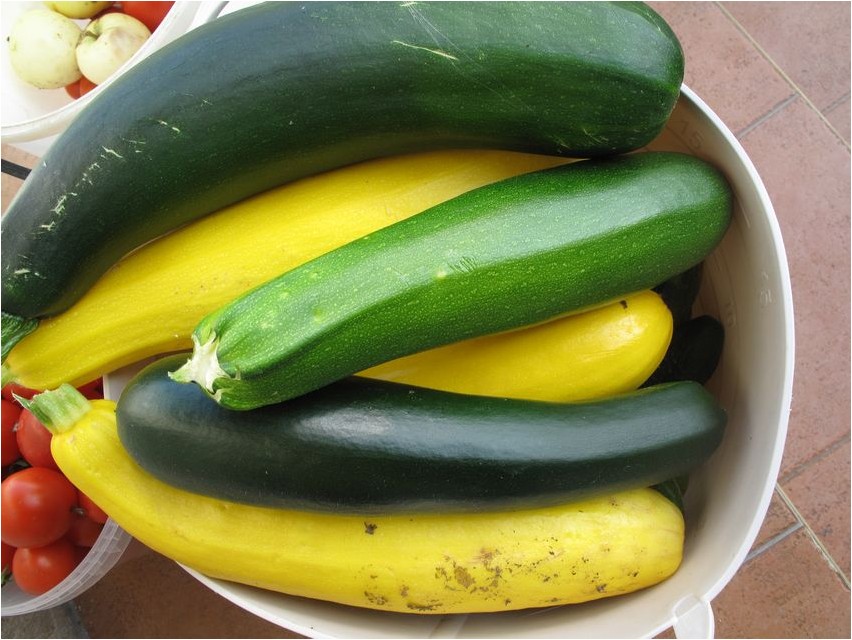
Zucchini (Cucurbita pepo) is a popular vegetable, a type of squash.
Geography
Zucchini is native to Central and South America. Today, zucchini can be found in any Russian gardener”s garden.
Zucchini is popular not only for its excellent taste but also for its high yield and early maturity. It is grown almost throughout the country, with the possible exception of the Far North and southernmost regions.
Zucchini is an annual plant, typically bush-shaped. Long-vine varieties are also common. Zucchini has a developed taproot system. The plant”s leaves are stiff, large, five-lobed, and the flowers are dioecious and monoecious.
Zucchini fruits are elongated, with white or green bark that turns creamy or yellow when ripe. The plant ripens in one and a half to two months. The seeds are quite small and white. The most common varieties, distinguished by high yields, are cold-hardy varieties such as Gribovsky 37 and the slightly less cold-hardy Beloplodny, Odessky 52, Dlinnoplodny, Grechesky 110, and others. Zucchini and squash varieties with Italian pedigree are very popular, including Zebra, Razbeg, Tsukesha, and others. They are quite productive and have excellent flavor. They also store well, making them a long-lasting addition to your table.

Care Instructions
Zucchini is generally considered a mid-season crop, although early-ripening varieties do exist.
Technical maturity of zucchini occurs in one and a half to two months, and physiological maturity takes three months or a little more.
Temperature: Zucchini is sensitive to temperature. Seeds germinate at 26-27°C. The minimum temperature required for germination is 8-10°C. The plant doesn”t tolerate frost well and is drought-resistant. However, watering is necessary to obtain a good harvest.
Soil: Choose fertile soil. Choose a well-lit, but draft-free location.
Sowing: Sow zucchini seeds directly into the soil. Take three to four dry or sprouted seeds and plant them 5-6 cm deep in a hole. Begin sowing when the soil warms to 10-12°C. Before sowing, add half a kilogram of humus, 22-25 g of superphosphate, and 15 g of potassium chloride to each hole.
To get an earlier harvest, it is better to grow zucchini in protected soil, planting it through seedlings. Zucchini seedlings are usually grown in a greenhouse, under film covers, and also at home — for example, on a balcony, on a windowsill, in paper or plastic cups.
The age of the seedlings is from three to five weeks (depending on the size of the pot). Zucchini seedlings should be planted in open ground after the spring frosts have passed. Under temporary film shelters — two to three weeks earlier.
Caring for zucchini crops means loosening between the beds, watering and fertilizing. Water the zucchini quite generously. In the phase of one or two true leaves, the seedlings must be thinned out, leaving one plant per hole. Fertilizing should be done once or twice using organic fertilizers.
The ovaries are removed when they reach 9-10 cm, as well as larger fruits with unripe seeds as they ripen, in order to avoid over-ripening. The zucchini must be cut together with the stalk. The fruits have soft skin and tender flesh. The vegetable yield is 9-10 kg per square meter. Zucchini fruits do not ripen as quickly, but they are stored longer. Larger zucchini fruits have the best preservation.
For seeds, you should choose typical fruits. Harvesting must be done before frost. The seeds need to be dried in the sun, stirring them from time to time.
Zucchini zucchini