Angelica
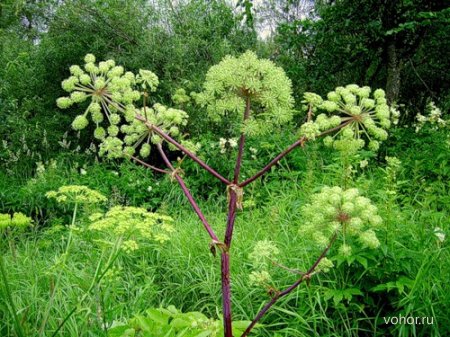
Angelica or angelica is a perennial plant. It reaches a height of up to 2. 5 m. The plant has an aromatic smell and has medicinal properties.
The flowers are flat, collected in inflorescences — umbrellas, and are yellow or light in color with a greenish tint. Only age blooms. The plant is used not only in folk medicine, but also in cooking, for example, mature grains are used as a seasoning for soups, sauces and salads. Suitable for cutting and next use in winter bouquets. In addition, the plant is a thick honey plant.
Care and cultivation of angelica
Angelica only grows best in sunny or slightly shaded areas. The most suitable are preferably drained, healthy and moist soils. Water moderately; during hot and dry periods, watering is increased. The plant is winter-hardy, therefore it does not seek shelter for the winter. In some areas, angelica can vegetate for 2-3 years, after which the plantings are renewed.
Reproduction
Angelica is planted with grains, which are sown before winter or in April. The grains are planted to a depth of almost 2 cm. After the emergence of seedlings, the plantings are thinned out, leaving a gap of almost 30-40 cm among the seedlings. It grows well by self-seeding.
It is possible to multiply by decomposing the bush and cuttings of rhizomes in premature spring or autumn, usually in September. The cuttings are cultivated with crushed coal, the divisions and fractions of the rhizome are immediately planted in the same area, almost 30-40 cm away.