Crazy cucumber
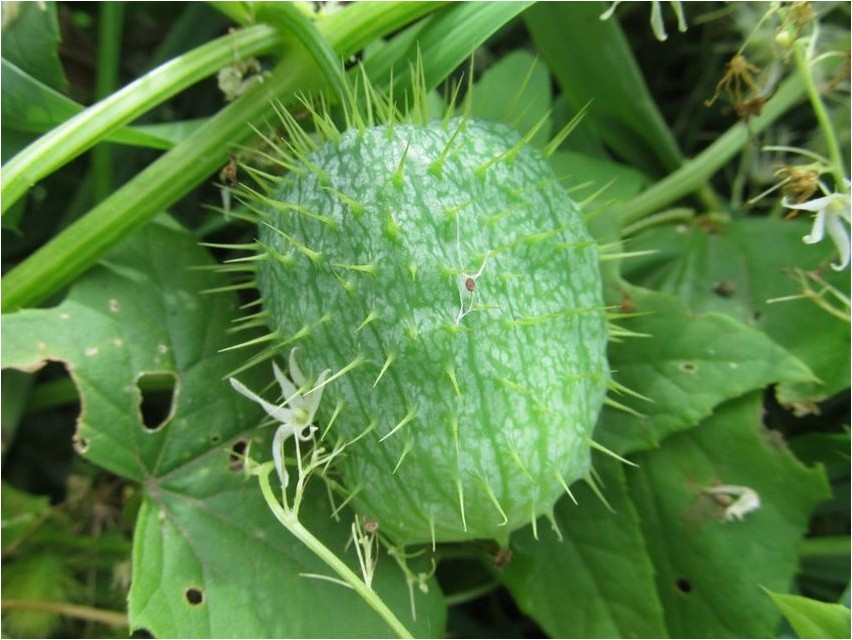
Crazy cucumber (lat. Ecballium) is a monotypic genus consisting of a single species of herbaceous plant called “Common cucumber” (lat.
Ecballium elaterium), classified by botanists as belonging to the Pumpkin family (lat. Cucurbitaceae). Despite the word “cucumber” in the name of the plant, its fruits are not served. This does not prevent the plant from being useful to humans, since its roots, stems, leaves and flowers contain healing substances that have a number of medicinal abilities.
What’s in your name
The Latin genus name “Ecballium” is based on an ancient Greek word meaning “throw away.” The genus owes this name to the fruits of its only species, which, after full ripening, crack, throwing seeds into the world in order to prolong their presence on this amazing and beautiful planet.
Favorite places to grow
Depending on the surrounding climatic conditions, the mad cucumber can be a perennial or an annual plant. Being a native of the warm places of the Mediterranean, where it can be found on the seashore; along the sides of country roads, tenaciously holding on to rural hedges; in garbage dumps, it grows in one place for years, stubbornly conquering living space from other plants.
Being a hardy plant, it has taken root well in areas with a temperate climate, in which it sacrifices its above-ground part in the winter, easily and quickly restoring its nimble shoots in the spring and creating impenetrable thickets along river banks in the summer. Making its way into man-made vegetable gardens, the Crazy Cucumber turns into an annoying weed if given free rein.
Description
The taproot, thickened, fleshy root of the plant sinks firmly into the soil, overgrown with a sparse network of adventitious roots. From the root to the surface of the earth an ascending or outstretched stem is born, the length of which varies from half a meter to one and a half meters. Without the tendrils characteristic of climbing plants, the Crazy Cucumber has learned to cling to any support with the rough surface of its stem.

Relatively long (up to fifteen centimeters) fleshy petioles connect the stem with large heart-shaped, ovate leaves. The leaf blade is penetrated by thickened veins and has a rough, hard, wrinkled surface and a felt underside. The edge of the leaf is decorated with crenate teeth.
From the axils of the leaves on long peduncles, racemes of inflorescences appear into the world. Moreover, female single flowers appear on one peduncle, and male flowers with stamens – on another, emerging from the same leaf axil. The structure of a flower has a full set of elements. At the base of the flower lies a bell-shaped calyx, composed of five short sepals. It bears a bell-shaped corolla of five pale yellow petals with green longitudinal veins, merging at the base into a green core.
If the shape of the fruits of the plant resembles small cucumbers, then with their bristly appearance they are really more like “mad cucumbers”. Although they are called “crazy” not for their appearance, but for their ability to explode when ripe, scattering dark brown small seeds within a radius of six meters around the mother plant.
Healing abilities
The roots and grass of the Mad Cucumber during the flowering period of the plant, as well as the fruits of the plant, have healing powers.
Chemical components of plant tissues, such as alkaloids, steroids, carotenoids, nitrogen-containing compounds, organic and fatty acids, vitamin C and others, determine the healing abilities of the Mad Cucumber.
The main areas of use of medicinal raw materials are diseases of the kidneys, liver, intestines, nervous system, skin diseases, various inflammations, as well as malignant formations.
Carefully!
When using medicinal raw materials for self-medication, you should remember that the plant is poisonous, and therefore, if dosed incorrectly, it will cause more harm to the body than good.





