Motherwort Siberian
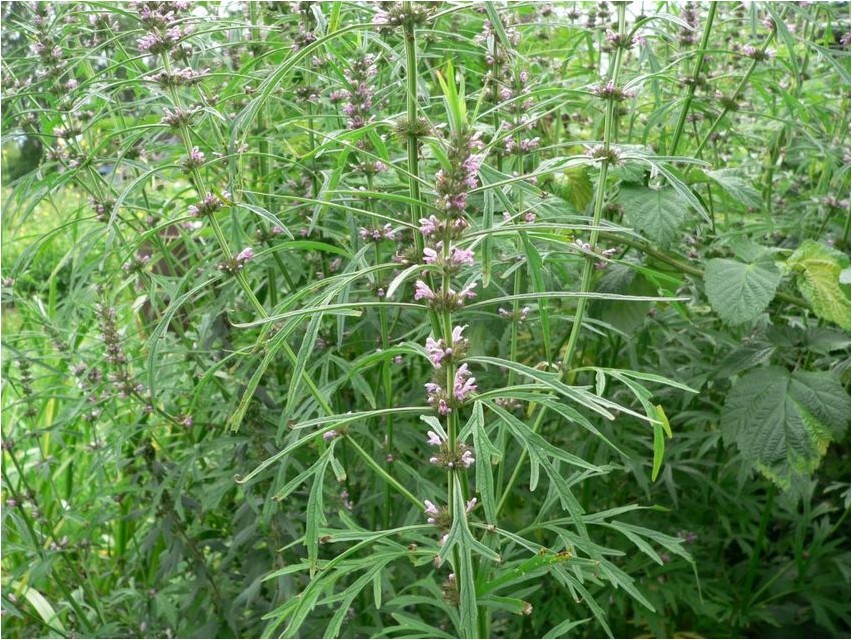
Siberian motherwort is one of the plants of the family called Lamiaceae; in Latin the name of this plant will be as follows: Leonurus sibiricus L.
As for the name of the Siberian motherwort family itself, in Latin it will be: Lamiaceae Lindl. (Labiatae Juss.).
Description of Siberian motherwort
Siberian motherwort is a biennial herbaceous plant, endowed with woody roots, erect and branched stems, the height of which can vary between fifteen and one hundred centimeters. The stems can be either numerous or solitary; they are pubescent with downward, short and appressed hairs. The leaves of this plant are broadly ovate in outline and short-adpressed, and to the very base such leaves will be dissected into three lobes. Siberian motherwort flowers are collected in spaced whorls, which in turn will form a long inflorescence. The bracts of this plant are subulate and will be shorter in length than the calyx. The length of the calyx will be about six to nine millimeters, it will be tubular-bell-shaped and endowed with long hairs in the middle part, the teeth of the Siberian motherwort themselves will be quite short and from a triangular base they will suddenly narrow into an awl-shaped point. The corolla of this plant will be quite large, its length is about fifteen to twenty millimeters, the upper lip on the outside is long and matted, and the corolla will be colored in pink and lilac tones. The fruit of this plant is triangular nuts, and its length is about two and a half millimeters.
Under natural conditions, this plant is found in the Amur region in the Far East, the Daursky region of Eastern Siberia and the Altai region of Western Siberia. For growth, Siberian motherwort prefers gravelly, rocky and steppe slopes, sandy coastal slopes, steppe meadows, steppes, places among bushes and pine forests.
Description of the medicinal properties of Siberian motherwort
Siberian motherwort is endowed with very valuable healing properties, and it is recommended to use the roots and herbs of this plant for medicinal purposes. The concept of grass includes flowers, leaves and stems. The presence of such valuable healing properties is recommended to be explained by the content of alkaloids, steroids, organic acids, the flavonoid rutin and the following higher fatty acids in the composition of this plant: oleic, linoleic and lauric, while the aerial part of the plant contains the alkaloid leonurin, cardenolides, stachyose carbohydrate, diterpenoids, flavonoids, nitrogen-containing compounds and tannins.
An infusion prepared from the Siberian motherwort herb has the ability to temporarily lower blood pressure, improve the cardiogram, and normalize rhythm and blood pressure. It is noteworthy that the experiment proved that an aqueous extract of the stems of this plant will have a stable hypotensive and sedative effect. At the same time, an alcoholic infusion of the sum of Siberian motherwort alkaloids will have a pronounced sedative effect, but the hypotensive effect is rather weakly expressed.

Traditional medicine uses a decoction of the herb and a liquid extract for hypertension, to normalize regulation, as a diuretic for edema and nephritis, and is also used in the postpartum period for bleeding and insufficient involution of the uterus. As part of the collections, such healing agents are used for menorrhagia, infertility, dysmenorrhea, endometritis and pain.





