Didymohlena truncated
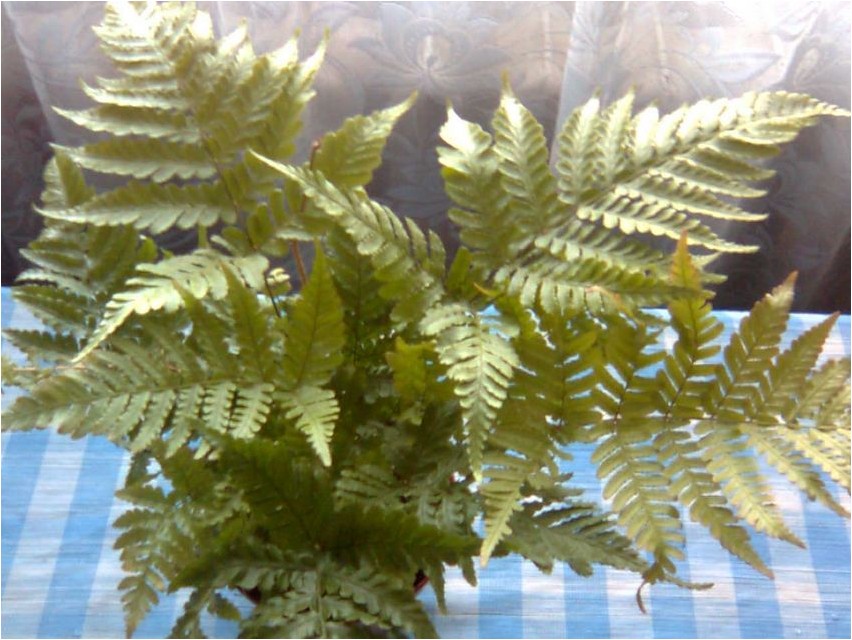
Didymohlena truncata belongs to the plants of the family called Dryopteris. In Latin, the name of this plant is as follows: Didymochlaena truncatula.
As for the family itself, its name in Latin will be: Dryopteridae.
Description of growing features
For favorable cultivation of this plant, it will be necessary to provide didymohlena with a truncated light regime of partial shade, but shade is also acceptable. In the summer, the plant will need to be provided with fairly abundant watering, and the air humidity necessary for the normal development of this plant must also be kept at an average level. The life form of Didymohlena truncata is a herbaceous plant. It is noteworthy that it is recommended to grow this plant both in fairly warm winter gardens and in greenhouses. In addition, the plant can very often be found in florariums, as well as indoors.
As for the maximum size that this plant can reach in cultivation, the height of didymohlena truncated can be fifty centimeters, and the diameter of the plant can even reach seventy centimeters. The plant will need replanting approximately once a year or three years: for this you should use pots of standard proportions. For the favorable development of this plant, you will need to prepare the following composition of the soil mixture: one part of turf soil and sand to two parts of leaf soil. The acidity of such soil should be slightly acidic.
As for the problems with growing Didymohlena truncata, it is important to remember that due to unfavorable growing conditions for this plant, the very tips of the leaves can often dry out. Unfavorable conditions include both improper watering and excessively dry air. In addition, didymohlena truncated can still be quite often affected by scale insects. The scale insects themselves can often be confused with brown spores of ferns. These pests are removed using cotton wool that has been previously dipped in methyl alcohol. However, the most affected plants can only be thrown out. It is also important to remember that, like all ferns, this plant does not like insecticides: for this reason, the use of such methods is permissible only in extreme cases.
Throughout the entire dormant period of this plant, the optimum temperature should be maintained in the range between eighteen and twenty-two degrees. At this time, it is also important to ensure moderate watering of the truncated didmohlena, and the air humidity should also be kept at an average level. If this plant is grown indoors, the dormant period will be forced and will last from October to February. This dormant period is explained by the fact that throughout this time the plant will be provided with reduced light and insufficient air humidity.

Reproduction of Didymohlena truncata occurs by sowing spores. As for the specific requirements of this crop, it should be noted that it is extremely undesirable to allow even the slightest drying out of the soil. In addition, it is important to provide the plant with constant moisture throughout the year.
The decorative properties of didymohlena truncated include not only the leaves of this plant, but also its stem. As for the shape of the leaves, they are double pinnately dissected, and the leaves of this plant will consist of fairly large leathery lobules, which are also shiny. Adult plants are capable of forming an amazingly beautiful trunk, the size of which can reach even forty centimeters.