Phyllanthus emblica
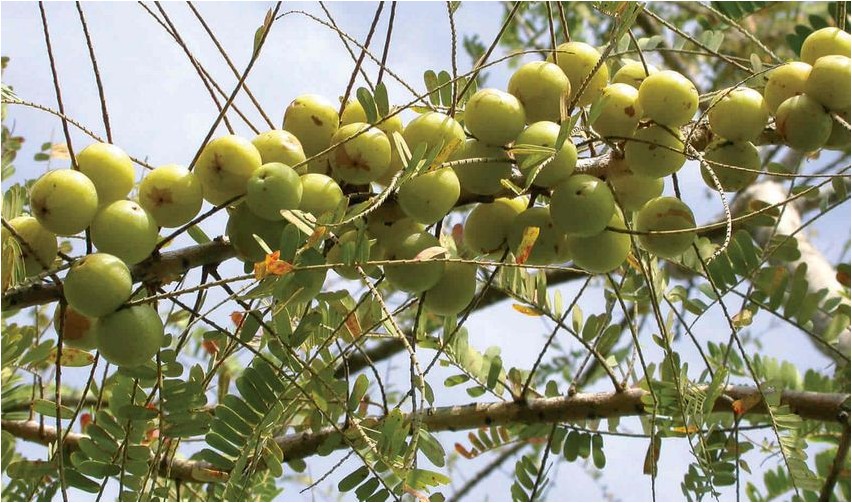
Phyllanthus emblica (Latin: Phyllanthus emblica) is a species of fruit tree in the genus Phyllanthus in the family Phyllanthaceae. Other names for the plant include Indian gooseberry, amalaki, emblic, amla, and gray myrobalan.
The plant is native to Southeast Asia. Today, Phyllanthus emblica is cultivated in India, Thailand, Malaysia, Pakistan, Bangladesh, China, and Sri Lanka.
Culture Characteristics
Phyllanthus emblica is a deciduous tree up to 30 m tall. The bark is smooth and gray-brown. The leaves are oblong, narrow, up to 2 cm long. The flowers are inconspicuous, unisexual, green, and collected in racemes located in the leaf axils. The fruits are greenish-yellow or orange, round, smooth, up to 3 cm in diameter, and serrated at the base. The flesh is juicy and crisp, containing six small seeds.
The fruits contain a wealth of vitamins and other beneficial substances, including ascorbic acid, niacin, carotene, riboflavin, calcium, iron, and others. Phyllanthus emblica seeds contain litholytic and proteolytic enzymes, as well as essential oil. The plant”s fruits are not eaten by animals or birds, and they store and transport well.
Propagation and Cultivation Details
Unfortunately, very little is known about growing this miraculous fruit crop. Phyllanthus emblica is propagated by seeds, but they are virtually impossible to find commercially. Most gardeners import young trees from warmer climates, where this crop is grown. Rooting from cuttings is possible, but this is not a 100% guarantee. Phyllanthus emblica is very demanding when it comes to soil conditions, growing well only in loamy soils with the addition of sand and peat. A substrate composed of humus, loam, and perlite (or vermiculite) is also acceptable. The plant thrives in partial shade and does not require intense light. The optimal temperature for indoor cultivation is 26-28°C (79-82°F) in summer and 15-18°C (59-64°F) in winter.
Care primarily consists of regular and ample watering. During the active growth period, the soil should be kept moist, but not stagnant. Insufficient watering can cause the plant to dry out, causing the leaves to become deformed and wrinkled or contract along the midrib. Emblica grown indoors requires frequent fertilization with mineral fertilizers (at least once every two weeks).

Application
The fruits of Phyllanthus emblica are used to prepare various drinks and juices, confectionery products, jams, jams, jellies, as well as marinades, sauces and hot seasonings. The fruits have a bitter taste; to get rid of it, they are soaked in a special brine or unripe mango or citrus fruits are added.
Emblica is also used in folk medicine. In combination with other fruits and products, it gives an incredibly amazing healing effect. Infusions and medicinal lozenges from the fruit are used in the treatment of pulmonary tuberculosis, diarrhea, hemorrhage, diabetes mellitus and diseases of the gastrointestinal tract. Phyllanthus emblica is also used in cosmetology; various creams and masks for the body, face and hair are made from the fruits.
Trichup Hair Oil for strong hair