Amaryllis

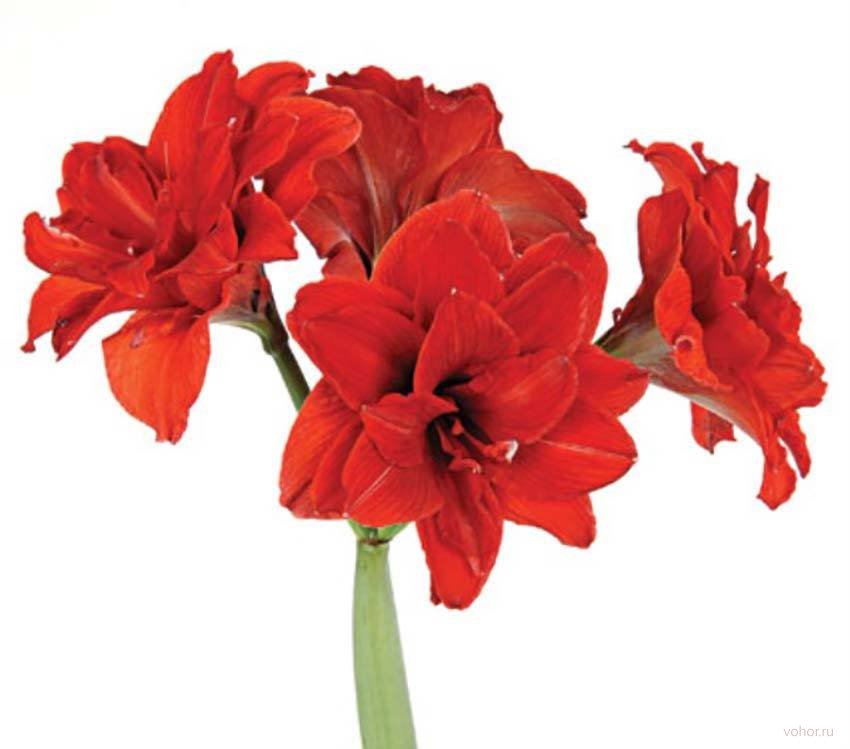
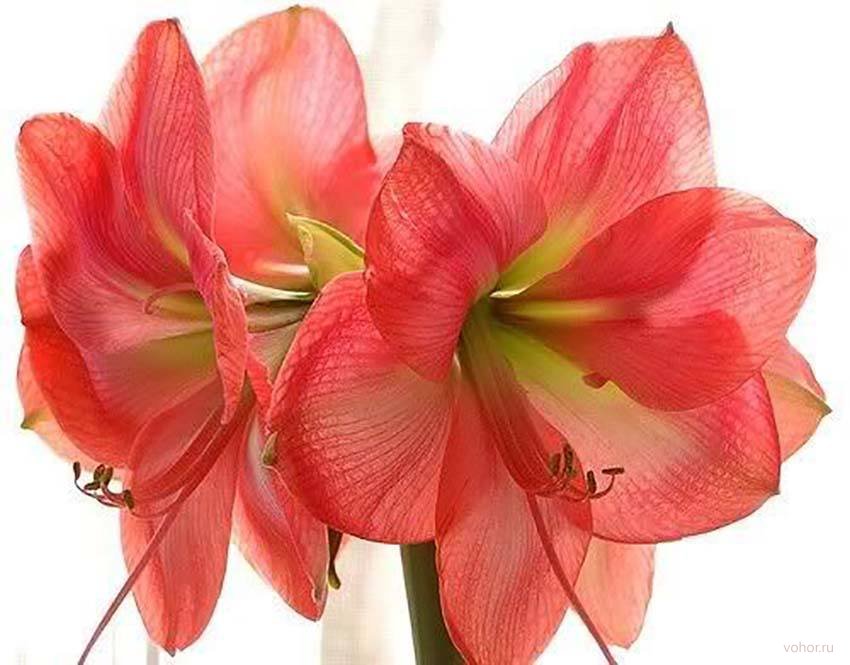
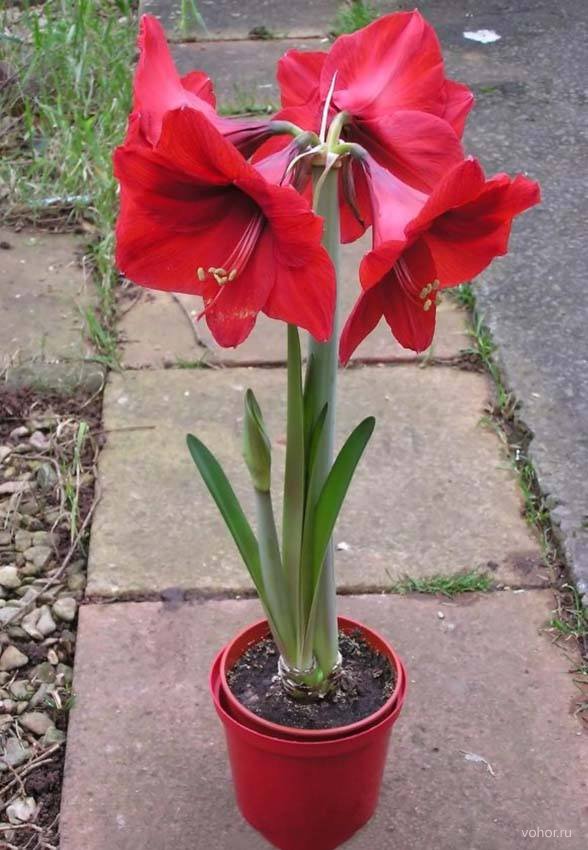
Amaryllis is grown as a houseplant. It is valued for its large flowers, which are collected in inflorescences. The flowers are fragrant, can be simple or double, and come in different colors. With proper care, amaryllis can bloom twice in age. However, the plant does not require any special conditions; its presence pleases with its decorative flowering. The plant is very closely related to such a noticeable flower as the hippeastrum, which is not unintentional. It is generally accepted that hippeastrum is a hybrid species of amaryllis. The difference lies in the size and number of flowers.
care and cultivation of amaryllis
To grow a flower, use a soil mixture of turf, leaf soil, humus, and sand. The pots are disassembled with a small volume (there should be a distance of no more than 2-3 cm through the bulbs in front of the walls of the pot), with the presence of drainage ears. Amaryllis are fed in a sunny space at a temperature of 20-25 degrees. During the growing season, moderate watering is ensured. The bottom should dry out when watered, but not dry out. Water with gentle and settled water at room temperature. The presence of watering does not allow moisture to enter the bulb.
During the growing season, amaryllis is fed with mineral fertilizers. Feeding is paid every 10 days. Organic fertilizers are not used as fertilizing. Subsequently, after flowering, watering and fertilizing are imperceptibly reduced. After feeding, they clean the area, but continue to water it occasionally. In the presence of this, the leaves will imperceptibly begin to dry out. After excessive drying, the leaves are cut off. During the dormant period, the plant is fed in an impenetrable and dry space, where the air temperature is maintained at around 10-15 degrees. The period of rest lasts for three months, after which the pot of amaryllis is placed in a warm and sunny area. After the appearance of the peduncle and its height reaching about 8-10 cm, watering is restored, and barely later the fertilizing is refreshed.
Transplantation is carried out in the spring, every 2-4 instars. During the transplantation period, it is recommended to eliminate all daughter bulbs with the goal of preventing the impotence of the mother bulb. When replanting, try not to bruise the roots, or the plant will not take root or take a long time to take root. Every year, the high level of substrate is made up for by new ones.
Note

Amaryllis is unusually beautiful, but at the same time harsh. Therefore, one stops practicing mindfulness when in contact with the plant.
reproduction
amaryllis are propagated by daughter bulbs. At the same time, after purchasing the bulbs, they are planted in a moistened substrate made from a mixture of sand and peat. Plant for no reason, so that 1/3 of the bulb remains above the soil surface. The flower is fed without watering, in a clear space where the air temperature is maintained at around 25 degrees Celsius. After the arrow appears, the plant is watered. Due to premature watering, flowering is rather short-lived.
Daughter bulbs are separated during transplantation or during the dormant period. Separated amaryllis bulbs are planted in a substrate of peat and sand. After planting, water. The presence of multiplication by daughter bulbs, flowering will begin through 2 instars.
diseases and pests
Amaryllis is resistant to pests and diseases, but can sometimes be affected by gray mold.