Catnip
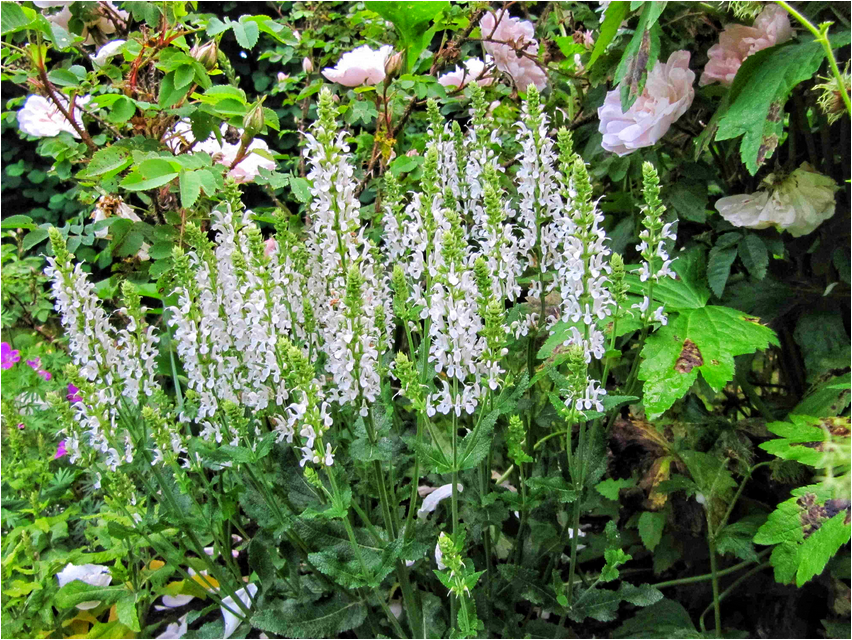
Catnip (lat. Nepeta) is a genus of perennial herbaceous plants of the Lamiaceae family. In nature, catnip is found in Southern and Central Europe, Central Asia, as well as in Pakistan, India and Nepal.
On the territory of the Russian Federation, catnip grows mainly in the European part, the Caucasus, the Far East and Siberia. The genus has about 250 species, of which only 80 grow in Russia. Typical places for wild species are forest clearings, wastelands, slopes, waste places and roadsides.
Characteristics of culture
Catnip is a herbaceous plant with a woody, highly branched root and a strong, erect stem 40-100 cm high. The leaves are sharp, coarsely toothed, pubescent over the entire surface, triangular-ovate in shape, with a heart-shaped base. The flowers are small, collected in dense complex semi-umbrellas or false whorls, located at the ends of the shoots or stem. The corolla is off-white with violet or purple specks or spots on the lower lip. The fruit is an elliptical nut of brown, brown or black color, often with a slight silvery tint. Catnip blooms in June – July, the fruits ripen in late July – early August.
Growing conditions
Catnip is a photophilous and heat-loving crop; it prefers well-lit areas throughout the day, protected from cold piercing winds. Soils are desirable fertile, loose, aerated, permeable and moderately moist. The culture does not accept acidic, saline, heavy and compacted soils. Areas with close groundwater are not suitable for growing catnip. He has a positive attitude towards mineral and organic fertilizers.
Reproduction and planting
Catnip is propagated by seeds, cuttings and dividing the bush. The seed method is quite simple and effective. Seeds are sown in open ground in May, or for seedlings in boxes in April. It is not forbidden to sow catnip in greenhouses or greenhouses. The seeding depth is 1 cm. When growing the crop using the seedling method, the plants bloom already in the first year of life. Seeds germinate at a temperature of 18-20C on days 14-20. Until 3-4 true leaves appear, the seedlings develop very slowly, then the plants begin to grow and develop green mass.
When growing catnip on a windowsill in the phase of 2-3 true leaves, the seedlings are planted in separate containers. Seedlings are planted in the ground at the end of May with an interval of 25-30 cm, by which time the plant should be at least 10-12 cm high. The area for catnip is prepared in advance: the soil is dug up to a depth of 25 cm and humus or compost is added (2-3 kg per square meter). In spring, the ridges are loosened and fed with complex mineral fertilizers.

Care
Caring for catnip consists of obligatory loosening of row spacing at least 2-3 times per season and fertilizing with mineral fertilizers, which is carried out after each cutting. Superphosphate and ammonium nitrate, or universal fertilizers such as “Solution” or “Kemira-Lux” are ideal for this purpose. Watering is carried out as necessary. Catnip overwinters without shelter. In the northern regions, plantings can be mulched with peat or sawdust. The greatest activity of catnip growth is observed during the budding period, and it is at this time that it is advisable to collect fresh herbs intended for cooking.
Application
Catnip is used as a spice and is often included in confectionery recipes. Catnip is used in soap making and the perfume industry. The crop is also grown as an ornamental plant in flower beds, borders and rockeries. Catnip is widely used in folk medicine. It is useful for bronchitis, anemia, migraine, melancholy, neuroses and cholera. The plant causes strong stimulation in representatives of the cat family.


