Hippeastrum hortorum
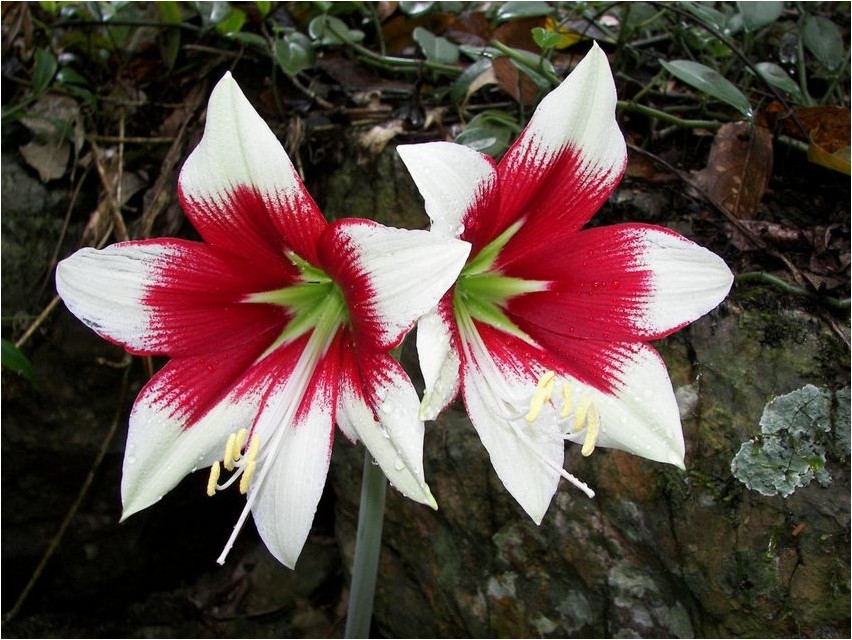
Hippeastrum hortorum is a member of the Amaryllidaceae family, and its Latin name is Hippeastrum x hortorum.
Description of Hippeastrum
Hippeastrum hortorum is a bulbous plant. It is often found in many conservatories and greenhouses, as well as on terraces and warm hallways. When growing this plant indoors, it is recommended to select an east-, west-, or south-facing window. In cultivation, this plant will reach a maximum height of approximately one hundred and twenty centimeters.
Description of Hippeastrum Care and Growing
The plant will require repotting, which should be done at the very end of winter, before growth begins. For repotting, select a standard-sized pot filled with fresh potting soil. It’s important to remember that overly spacious pots are highly undesirable, as the plant won’t bloom as profusely when grown in such containers, but will produce quite a few offspring. It’s important to note that the pot’s diameter should be slightly smaller than its height, with the distance between the bulb and the rim of the pot no more than two to three centimeters. As for the soil mix itself, for the plant to thrive, the following soil is required: one part loam and sand, and three parts leaf mold. The pH of this soil mix should be either neutral or slightly acidic.
As for the specific requirements of garden hippeastrum, it should be noted that the plant will extremely negatively tolerate damage to its fragile roots. In the case when in winter the temperature is very high and the lighting is insufficient, the plant will stretch quite strongly. The most common disease of this plant is a disease such as staganospora or red mushroom burn: with such a disease, red spots appear on the bulbs and leaves of Hippestrum garden. In order to get rid of this disease, you will need to remove the plant bulb from the pot and completely clean it not only of the upper scales, but also of the diseased scales. The lesions should be cut out down to healthy tissue, and the wounds should be sprinkled with a mixture consisting of a large amount of chalk and a small amount of copper sulfate. Then the bulb must be dried for one week, and after that it is transplanted into a new substrate.
Throughout the entire dormant period, you will need to provide the plant with an optimal temperature of about eight to ten degrees Celsius. It is noteworthy that garden hippeastrum will not require any watering during this entire time. The dormant period can occur from one to three times a year; this dormant period will last approximately two months and will occur during the time between the flowering of hippeastrum garden.
Reproduction of this plant most often occurs through daughter bulbs, as well as with the help of fresh seeds. It is recommended to sow seeds immediately after collecting them, due to the fact that the germination capacity of the seeds is lost quite quickly. However, when seeds are sown, flowering will not occur until about five years later, and varietal characteristics will not be reproduced.

It is recommended to move the garden hippeastrum to the open air in the summer, and the pot with the plant should be placed in a place that will be reliably protected from direct sunlight. It is also important to remember that unrotted organic matter cannot be mixed into the soil: this requirement applies to all bulbous plants.