Lungwort
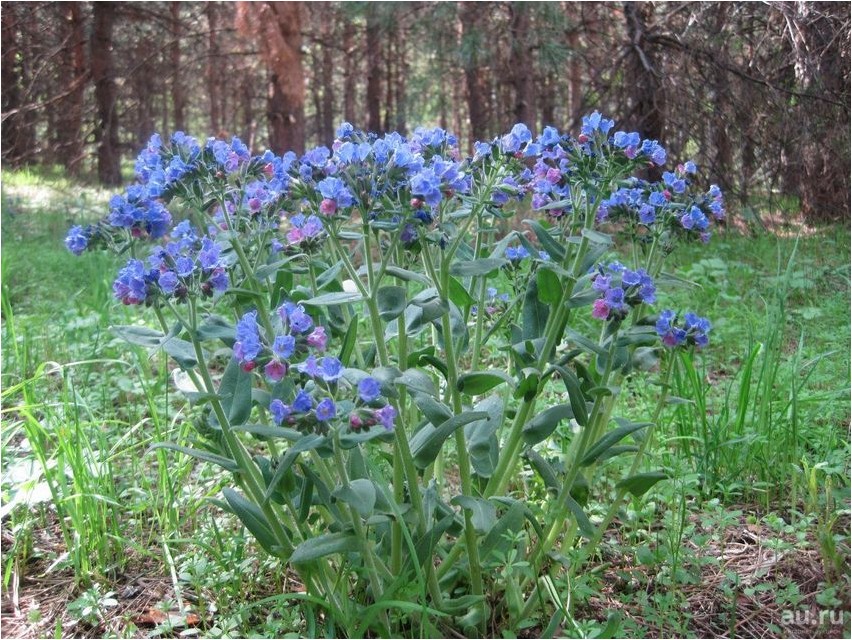
Lungwort is a member of the Boraginaceae family. Its Latin name is Pulmonaria dacica Simon K.
The Latin name for the Lungwort family is Boraginaceae Juss.
Description of Lungwort
Lungwort is also known by common names such as lungwort and lungwort. Lungwort is a perennial herb with a rather thick, dark-brown rhizome covered with cord-like lobes and adventitious roots. The stems of this plant range in height from thirty to fifty centimeters, and are often heavily pubescent. The basal leaves of the Lungwort are quite large, reaching up to thirty centimeters in length, velvety and elliptical in shape. The stem leaves of this plant are significantly smaller than the oblong leaves. The flowers of the Lungwort are regular, initially pinkish in color, and after pollination, they acquire a violet-blue hue. These flowers are tubular, borne in slightly drooping racemes. Lungwort blooms from late April to mid-May. The fruits of this plant are shiny, ovoid nuts colored black. After the fruits ripen, the stem dies, and the basal rosette begins to develop.
In the wild, Lungwort is found in Western, Central, and Eastern Siberia in mountain forest belts, forest zones, and forest-steppe zones. This plant prefers forest meadows and sparse forest edges.
Description of the medicinal properties of Lungwort
Lungwort has very valuable medicinal properties, which are attributed to its content of saponins, carotene, polysaccharides, mucilaginous and tannin substances, rutin, flavonoids, ascorbic acid, and a large amount of the following microelements: silicon oxide, manganese, potassium, calcium, and iron.
It should be noted that the experiment proved the positive effect of this plant on the composition of the blood during tumor processes, and lungwort also showed the ability to enhance the effect of various antitumor drugs. It has been scientifically proven that this plant regulates the alkaline-acid balance in the body.

As for traditional medicine, an infusion prepared from the herb of this plant has become quite widespread. This infusion is recommended for use in diseases of the lungs as a valuable emollient and expectorant, and this infusion is also used for anemia, pneumonia, cystitis, bronchitis and metabolic disorders. In addition, it is quite acceptable to use lungwort for eczema, as an anti-inflammatory, astringent and hemostatic agent for various liver diseases, female diseases, nephritis and various bleedings. Crushed leaves of this plant are recommended to be applied to purulent wounds in order for them to heal more quickly. It should be noted that this plant is edible: lungwort is often used to prepare soups and various vitamin salads. For nephritis, infuse four teaspoons of the herb in two glasses of boiling water for two hours, and then take one-third of a glass three to four times before meals.





