Akteya
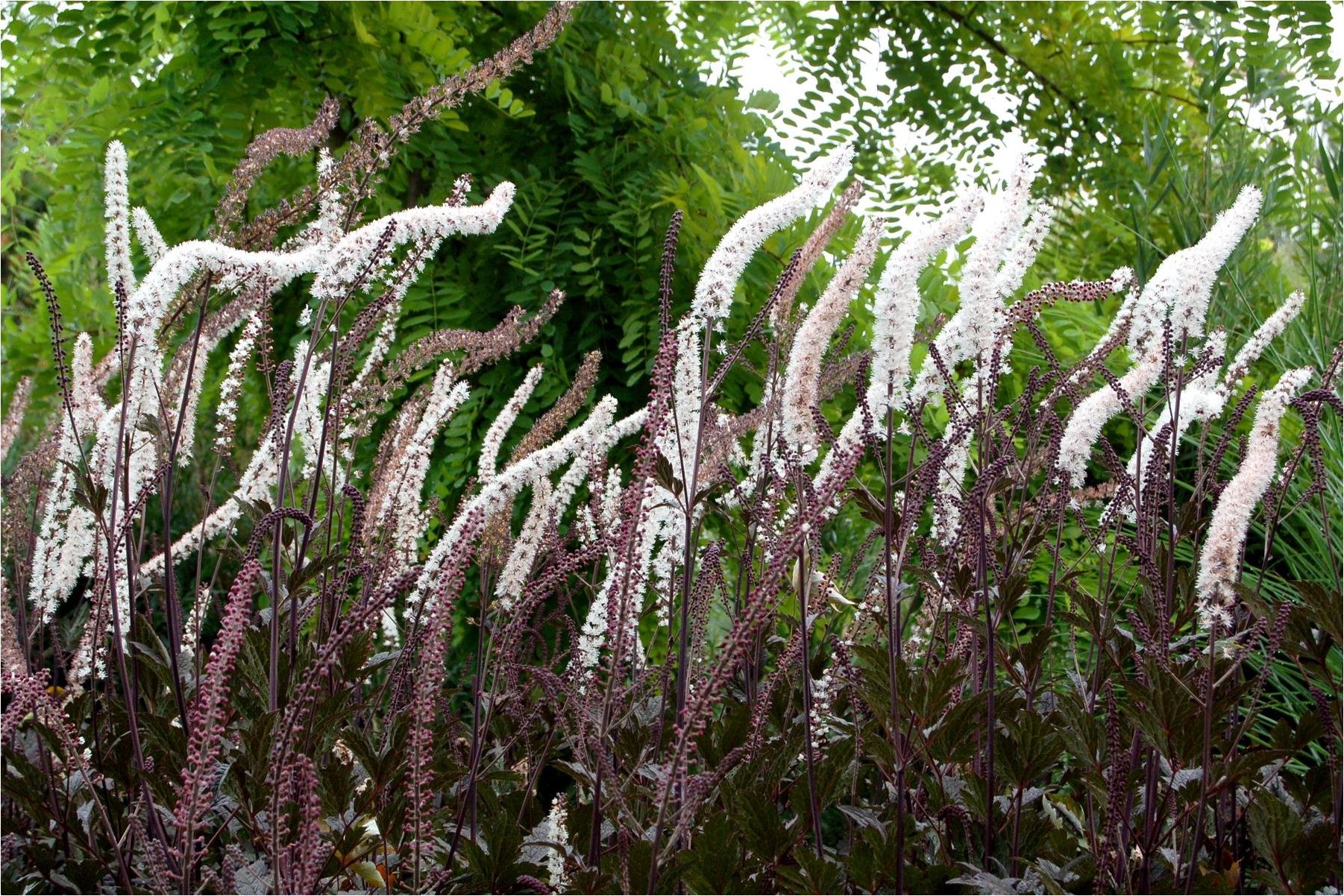
actaea (lat. Actaea) is a shade-loving decorative foliage perennial from the Ranunculaceae family. The second name is Voronets.
Description
Actea is a medium-sized, short-rhizomatous perennial, from whose short rhizomes a great many fairly large dissected alternate leaves arise. And with the onset of spring, powerful flower stalks appear above these leaves, on which clusters of small white flowers are located. As for the height of these flower stalks, it usually ranges from half a meter to seventy centimeters.
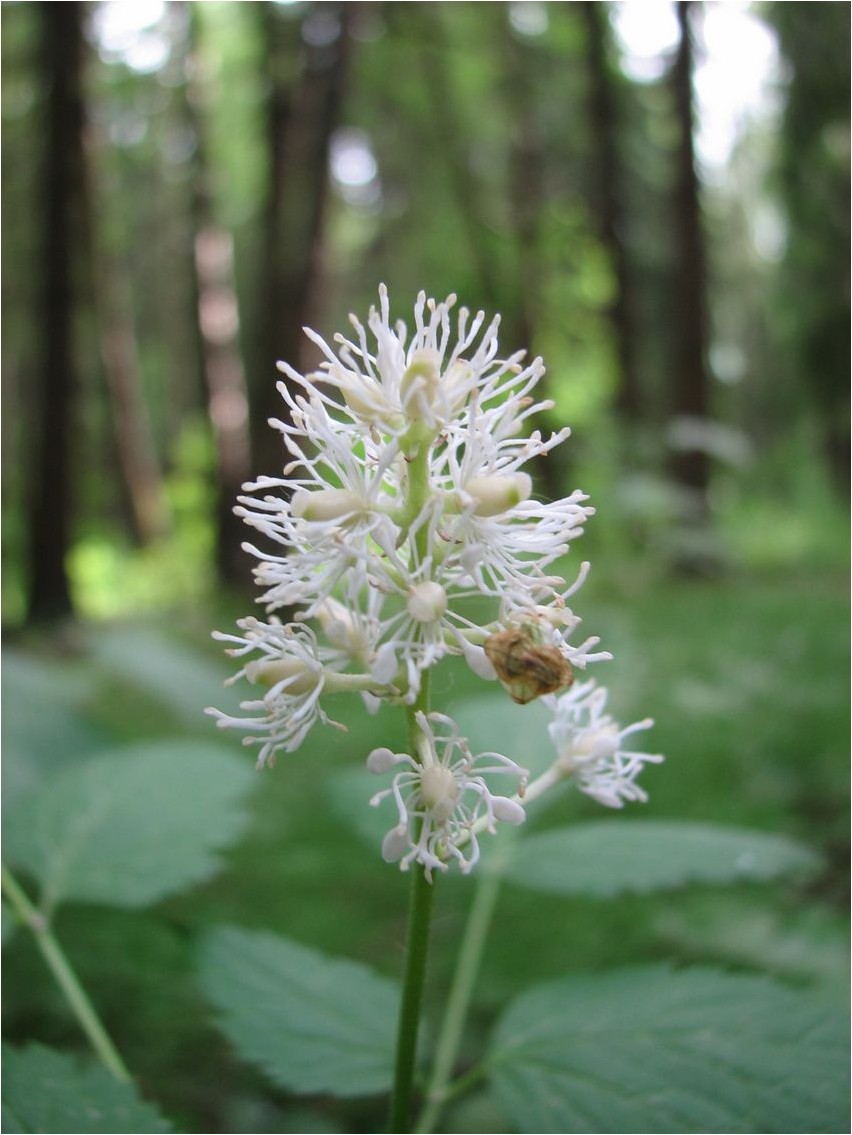
The flower calyxes are formed by four rapidly falling leaves of whitish shades. They usually have from one to six small spatulate petals, although it also happens that they are completely absent. Numerous stamens, which will be longer than all other parts of the flower, are often equipped with threads that expand at the top. And each flower has from one to eight pistils, and all of them boast the presence of wide sessile stigmas and ovoid superior ovaries.
The shiny fruits of actea, depending on the type, can be either black or red — they look like multi-seeded nuts or berries the size of a pea and can sometimes sit on rather long stalks.
Actaea can boast of being especially decorative towards the end of summer, when numerous fruits begin to appear on it.
Where does it grow
The deciduous forests of North America, the Far East and Europe are considered to be the birthplace of actea. Currently, this plant is quite widespread in North America, Northern Europe, Japan, China, Mongolia, Western Siberia and the Caucasus. Actea can be found especially often in damp shady forests, both coniferous and mixed, as well as in forest swamps, on hummocks in the middle of grass swamps or in sparse thickets. However, this beauty grows quite well in open areas, as well as on clay-rocky or dry clay slopes.

usage
actea is quite actively planted in gardens as an ornamental plant. However, it is important not to forget that all its parts are poisonous, and if a person accidentally eats or deliberately tries its fruits, he may experience severe abdominal pain, vomiting or nausea, and in especially severe cases, confusion, convulsions or tremors.
Actaea berries, boiled in alum, are used to obtain black paint. The strongly curved branched rhizomes of this plant are used in folk medicine as a laxative, and the tincture from the underground organs of Actea Dahuriana has a pronounced calming effect, helps reduce blood pressure and is quite widely used in the initial stages of hypertension (the underground organs of this plant contain alkaloids, resins, coumarins and glycosides).
Growing and care
Actea is usually planted in semi-shaded or shaded areas, usually under the canopies of various trees, on forest soils with normal moisture. Sandy or loamy soils are also suitable for its cultivation, but clayey, alkaline and poorly drained soils should be avoided in every possible way.
Anyone who wants to grow an actea must also take into account the fact that this beauty may need an initial garter — either to a wire or to a guide twine.
Actea propagation is carried out either by dividing the bushes at the end of summer, or by seeds that are sown in autumn or spring. Seedlings usually begin to delight with their flowering in the second or third year. By the way, Actaea self-sows quite well!