Areca palm or Betel palm
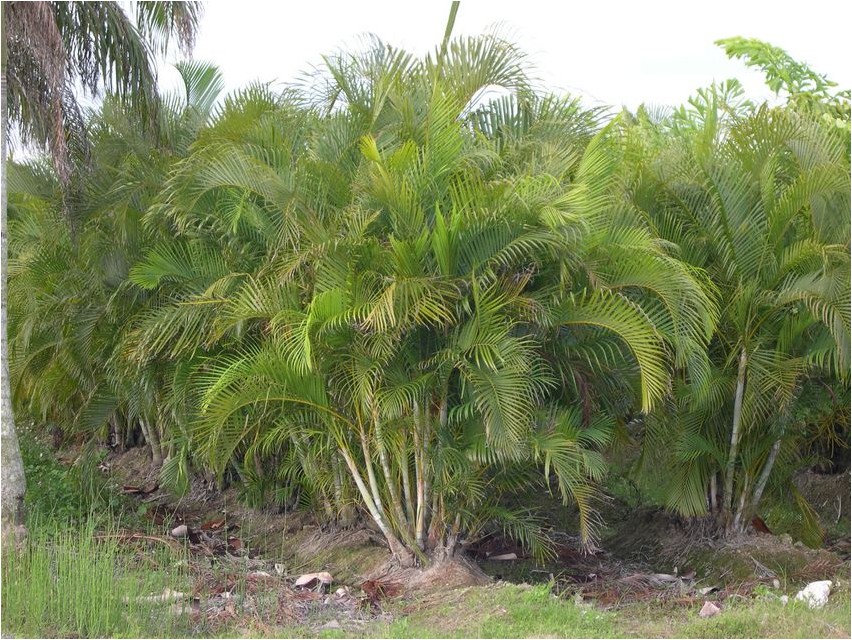
The tanning areca (Latin Areca catechu), or Areca palm, or Betel palm, is a type species of plants of the Areca genus from the Arecaceae family of the same name (Latin Arecaceae), or Palm trees (Latin Palmaceae).
The palm tree is known for its fruits, popularly called nuts. Their pungent and bitter taste has an invigorating effect on the human body, and therefore in many Asian countries nuts are used for chewing. Moreover, the best effect is obtained when the nuts are combined with the leaves of a plant called “Betel” or dried tobacco leaves.
Where does the Areca Palm grow?
Botanists believe that the homeland of the Areca palm is the Philippines, from where the palm migrated to China and other Asian countries with a tropical climate (Indonesia, Cambodia, Vietnam, Laos, India and others), and also reached East Africa.
In each country, people gave the palm tree its own name, and therefore the tree has a large number of different names. In addition to those already listed, there are, for example, such as “Indian nut”, “Areca nut palm”. The tree’s widespread name “Betel Palm” was due to the fact that its nuts had a great relaxing effect on the nervous system when people chewed them along with the leaves of the Betel plant (Latin: Piper betle), which belongs to the genus Pepper (Latin: Piper).
Description
Areca catechu is a medium-sized palm. Its erect trunk rises to a height of 20 – 30 meters, with a trunk diameter of 15 to 50 centimeters. The underground part of the palm tree is represented by numerous branched roots. On the trunk of a palm tree, scars remain from falling leaves, turning it into a decorative ringed pillar.
The feathery leaves form a lush crown at the top of the trunk. The bases of the leaves cover the upper part of the trunk, creating a “green crown”, from which petioles with leaves deviate in different directions. Each leaf consists of numerous long and narrow leaflets with sharp tips and parallel veins, tightly seated on a common petiole. The length of the sheet varies from 1. 5 to 2 meters. The number of simultaneously growing leaves ranges from 8 to 12 pieces.

Meter-long peduncles bear inflorescences, the initial form of which at the beginning of life is a spadix of flowers. When the flowers open, they create a paniculate inflorescence of creamy white color. Palm flowers are unisexual, but there are both male and female flowers on the same peduncle, that is, the areca palm is a monoecious plant.
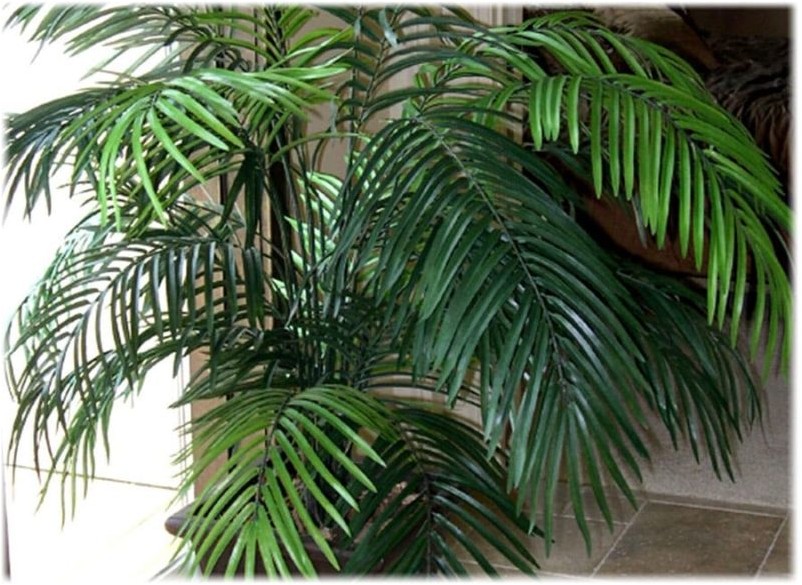
The top of the growing season is the orange or red fruit, which is a drupe up to seven centimeters long. The bone, up to 2. 5 centimeters long, called a “betel nut,” is protected by a brown or reddish woody shell and wrapped in a fibrous dry shell. It is the fruit seed that is used for chewing, for which people grow the Areca palm.
Chemical composition of palm seeds
Betel palm seeds contain alkaloids such as arecoline and ascaidine, which, when chewed, cause a slight intoxication in humans. This would not be so dangerous for the human body if the seeds did not contain condensed tannins, called arecanines, which are carcinogenic substances that provoke malignant tumors.
Usage
In addition to the fact that palm seeds are used as chewing gum, which stimulates the human nervous system, there are other purposes for using various parts of the palm tree.
Palm seeds contain a red pigment that not only colors the mouths of chewers, but is also used in cotton manufacturing to dye fabrics red.
The chemical elements contained in palm seeds are used for medicinal purposes.





