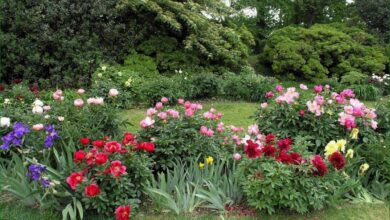
Ambarella
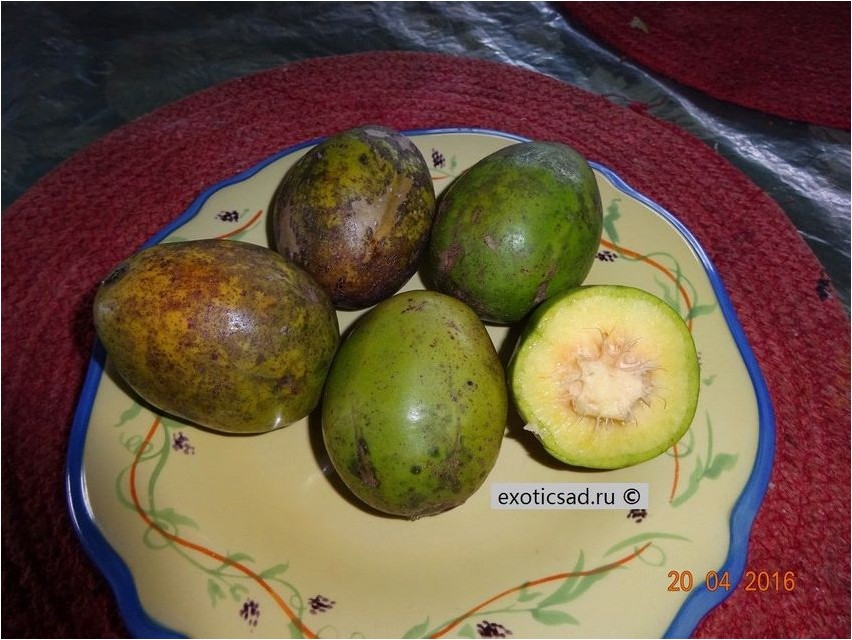
Ambarella (lat. Spondias dulcis) is a fruit-bearing plant from the Sumacaceae family, which is often called yellow or Polynesian plum, as well as Cythera apple or sweet mombin.
Description
Ambarella is a tree whose height can reach eighteen meters. In addition, it boasts very large leaves — their length ranges from twenty to sixty centimeters. And this plant blooms with creamy or white panicles reaching a length of thirty centimeters.
Ambarella grows in clusters, and its oval fruits boast a pleasant golden color. Outside, they are framed by a fairly hard peel (either smooth or slightly warty) approximately 2. 5 mm thick, and inside each fruit there is a prickly and very hard stone containing several flat seeds densely covered with thin curved spines. Juicy and sweet ambarella pulp has pleasant pineapple and mango notes. It is fibrous, crunchy and has a nice yellow color. It is noteworthy that the closer the pulp is to the peel, the more sour it is.
Where does it grow
The main growing areas of ambarella are now Sri Lanka, the Philippines, Indonesia and India. And in its wild form it can be found in Melanesia and Polynesia — it was from there that it subsequently came to other states: approximately at the end of the eighteenth century it was brought to Jamaica (to be more precise, this event dates back to 1782), and from there it began to penetrate the rest of the Caribbean islands, as well as Suriname, Brazil, the states of Central America and Venezuela. Ambarella is also quite actively cultivated in Gabon, Zanzibar, Australia, Malaysia and Indochina. Moreover, its excellent decorative characteristics have encouraged some gardeners in the south of Russia to grow ambarella.
Application
Ambarella pulp is very often consumed fresh, but it has also proven itself quite well in cooking: it is used to obtain juices, as well as to make jelly, confiture and marmalade. It is quite acceptable to eat unripe fruits: they are pickled, added to various soups, stewed as a side dish (in this case they become an excellent alternative to vegetables) or excellent sauces are prepared from them. So, in order to prepare a sauce for meat, you just need to season the pulp, rubbed through a sieve, with a small amount of sugar. And Indonesians use the sour and crunchy pulp of the green fruit to prepare a dish called rujak. Behind such an interesting name lies a traditional salad, prepared from raw vegetables and seasoned with a special seasoning with a salty-sweet aftertaste. Young leaves are no less actively used — they are often served with rice and salted fish.
In addition, ambarella leaves (and the fruits too) are excellent feed for livestock and, together with the bark, are used to treat burns, inflammations and wounds.

Ambarella is incredibly rich in vitamin C (a person’s daily need for this vitamin is easily covered by just 150 g of the pulp of this fruit) and iron. The high content of vitamin C helps maintain immunity at the proper level, accelerates the healing process of wounds, and also helps reduce the risk of developing all kinds of cardiovascular diseases and oncology. Ambarella is also high in fiber, which helps lower bad cholesterol levels.
Contraindications
To date, no serious contraindications to the use of ambarella have been identified. However, this does not completely exclude the possibility of allergic reactions.