Beloperone
Beloperone is sometimes also called indoor hop; this genus includes about thirty plant species. Beloperone is considered a plant from the Acanthaceae family.
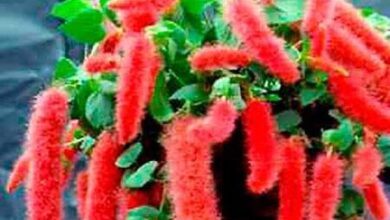
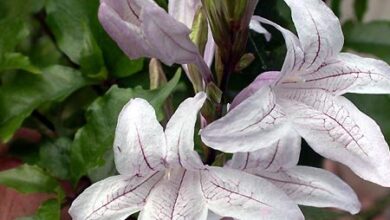
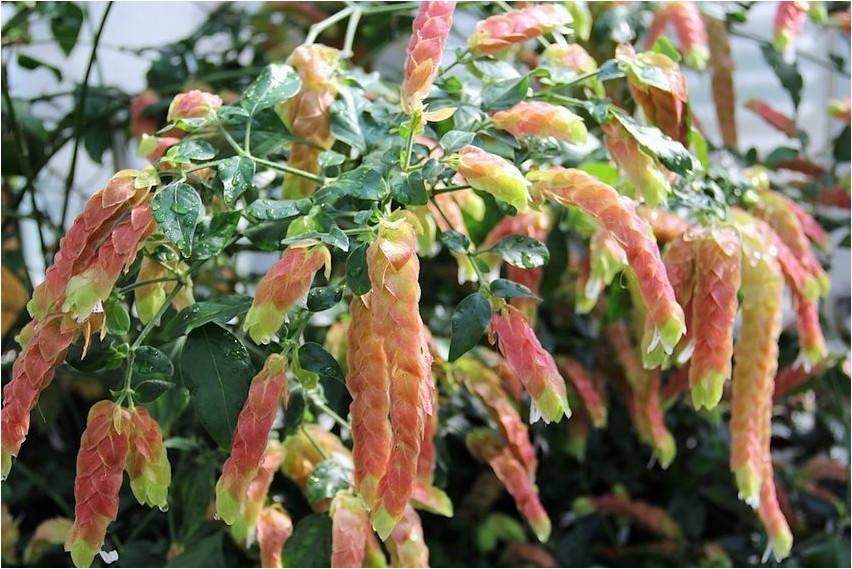
This is a herbaceous plant, evergreen, and in length it can reach about forty to fifty centimeters. This plant has small leaves, endowed with elongated oval shapes, and white perone also has small two-lipped flowers, painted in white tones. Such flowers are collected in rather dense inflorescences. However, the rather striking bracts, which come in both greenish and red tints, give this plant a special decorative appearance. The length of such bracts is about fifteen centimeters; they unfold downwards, while covering the flowers. In addition, there are also bracts of orange and yellow color, which are very similar to sea shrimp.
This plant is native to tropical and subtropical regions of America. As for the temperature, this plant can develop normally in a temperature range of approximately seven to twenty-eight degrees Celsius. In summer the plant needs abundant watering, but in winter it only needs to keep the soil slightly moist. Beloperone likes high air humidity, so regular spraying will be required. As for lighting, bright, diffused light is suitable for the plant. Reproduction of this plant occurs through seeds and using apical cuttings.
Growing and caring for beloperone
The plant should be placed in a well-lit place, however, without direct exposure to intense sunlight. As for the soil, the plant will need the following soil composition: turf and leaf soil, peat, humus and sand, taken in equal proportions. In addition, you will also need to add quite a bit of bone meal.
During the warm period, beloperone should be kept at a temperature of twenty-two to twenty-eight degrees, but in winter the temperature should be from ten to sixteen degrees, but the plant can withstand a temperature drop of up to seven degrees Celsius. From May to October you will need to place the pot with the plant in fresh air.

From spring to late autumn, it is recommended to provide the plant with abundant watering, but under no circumstances should waterlogging be allowed. In winter, watering is limited, but the earthen food should not be allowed to dry out.
As already mentioned, propagation of the plant occurs using seeds and cuttings. Seeds are planted in February-March, and the substrate should consist of a quarter of sand and one part of leaf soil. The temperature in the room where the seeds are located should be twenty to twenty-two degrees. After the seeds germinate, they should be planted in the following soil: sand, turf and leaf soil in equal proportions. In young plants, you will have to pinch off the very tops, which will greatly contribute to the intensive growth of the plant.
Under conditions of proper plant care, beloperone can bloom all year round. This plant grows and develops quite quickly, for this reason the white perone should be pruned regularly. The size of the bush should be maintained at approximately fifteen to twenty centimeters in height, with a diameter of no more than twenty centimeters. In addition, fertilizing with liquid mineral fertilizers is also required; this should be done once every fifteen to twenty days. The plant requires such feeding during the growing season, which lasts from March to the end of October.