Peony obovata
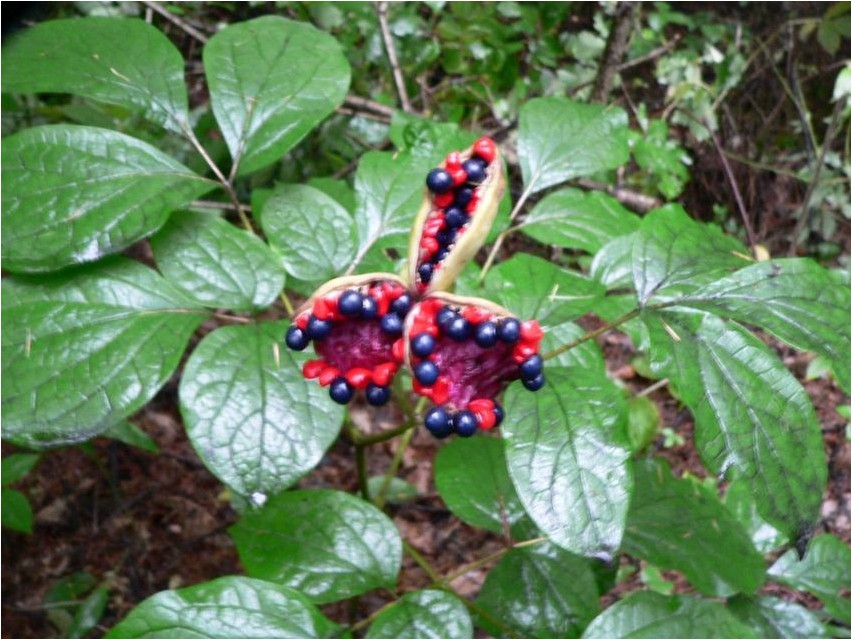
The peony obovata is a member of the peony family, and its Latin name is Paeonia obovata Maxim.
The family name of the peony obovata is Paeoniaceae Rudolphi.
Description of the Peony Obovata
The peony obovata, or obovate peony, is a perennial herbaceous plant that ranges in height from sixty to ninety centimeters. Its flowers are indehiscent and approximately two and a half centimeters across. The leaves of the peony obovata are quite dense, with a very glaucous underside. The terminal leaflet is oblong-obovate, almost twice as long as it is wide. The lateral leaflets of this plant are sessile. In the wild, this plant is found in the Daurian region of Eastern Siberia, as well as in the following regions of the Far East: Sakhalin, Okhotsk, Amur, and Primorsky. It prefers river valleys and birch and oak forests. It is noteworthy that the obovate peony is a very ornamental plant.
Description of the medicinal properties of the obovate peony
The obovate peony has very valuable medicinal properties, and its roots are recommended for medicinal purposes. These valuable medicinal properties are explained by the traces of alkaloids and flavonoids found in the roots.
In folk medicine, this plant is quite widespread. Traditional medicine recommends using a decoction made from the rhizomes of the obovate peony for hepatitis, various gastrointestinal ailments, and to improve appetite. A decoction made from the seeds and rhizomes of this plant is indicated for use as a very effective pain reliever, and is also used for gastralgia, body aches, gynecological diseases, headaches, eye and ear diseases.
A decoction prepared from the roots of Peony obovata should be used as an antipyretic, and is also used for asthma, cough and epilepsy. Powder based on the rhizomes of this plant should be sprinkled on wounds; in addition, such a healing agent can be added to the composition of a wound-healing ointment, which is used to treat various bone fractures.

In addition, it should be noted that the roots of this plant are present in Korean medicines used in the treatment of pneumonia, pleurisy and urticaria. It should be noted that the experiment showed that the rhizomes of this plant are endowed with a very effective anti-inflammatory effect, which will be similar to amidopyrine.
A decoction prepared from peony obovata seeds should be used for various eye and ear diseases.
When coughing, it is recommended to use the following very effective remedy based on this plant: to prepare such a healing remedy, you will need to take one tablespoon of crushed roots and rhizomes of peony obovata per glass of water. The resulting mixture should be boiled for about five minutes over low heat, then this mixture is left to infuse for two hours and filtered very carefully. Take this healing remedy based on peony obovata three times a day, half a glass or one third of it. When used correctly, this healing remedy will be very effective.
|VIDEO LESSON| Dry pastel – Yulia Fadyushina “Peony on a black background”





