Common Artemisia
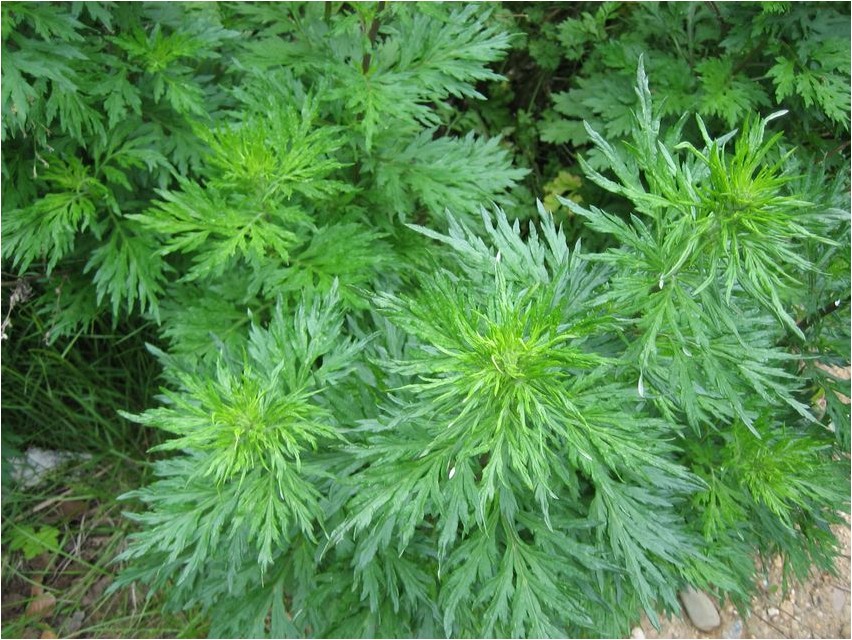
Common Artemisia is a member of the Asteraceae or Compositae family. Its Latin name is Artemisia vulgaris L.
As for the family name itself, the Latin name is Asteraceae Dumort. (Compositae Giseke).
Description of Common Artemisia
Common Artemisia is known by many common names: venichye belon, chernobyl, bylnik, wormwood, and forget-me-not. Common artemisia is a perennial herbaceous plant, reaching heights between 100 and 150 centimeters. This plant has a branched rhizome and somewhat pinnate, paniculate stems with reddish tones, which are appressed in the upper part. The leaves of common wormwood are alternate, large, and pinnately divided. These leaves are dark green above and whitish or grayish-tomentose below. The bracts are entire, while the stem leaves are sessile, with the lower leaves having petioles. The flowers of common wormwood are tubular, very small, and yellow, pink, or reddish in color. The outer flowers of this plant are female, while the inner flowers are bisexual. These flowers are collected in drooping or erect heads of twenty to forty. This results in the formation of a long, dense, paniculate inflorescence.
Wormwood blooms from June to August, while the fruits ripen in August and September. In the wild, this plant is found throughout Ukraine, Central Asia, the Caucasus, Belarus, and all regions of Russia. It prefers to grow along the banks of oxbow lakes, rivers, and ponds, in damp forest edges and clearings, under fences and building walls, in parks, vegetable gardens, courtyards, orchards, and among shrubs.
Description of the Medicinal Properties of Artemisia vulgare
Artemisia vulgare has valuable medicinal properties, and its roots, seeds, and herb are recommended for medicinal use. The herb includes the stems, flowers, and leaves. This medicinal herb should be harvested during July and August, while the roots are harvested in late autumn.
The presence of such valuable healing properties should be explained by the content of carotene, vitamin C, mucous and resinous substances, tannins, coumarins, saponins, essential oils and alkaloids in the composition of the herb of this plant. The roots of wormwood, in turn, will contain sugars, resins, mucous and tannins, as well as essential oil, which will contain dihydromatricariic acid ketone.

The herb of this plant in the form of an infusion will be endowed with a very effective analgesic, antiseptic, restorative, antipyretic, anthelmintic, diaphoretic and insecticidal effect, and such a healing agent will improve appetite and the activity of the glands of the gastrointestinal tract. In addition, such healing remedies based on wormwood will have the ability to suppress seizures and various colics, speed up labor, normalize sleep and the menstrual cycle, and will also have a calming effect on the nervous system. Homeopathy uses a decoction and infusion prepared from the rhizomes, herbs and seeds of this plant as a sedative, hypnotic and anticonvulsant for paralysis, epilepsy and convulsions.





