Raponticum uniflorum
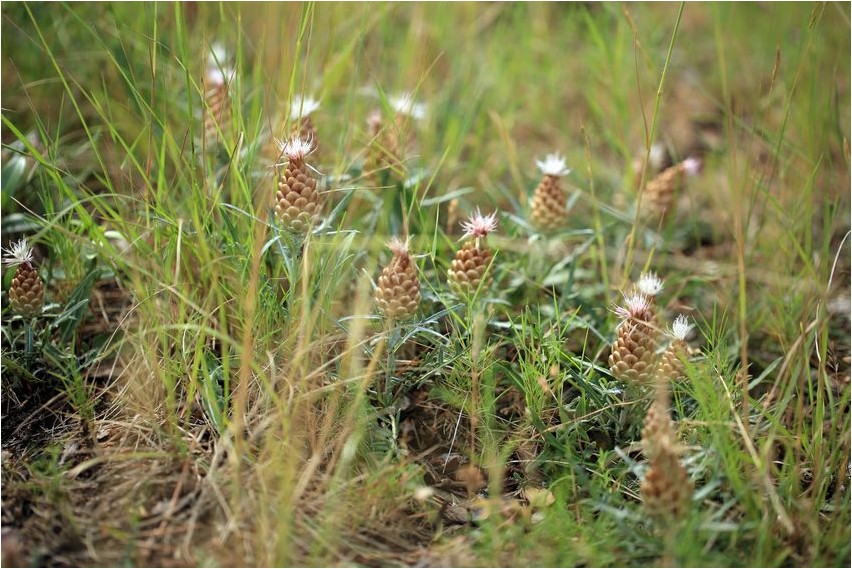
Rhaponticum uniflorum is one of the plants of the family called Asteraceae or Asteraceae; in Latin the name of this plant will be as follows: Rhaponticum uniflorum (L.) DC.
As for the name of the Raponticum uniflora family itself, in Latin it will be: Asteraceae Dumort. (Compositae Giseke).
Description of Raponticum uniflorum
Raponticum uniflorum is a perennial herbaceous plant, the height of which will vary between three and sixty centimeters. Such a plant will be endowed with a stem, cobwebby felt leaves, as well as large single and hemispherical baskets, the diameter of which will be about four to six centimeters. The involucre leaves of Raponticum uniflorum are glabrous, they are endowed with a blunt, leathery and spoon-shaped appendage, which in turn will cover the base of the leaflet. The corollas of this plant are painted in dark pink tones.
Under natural conditions, Raponticum uniflora is found in the territory of Primorye and Amur region in the Far East, as well as in Eastern Siberia. For growth, this plant prefers fallow lands, sandy river banks, forests, rocky soil and dry meadow-steppe slopes.
Description of the medicinal properties of Raponticum uniflorum
Raponticum uniflorum is endowed with very valuable healing properties, and it is recommended to use the rhizomes and grass of this plant for medicinal purposes. The term grass includes flowers, stems and leaves.
The presence of such valuable healing properties is recommended to be explained by the content of flavonoids, rubber, phytol, alkaloids and sesquiterpenoids in this plant.

As for traditional medicine, here this plant is quite widespread. Traditional medicine recommends using inflorescences and rhizomes as part of preparations for fevers, stomach tumors, vomiting, chronic and acute intestinal diseases. Fresh leaves of Raponticum uniflorum can be used externally as a wound healing agent. A decoction and infusion prepared from the inflorescence of this plant is indicated for use in treating muscle tumors and their atrophy.
In Tibetan medicine, an infusion based on the inflorescences and herb of Raponticum uniflorum is used: this healing agent is used as a wound-healing agent and is also used to regulate metabolic processes.
For muscle atrophy, it is recommended to use the following very effective remedy based on this plant: to prepare such a healing remedy, you will need to take one tablespoon of crushed dry inflorescences of Raponticum uniflorum in about one glass of boiling water. The resulting healing mixture should first be left to infuse for approximately two hours, after which this mixture must be filtered very carefully. Take this medicine based on Raponticum uniflora three times a day, two tablespoons, regardless of meals.
For gout, the following healing remedy is used: to prepare such a remedy, you need to take about three tablespoons of crushed dry herb Raponticum uniflora per two glasses of water. This mixture based on this plant is first boiled for five minutes, left for a couple of hours and filtered. This medicine is taken based on Raponticum uniflorum in the form of compresses and lotions. If prepared correctly, such a medicine will be very effective: the positive effect will be noticeable quite quickly, depending on the intensity of the disease.





