Callisia graceful
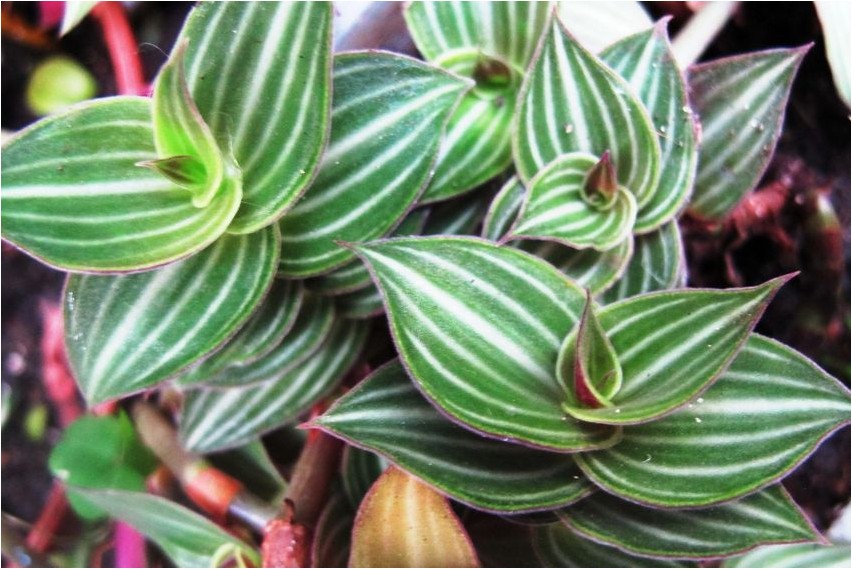
Elegant callisia is also known as callisia elegans; in Latin the name of this plant is as follows: Callisia elegans.
Callisia graceful is one of the plants of the family called Commelinaceae, in Latin the name of this family will be: Commelinaceae.
Description of callisia graceful
It should be noted that graceful callisia can hardly be called a particularly fastidious plant to care for. However, the air humidity should be maintained at an average level, and the plant should be watered abundantly throughout the entire summer period. As for the light mode, you can choose between sun and partial shade. The life form of the plant is a herbaceous plant.
Elegant callisia is quite often found in winter gardens, as well as indoors. When growing this plant at home, you can choose both eastern and western, as well as southern windows. In addition, quite often callisia graceata is used as an hanging plant in wall pots or in hanging baskets. The plant can also act as a ground cover crop in flowerpots containing other large plants: for example, dracaenas and ficuses.
In culture, shoots can reach a maximum height of about fifty centimeters.
Description of the features of care and cultivation of callisia graceica
The plant must be replanted regularly, either once a year or every two years. Due to the fact that the root system of callisia graceful is rather poorly developed, but at the same time has the ability to grow very quickly, when replanting, you should choose pots that will be wider than the previous ones. As for the composition of the soil mixture, it is recommended to combine one part of turf soil and sand, as well as two parts of leaf soil. The acidity of such soil should be slightly acidic.

Throughout the entire dormant period, it is important not only to maintain the temperature at about sixteen to twenty degrees, but also not to forget to water the plant in moderation. The dormant period occurs because air humidity and lighting are insufficient for this plant. The dormant period of callisia graceata begins in October and ends in February.
For the favorable development of callisia gracilis, it is important to ensure air humidity of more than sixty percent, because otherwise damage may occur through spider mites. It is highly undesirable to change the location of this plant relative to the light source. In addition, it is necessary to spray several times a day. It is also important to note that for the favorable development of callisia graceica and to extend the life of this plant, it is recommended to regularly prune and pinch the shoots. Shoots should be pinched once a year, but anti-aging pruning can be done every two to three years.
Reproduction of callisia graceica most often occurs through the upper part of the shoots. Such shoots should be placed in water; after about seven to ten days, new roots will appear. In addition, sometimes gardeners also reproduce by rooting lateral shoots, which, however, are not separated from the mother plant. It is extremely rare to propagate callisia graceica using seeds or dividing a bush.
It is important to remember that the plant should be carefully protected from direct sunlight. However, daylight hours should be about eight to ten hours. The shoots of this plant will need to be supported, and the air humidity should be maintained at approximately seventy to seventy-five percent.