Hydrangia paniculata
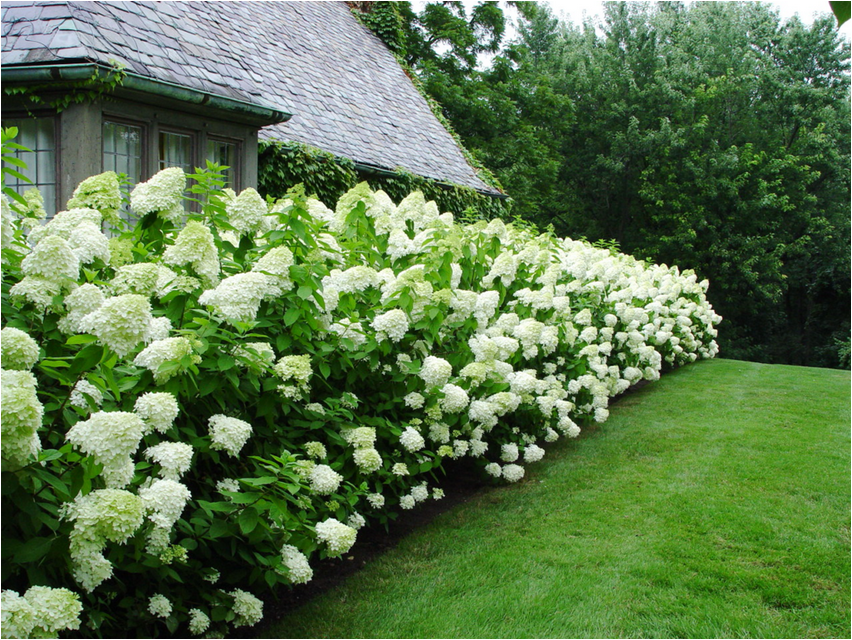
Hydrangia paniculata is one of the plants of the family called hydrangiaceae, and this plant is also known as hydrangea paniculata.
In Latin, the name of this plant will be as follows: Hydrangea paniculata Sieb. As for the name of the Hydrangea paniculata family itself, in Latin it will be: Hydrangeaceae Dumort.
Description of Hydangia paniculata
Hydrangia paniculata is an upright branched shrub whose height will be about six meters. This plant will be endowed with bare and slightly hairy shoots, which are colored in reddish-brown tones. The leaves of this plant are dense and broadly oval, they are dark green on top and lighter below. Also, the leaves of Hydangia paniculata are also endowed with dense, appressed hairs along the veins and sparse hairs over the entire surface, and the base will be either rounded or broadly wedge-shaped. The inflorescence of this plant is pyramidal and densely hairy, there are only ten stamens, the sepals of the marginal flowers will be entire.
Hydangia paniculata blooms from July to August, while the plant begins to bear fruit in September. Under natural conditions, this plant can be found in the Far East: namely in the south, the Kuril Islands and Sakhalin, as well as in Japan. For growth, this plant prefers coastal mountain forests and forest edges. It is noteworthy that hydrangia paniculata is also an ornamental plant, which is often grown in gardens and parks in both Russia and Ukraine.
Description of the medicinal properties of Hydangia paniculata
Hydrangia paniculata or Hydrangea paniculata is endowed with quite valuable healing properties, and it is recommended to use both the flowers and roots of this plant for medicinal purposes. The presence of such valuable medicinal properties is explained by the content of the plant alkaloid febrifugin, carbohydrates, rubber, as well as the following flavonoids: rutin, quercetin, luteolin, cyanidin and kaempferol. In addition, the plant will also contain coumarins such as ellagic acid, hydrangethin and umbelliferone in the hydrolyzate. The phloem of Hydangia paniculata also contains coumarins, namely neohydrangine, and the seeds of this plant will contain alkaloids.
A decoction prepared from the roots of this plant has a diuretic effect. Preparations prepared from the dried flowers and roots of various types of hydrangea paniculata have become quite widespread in Chinese medicine. Here such drugs are used for malaria, dyspepsia, sore throat, tonsillitis, as well as for various heart diseases. As for the external use of this plant, it is used for pustular skin diseases and toxicoderma, and also as an antiparasitic agent.

An infusion based on hydrangea or paniculata hydrangea is very effective as a diuretic. To prepare such an effective remedy, you will need to take about ten or twelve grams of crushed roots of this plant per approximately one glass of water. The resulting mixture should be left to boil for one hour, and then this mixture should be filtered very carefully, after which the volume of the mixture is brought to the initial volume by adding boiled water. It is recommended to take approximately two tablespoons of this remedy three times a day.
It should be noted that the healing properties of hydrangia paniculata have not yet been fully studied.


