Meadowsweet naked
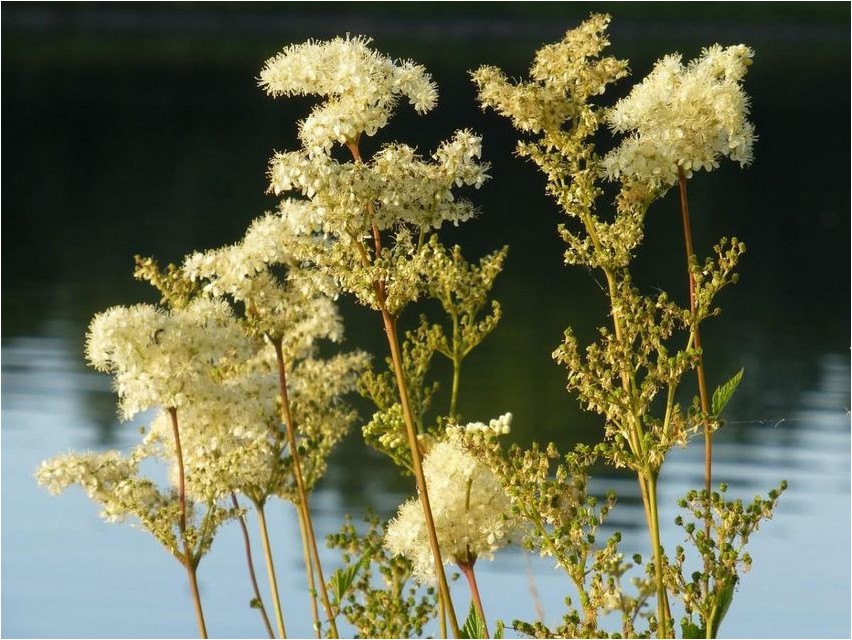
Meadowsweet naked is one of the plants of the family called Rosaceae; in Latin the name of this plant will be as follows: Filipendula denudata (J. et C. Presl.) Frisch.
As for the name of the naked meadowsweet family itself, in Latin it will be: Rosaceae Juss.
Description of naked meadowsweet
Naked meadowsweet is a perennial herbaceous plant whose height will vary between one and two meters. The rhizome of this plant is creeping; its stems can be either branched or simple. Such naked meadowsweet stems will be bare, densely leafy, hard and ribbed. The leaves of the naked meadowsweet are dense and intermittently pinnate, on both sides they will be colored green, but below they will be either bare or, most often, hairy only along the veins. The flowers of this plant are in a rather dense paniculate inflorescence up to twenty centimeters in length; they will be small in shape and quite numerous. The diameter of such flowers will be about six to eight millimeters, they will also be endowed with a very fragrant smell. There are only five or six petals of naked meadowsweet; they are obovate, endowed with a rather long nail and painted in yellow-white tones. The length of the fruits of this plant is three to four millimeters; they will be bare and spirally twisted.
The naked meadowsweet blooms from June to August. Under natural conditions, this plant is found in the Caucasus, Belarus, Ukraine, the European Arctic and all areas of the European part of Russia, with the exception of the Lower Don, Lower Volga and Black Sea regions. For growth, this plant prefers swamps, meadows, forests, shores of lakes and oxbow lakes, as well as shaded areas.
Description of the medicinal properties of meadowsweet
Meadowsweet is endowed with very valuable healing properties, and it is recommended to use the grass and roots of this plant for medicinal purposes. The term herb includes the flowers, leaves and stems of the naked meadowsweet.
The presence of such valuable healing properties should be explained by the content of flavonoids and tannins in the composition of the herb and rhizomes. The flowers of naked meadowsweet will contain essential oil, which contains numerous aromatic compounds: vanillin, flavonoids, ethyl benzoate, benzyl alcohol, benzaldehyde and heliotropin.

A decoction and alcoholic extract of this plant exhibit antiulcer activity and also possess valuable sedative properties. Powdered dried herb and a decoction prepared from the rhizomes of Meadowsweet have a very effective wound-healing effect. The juice of the leaves of this plant has anti-inflammatory properties.
For neuroses, the following remedy based on this plant is recommended: to prepare this remedy, take one teaspoon of crushed Meadowsweet rhizomes per 200 milliliters of water. Boil the resulting mixture for approximately three to four minutes, then let it steep for two hours, after which it is thoroughly strained. Take one tablespoon of this healing remedy based on Meadowsweet four times daily. The following remedy based on this plant is used as a wound-healing agent: a decoction prepared from the rhizomes and herb of the naked meadowsweet is recommended for compresses and lotions.
Easy-to-grow flowers for the garden: Meadowsweet. Garden World website





