Kulbaba bristly
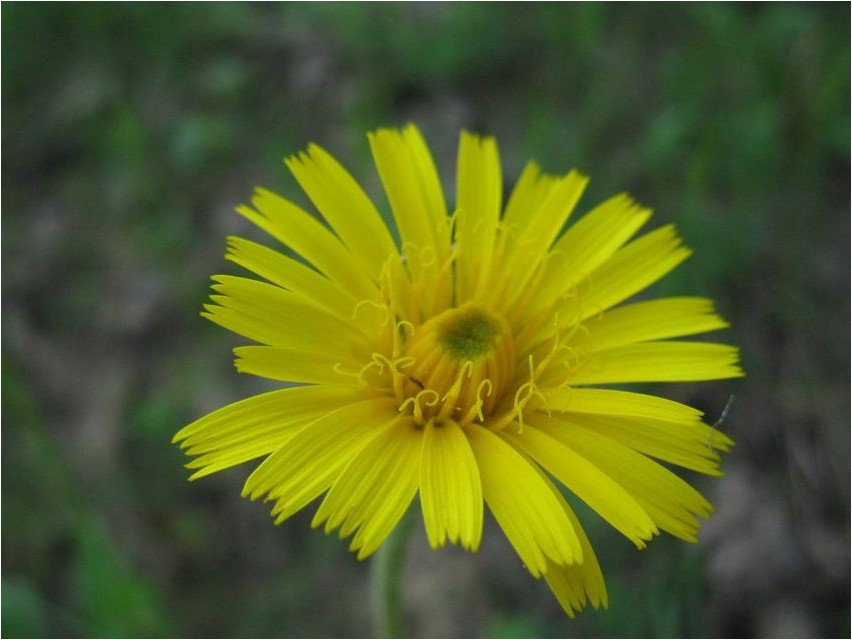
The bristly kulbaba is one of the plants of the family called Asteraceae or Asteraceae; in Latin the name of this plant will be as follows: Leontodon hispidus L.
As for the name of the bristly kulbab family itself, in Latin it will be like this: Asteraceae Dumort.
Description of bristly kulbaba
Bristle kulbaba are perennial herbaceous flower stalks, the height of which will vary between ten and sixty centimeters. The rhizome of this plant is short and as if chopped off; it can be either horizontal or almost vertically directed downwards. Such a rhizome will be endowed with numerous thread-like roots, the arrow will be straight, the height will be ten to sixty centimeters. The arrow is rough and the bottom can sometimes be colored pinkish. The length of the basal leaves is about five to twenty centimeters, and the width is one to three centimeters. Such leaves of bristly kulbaba will be oblong, and on the lower surface they will be endowed with numerous pinpoint pits. During flowering, the baskets are erect, but during flowering they will droop. The length of such baskets is equal to a centimeter or three centimeters, and the tongues will be painted in yellow tones. The length of the achenes of the bristly kulbab is about four to six millimeters, they will be spindle-shaped and colored in light brown tones.
This plant blooms from June to August. Under natural conditions, bristly kulbab is found in Ukraine, the European Arctic, Moldova, the Caucasus, Belarus and the following regions of the European part of Russia: Volga-Kama, Zavolzhsky, Lower Don, Volga-Don, Ladoga-Ilmensky, Karelo-Mkurmansky, Baltic and Dvinsko-Pechora regions.
Description of the medicinal properties of bristly kulbab
The bristly kulbaba is endowed with very valuable healing properties, and the herb of this plant should be used for medicinal purposes. The concept of grass includes the stems, flowers and leaves of the bristlecone.
The presence of such valuable healing properties should be explained by the rubber content of this plant, while tocopherol will be present in the flowers of the bristly kulbaba, and the seeds contain fatty oil.

Infusion and decoction prepared from the herb of this plant are recommended for use for various diseases of the gallbladder. In the form of rinses, such healing agents are used for toothache. It is noteworthy that the leaves of bristly kulbaba can also be used for preparing salads.
For cholecystitis, it is recommended to use the following very effective remedy based on this plant: to prepare such a remedy based on bristly kulbaba, it is recommended to take one tablespoon of crushed dry herb of this plant per glass of water. The resulting mixture should be boiled over low heat for about three to four minutes, after which this mixture based on bristly kulbaba should be infused for two hours and filtered very carefully. Take this healing remedy three times a day, one-third or one-fourth of a glass.
For rinsing with toothache, you should use the following remedy based on bristly kulbab: to prepare such a remedy, you will need to take three tablespoons of crushed herbs of this plant per two glasses of boiling water. The resulting healing mixture should be infused for about one to two hours, after which this mixture based on bristly kulbaba is filtered very carefully.





