Cupyr butenefolia
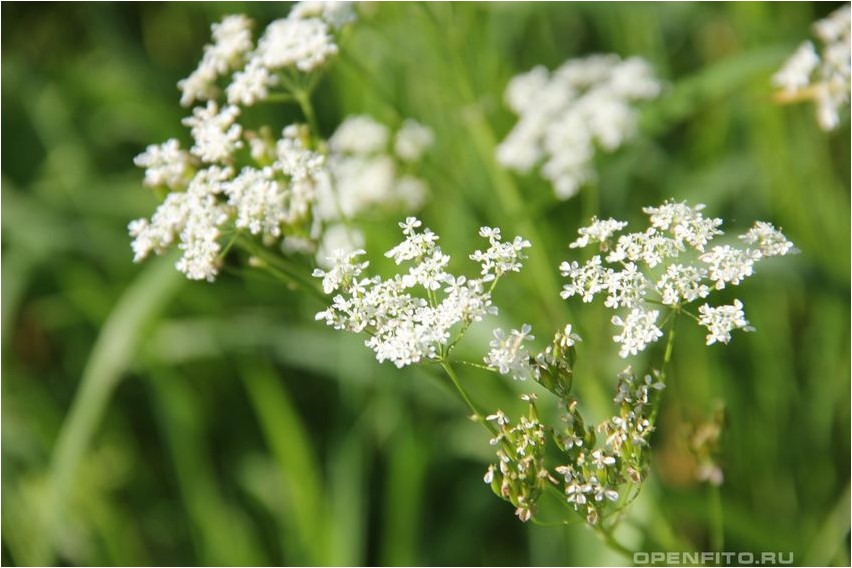
Butaneleaf rose is one of the plants of the family called Umbellaceae; in Latin the name of this plant will be as follows: Anthriscus cerefolium (L.) Hoffm.
As for the name of the butenefolia family itself, in Latin it will be: Apiaceae Lindl.
Description of butenefolia
Butaneleaf sedum or chervil oleracea is an annual herbaceous plant, the height of which will vary between fifteen and fifty centimeters. The root of this plant is spindle-shaped and thin, it can be either ascending or straight. The stems of the buthenfolia are straight, almost from the very base they will be branched, at the nodes they are short-haired, and under the nodes they will be slightly swollen. In outline, the leaves of this plant will be either triangular or triangular-ovate in shape, and are also triply pinnately dissected. Umbrellas of buteneleaf sedum are endowed with three to eight rays; during flowering they will reach about one and a half to two and a half centimeters in diameter. The length of the petals of this plant is about one millimeter and they will be painted in white tones. The fruit of the buteneleaf sedum is linear-oblong, its length will be about seven to ten millimeters, and its thickness will be equal to one millimeter, while the fruiting flowers in the umbrella can be from four to six pieces.
Buthenleaf sedum blooms during the period from April to May. Under natural conditions, this plant is found in the Baltic states, Belarus, Moldova, Central Asia, the Caucasus, the Dnieper region of Ukraine, as well as the Ladoga-Ilmen region of the European part of Russia. For growth, the plant prefers garbage places, gardens, shady gorges, places among bushes and sparse forests.
Description of the medicinal properties of butenefolia
Butaneleaf sedum is endowed with very valuable healing properties, and it is recommended to use the grass, fresh juice and fruits of this plant for medicinal purposes. The concept of grass includes the leaves, flowers and stems of the sedum.
The presence of such valuable healing properties should be explained by the presence of essential oil in the herb of this plant, which will contain beta-phellandrene, methyl chavicol, osmorisol, anethole, beta-pinene and octanol. The leaves of the buteneleaf plant contain polyacetylene compounds, vitamin C, apigenin and luteolin. The fruits of this plant contain essential oil, which will contain the following acids: oleic, petroselic, stearic, linoleic and palmitic acids.

In the Caucasus, an infusion prepared from the leaves of this plant is used as an anti-inflammatory, expectorant, diuretic, and locally this remedy is used for hemorrhoids. To prepare whey, it is recommended to use fresh juice of the buteneleaf plant.
It is noteworthy that in everyday life the leaves of this plant can be used as a spice for preparing various soups and salads. Infusion and decoction prepared on the basis of the leaves of the buteneleaf plant have become quite widespread in Western Europe. Such medicinal products are used as a diaphoretic, wound-healing, stimulant and diuretic. The leaves of this plant are also included in preparations intended for the treatment of tuberculosis, scrofulosis and eczema. A decoction prepared from the fruits of the buteneleaf marigold is recommended for use in cases of flatulence.





