Gentian macrophylla
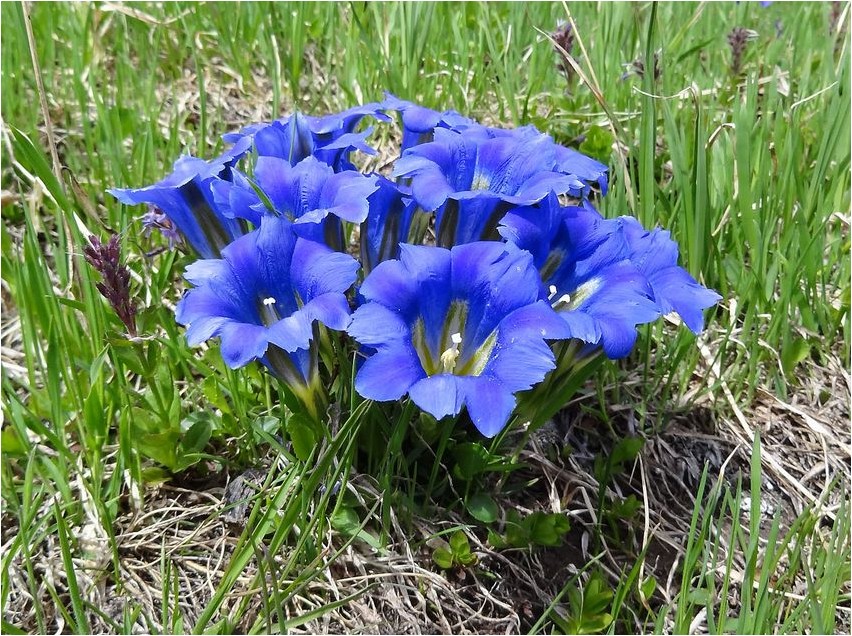
Gentian large-leaved is one of the plants of the family called Gentianaceae; in Latin the name of this plant will be as follows: Gentiana macrophylla Pall.
As for the name of the large-leaved gentian family itself, in Latin it will be: Gentianaceae Juss.
Description of Gentian macrophylla
Gentian large-leaved is a perennial herbaceous plant, the height of which will be about forty to seventy centimeters. The leaves of this plant are quite large, their length will be about fifteen to forty centimeters, and the width will range between fifteen and thirty centimeters. The basal leaves of gentian macrophylla form rosettes on the lateral branches of the rhizome. The stems of this plant are thick and can be either straight or slightly erect. The flowers are colored in intense blue-violet tones, and their length will be about fifteen to twenty millimeters.
Under natural conditions, this plant can be found in Western and Eastern Siberia, as well as in the Far East: namely in Primorye and Amur region. For growth, large-leaved gentian prefers meadow slopes, forest edges, steppes, river valleys and meadows. It should be noted that this plant is also a honey plant.
Description of the medicinal properties of gentian macrophylla
Large-leaved gentian is endowed with very valuable healing properties, and it is recommended to use the rhizomes, leaves and grass of this plant for medicinal purposes. The term herb includes the stems, flowers and leaves of Gentian macrophylla.
The flowers of this plant contain coumarins, flavonoids, as well as the following alkaloids: gentianidin and gentianin. In China, the herb of this plant in various preparations is recommended for use in the treatment of epidemic flu. Also in Chinese medicine, a decoction prepared from the rhizomes of Gentian macrophylla is used as a diuretic for nephritis and stroke, as well as for rheumatism and jaundice. In addition, such a remedy will also be effective as a pain reliever.

As for traditional medicine, it is recommended to use tincture of gentian macrophylla rhizomes as a remedy that will improve digestion, and also as a remedy that enhances potency. Moreover, in Tibetan medicine, a decoction of the rhizomes and herbs of this plant is used for gastritis and gastrointestinal diseases, and also as an antipyretic. In addition, tincture of the roots and rhizomes of gentian macrophylla is drunk for fever, dysentery, female diseases, stomach and intestinal colic, as well as for diarrhea, before and after childbirth.
A decoction of the herb of this plant has a hemostatic effect, which has been confirmed experimentally. In addition, a decoction of gentian macrophylla exhibits histamine-like activity and is endowed with choleretic properties. In an experiment, an infusion of the herb of this plant is able to regulate the secretory and excretory functions of the stomach. Ointment from the herb of this plant will have a wound-healing and anti-inflammatory effect, which is especially important for frostbite and burns.
In folk medicine, infusion and decoction of the herb gentian macrophylla is considered an effective remedy for neurasthenia, amenorrhea, hypertension, pulmonary tuberculosis and uteroptosis. As for topical use, this plant is used as a poultice for breast infiltration. In Tibetan medicine, an infusion of the herb of this plant is used to treat respiratory diseases, as well as cholecystitis and chronic gastritis.