Cynodon dactylon (L.) Pers.
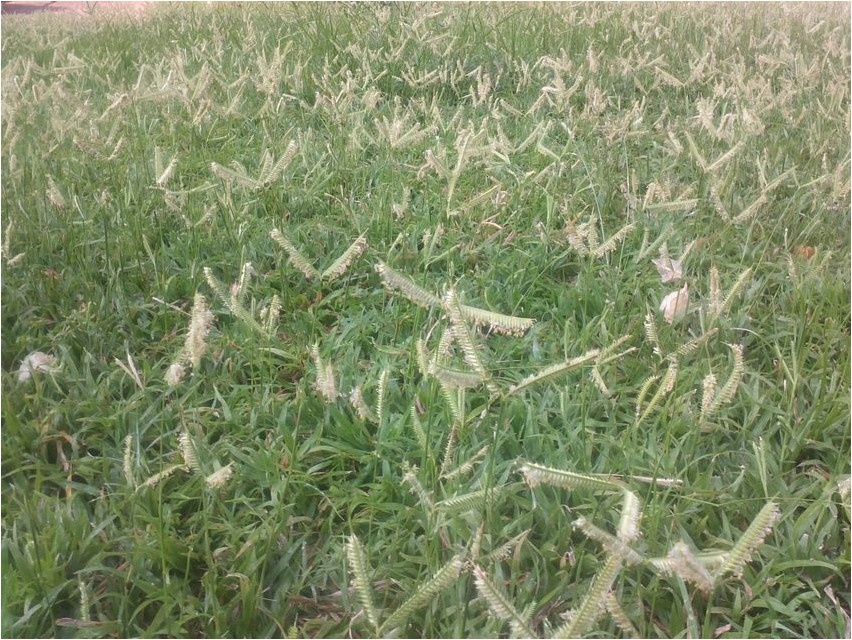
The Latin name for Cynodon dactylon (L.) Pers.
Description of Cynodon dactylon
Cynodon dactylon (L.) Pers. is a perennial plant, reaching heights between ten and fifty centimeters. Its rhizome is long, branched, and creeping. Its stems are ascending, branched at the base. Its leaves are glaucous, linear-lanceolate, and either stiff or soft, with a ciliated ligule. Its inflorescence has only three to eight branchlets, and the spikelets are ovoid. The flowering period of the common rhododendron lasts from July to August. In the wild, this plant is found in Crimea, Central Asia, the Middle Dnieper and Black Sea regions of Ukraine, the Irtysh and Upper Tobol regions of Western Siberia, and the following regions of European Russia: the Lower Volga, Black Sea, and Lower Don. In terms of general distribution, this plant is found in the Balkan Peninsula, northwest China, Mongolia, Central Europe, Asia Minor, the Mediterranean, Afghanistan, Armenia, Irina, and Kurdistan. Common rhododendron prefers mountains, plains, sandy areas, and areas overgrown by cattle. It is noteworthy that this plant can often become a noxious weed. Description of the medicinal properties of the common hogweed
The common hogweed possesses valuable medicinal properties, and the entire above-ground portion of this plant and its root shoots are recommended for medicinal purposes.
This plant is quite widespread in China. A decoction prepared from approximately fifteen to thirty grams of the herb and thirty to sixty grams of the common hogweed root is recommended for dysentery, nosebleeds, rheumatic bone pain, upper respiratory infections, lower extremity edema, liver inflammation, hemiplegia, hematemesis, urinary tract infections, nosebleeds, hemoptysis, urticaria, blood in the stool, rheumatic bone pain, various injuries, and paralysis of the arms and legs.
As for the external use of this plant, fresh leaves of the palm plant, crushed to a pasty mass, should be used in the form of a patch for small ulcers on the legs, bone fractures, small incised wounds and carbuncles.
It should be noted that pigweed is a drought- and salt-tolerant plant. It is noteworthy that this plant is used as a fodder in semi-desert and desert zones, in particular, this will apply to the sheep breeding zone.

In folk medicine of different countries, hogweed has become quite widespread. Such a plant will be endowed with a weak hypotensive effect, laxative and diuretic effects. However, it is important to note the fact that scientific research on this medicinal plant is quite sparse and even the chemical composition of pigwort is not yet fully understood. For this reason, it is quite possible that new ways of using this medicinal plant will emerge, because it is endowed with quite a lot of medicinal potential.
Finding a pig on the lawn
Pig palmate





