Allium cernuum (Latin: Allium cernuum)
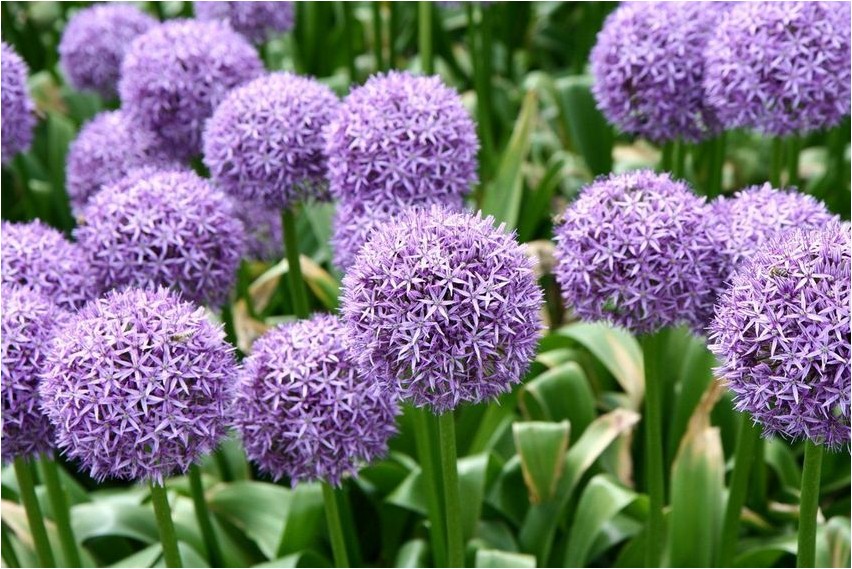
Allium cernuum (Latin: Allium cernuum) is a member of the Onion genus of the Onion family. It is a beautiful ornamental plant used in garden landscaping and cooking. It is used to decorate rockeries, alpine gardens, and other rock gardens. It is native to the prairies and forests of North America.
Crop Description
Allium cernuum is a perennial plant with an elongated, conical bulb up to 15 mm in diameter. The leaves are green, flat, linear, up to 30-35 cm long, with pronounced parallel venation, gathered in a rather voluminous, fan-shaped rosette at the base. The flowers are white or pink, gathered in drooping umbels. The anthers are yellow, longer than the corolla. The peduncles are up to 50 cm long. The seeds are dark brown or black and small. Onion bulbs bloom in July-August, and in regions with hot climates, flowering begins in June. In central Russia, onion bulbs produce a small number of seeds, forming sterile flowers. The bulb and leaves have a characteristic aroma; only the young leaves are used for cooking, and they are used in various salads and other dishes along with parsley and dill.
Growing Tips
Like most members of the onion genus, this plant loves light. The intensity of leaf and flower color depends on the level of light. Well-drained, breathable, loose, fertile, and moderately moist soils are desirable. A pH of 6. 8-7. 0 is preferred. Highly acidic soils should be limed beforehand.
Before planting onions, careful site preparation is important, including removing last year”s plant debris, tilling the soil, and adding well-rotted compost and mineral fertilizers. Micronutrient feeding is also recommended; it has a positive effect on the subsequent development of the plant. Leaning onions are propagated by seeds, bulblets, or cuttings. Although the seeds are very small, they have a high germination rate. When grown from seed, onions bloom in the third year, rarely in the second. Leaning onions can thrive in one location for up to five years, after which they require division and replanting.
Leaning onions can be grown alongside other ornamental onions, annual and perennial flowers. Leaning onions also pair well with vegetables and herbs. Besides their ornamental properties, they also act as a protector, repelling insect pests with their scent.
Sowed and planted onions should be in early spring; autumn planting is also acceptable. The first feeding is carried out at the time of planting or in the spring after the snow melts, then during the formation of buds and the formation of bulbs. At the end of summer, you can carry out final fertilizing; it will make future wintering easier.
In addition to fertilizing, inclined onions need rare and moderate watering, weeding and loosening of rows. After planting, it is recommended to mulch the soil around the plants with pebbles, film or gravel. It is undesirable to use organic material, as it is susceptible to attack by slugs, worms and other unpleasant guests. In addition, organic mulch acidifies the soil, which is contraindicated for this onion.

Application
As mentioned above, bowed onions are widely used in cooking. However, the plant is most often found as an ornamental crop. Its bright, bewitching and spectacular inflorescences fit perfectly into any gardens and flower beds. The plant looks especially harmonious in rocky gardens, as well as ridges, flower beds and mixborders.
Decorative bows