Pereskia spinosa
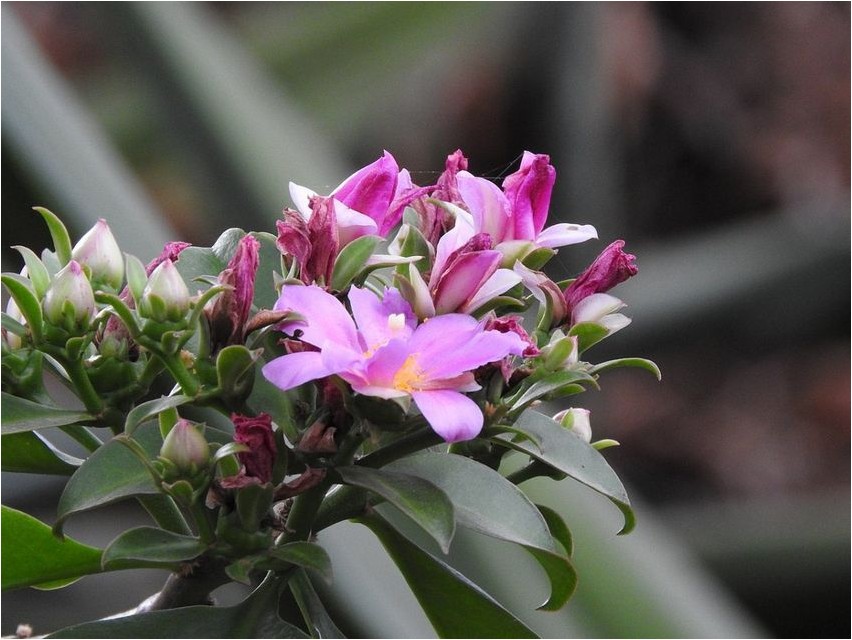
Pereskia aculeata is also known as Pereskia aculeata; in Latin the name of this plant would be Pereskia aculeata.
Pereskia spinosa is one of the plants of the family called cactaceae, in Latin the name of this family will be: Cactaceae.
Description of Pereskia spinosa
For favorable cultivation of this plant, it is recommended to provide an optimal light regime, either partial shade or full sun. As for the degree of air humidity, it should be kept at an average level. The life form of this plant is a semi-deciduous shrub. Pereskia spinosa can be very often found indoors, and the plant can grow on windows of any orientation. However, when the bush is endowed with a very dense crown, as well as rather dense, fleshy leaves, it is recommended to place such a plant on the sunny side. It should also be noted that achieving maximum decorativeness of this plant is important only if it is grown in greenhouses.
As for the maximum size in culture, the height of Pereskia spinosa can reach about three meters.
Description of the features of care and cultivation of pereskia prickly
In order for this plant to develop favorably, a transplant will be required, which should be done in the spring. Such a transplant is necessary for the plant as it grows, and it is recommended to use larger pots. After the transplant has been carried out, you should tie the pereskia thorny to a reliable support and do not water it for several days. In this case, such a pot should be in a damp place, which will be reliably protected from direct sunlight.
As for the composition of the soil mixture, it should be quite heavy and nutritious soil, which at the same time will have the ability to pass water. Such soil should consist of coarse sand and clay soil, as well as a small amount of humus. The acidity of the soil should remain slightly acidic.

It should be noted that Pereskia spinosa will grow very quickly and intensively, gradually filling all the available space. The young shoots of this plant bear spines, which are hook-shaped and have the ability to cling to literally everything around. Among other things, full development, as well as flowering of Pereskia spinosa, is possible only in adulthood and if grown in greenhouses.
Throughout the entire dormant period of this plant, it is important to maintain the temperature between twelve and fifteen degrees Celsius. Pereskia prickly will need to be watered infrequently, and air humidity should be kept at a moderate level. The rest period will begin in November and continue until March.
Reproduction of this plant occurs through mature cuttings that have not yet become woody. Such cuttings should be rooted in a moist and loose substrate.
The specific requirements of Pereskia spinosa include the fact that the plant will be extremely responsive to both frequent spraying and washing under running water. Pereskia spinosa will also require regular feeding, both root and foliar. Such fertilizing should be a solution of complex mineral fertilizers taken in low concentration. To form a crown, this plant should be tied up, as well as shoots pruned. It is recommended to prune weak shoots that grow inside the crown.