Chloranthus
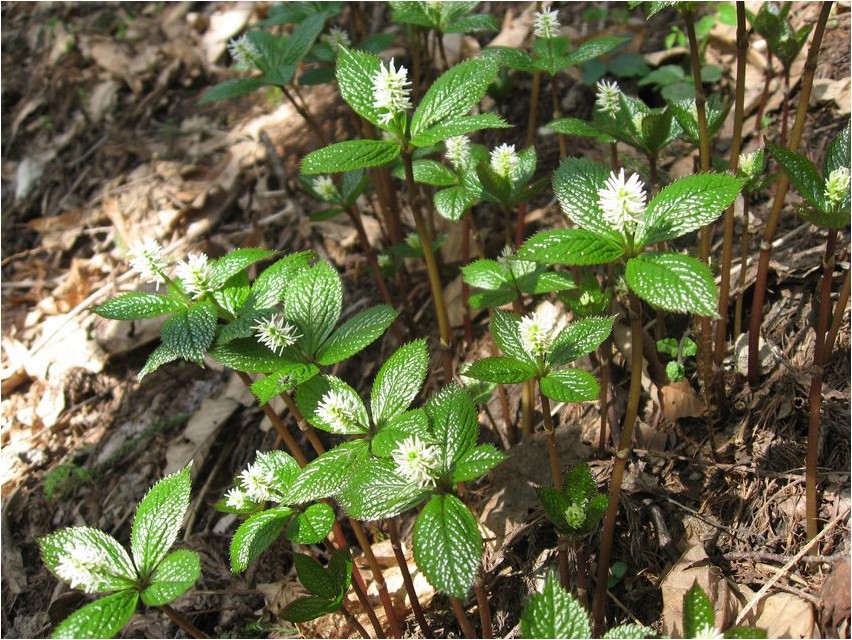
Chloranthus is a small genus of flowering plants belonging to the Chloranthaceae family.
The genus includes approximately two dozen species. Another common name is greenflower. In the wild, the plant can be found in Asian countries, as well as on the Kuril Islands and in the Amur region. Representatives of the genus are actively used in traditional medicine, and some are used as a flavoring for tea.
Cultural Characteristics
Chloranthus is represented by annual and perennial herbaceous plants, and less commonly by subshrubs and low-growing trees. They are characterized by opposite green foliage and flowers lacking sepals and petals. The flowers, in turn, are collected in loose, spike-shaped inflorescences. The fruits are fleshy, spherical drupes. Chloranthus serratus is a perennial plant growing to a height of no more than 60 cm. It is characterized by erect stems topped with opposite, oval-shaped foliage with oval tips. The flowers are small, snow-white, and unattractive, blooming in the spring. In the wild, this species is found in Russia and Japan.
Chloranthus japonicus is a perennial, low-growing plant growing to a height of about 25 cm. It is characterized by erect stems covered with serrated, oval-shaped foliage with a glossy surface. The flowers are small, white, and inconspicuous, gathered in small inflorescences that are very reminiscent of horsetail. Chloranthus erectus is a perennial plant that forms a subshrub reaching 200 cm in height. It has rounded, bare stems bearing opposite, broad, elliptic, or obovate petiolate leaves. The flowers are small, white, and adorned with triangular or ovate bracts.
Chloranthus spicatus is a perennial plant that grows as a prostrate subshrub just over half a meter tall. It has cylindrical, bare stems topped with opposite, petiolate, elliptic, toothed-serrate, pale green foliage. The flowers are small and inconspicuous, gathered in spike-shaped inflorescences that form large panicles.
Use In Russia, representatives of the genus are used in folk medicine; in Japan and China they are prescribed in the pharmacopoeia (a collection of official documents establishing standards for the quality of medicinal raw materials). Numerous studies have shown that chlorant is effective in combating fever and pain. In addition, it is endowed with antibacterial and anti-inflammatory properties.

Most often, plant rhizomes are used for medicinal purposes. In particular, this aspect concerns the following types: Japanese, serrated and erect. The rhizomes are dug up closer to autumn, they are dried, and then stored in a dark, dry place. It is important to remember that rhizomes have a rather pronounced aroma, which means they cannot be stored in combination with products that actively absorb odors.
Flowers and foliage are also medicinal raw materials, however, they are collected only from the following species: erect, Henry, Fortune. They, in turn, are laid out for drying in late spring – early summer. They also have a rather distinct aroma. It is worth noting that some types of chlorant are classified as poisonous and should be taken only after consultation with a specialist.
Today, chlorant is used to treat liver cancer. It is often recommended as an antipyretic, and its effectiveness is comparable to the popular paracetamol. Chlorant is also used externally as an antifungal agent in the form of lotions. Decoctions and tinctures of alcohol are taken as a diaphoretic, antitussive, antitumor agent, and are often used for colds and flu.
Japanese chlorant. Brief overview, description of characteristics, where to buy chloranthus japonicus seedlings
Chlorant chlorant





