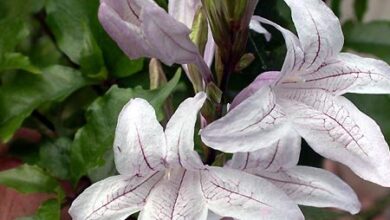
Callistemon lemon
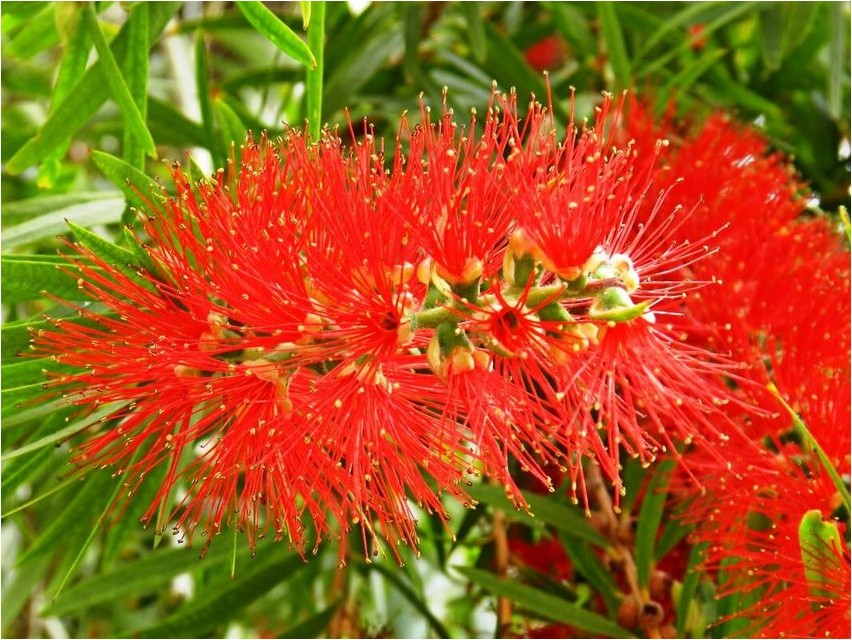
Callistemon lemon belongs to the family called Myrtaceae. In Latin, the name of this plant is as follows: Callistemon citrinus.
As for the name of the family itself, in Latin it will be: Myrtaceae.
Description of Callistemon lemon
It is worth noting that not much effort is required for the favorable development of this plant. As for the light mode, it should be sunny. In the summer, the lemon callistemon should be provided with fairly abundant watering, and the air humidity should be kept at an average level. The life form of lemon callistemon is an evergreen shrub.
This plant can be found not only in greenhouses, but also in rather cool winter gardens. As for indoor conditions, the maintenance of this plant seems quite problematic, due to the fact that the plant requires very cool conditions throughout the winter. The maximum size of this plant will be about three meters in height.
Description of the features of growing and caring for lemon callistemon
It should be noted that for the favorable development of this plant, it will be necessary to replant the plant approximately every two to three years, however, this only applies to young plants. Older lemon callistemons should be replanted once every three to four years, but it is important to replace the top layer of soil every year by about five centimeters. When replanting a plant, it is important to use larger pots or tubs. As for the composition of the soil, you will need to combine one part of leaf soil and sand, as well as two parts of turf soil. The acidity level of this soil can be either neutral or slightly acidic.
If we talk about possible problems with growing this plant, it is important to remember that flowering may not occur if the lighting is insufficient, as well as if there are disturbances in the temperature regime. In some cases, lemon callistemon can be damaged by whiteflies, spider mites and aphids.

Throughout the entire rest period, the temperature should be maintained at approximately ten to fifteen degrees Celsius. During this entire time, watering should be provided in a moderate mode, and air humidity should also remain average.
It is important to remember that lemon callistemon does not tolerate even the slightest stagnation of water. For this reason, it will be necessary to provide regular watering, which will be moderate, however, drying out the substrate should also not be allowed under any circumstances.
As for the degree of air humidity, the plant is not particularly demanding. However, if conditions become excessively dry, the plant will be affected by spider mites. It is noteworthy that the resting period of lemon callistemon will last from October to February.
As for fertilizing, starting from the spring and ending in the fall, it is important to fertilize with complex fertilizers, which have a fairly low phosphorus content.
Reproduction of lemon callistemon occurs through rooting cuttings, in which case the soil temperature should be kept at approximately twenty to twenty-five degrees Celsius. In this case, stimulants should also be used.
It is important to form the crown of this plant by pinching. In the summer, it is recommended to move the pot with the plant to the open air, which is due to the fact that lemon callistemon does not like a stagnant atmosphere. Not only the flowers, but also the leaves of this plant are endowed with decorative properties.