Primrose tall
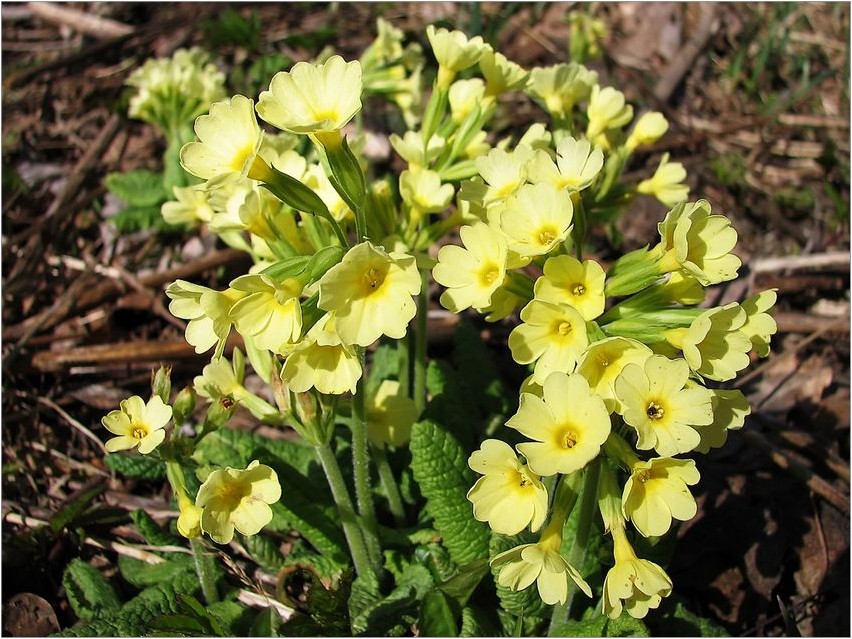
The tall primrose is one of the plants of the family called primroses; in Latin the name of this plant will be as follows: Primula elatior (L.) Hill.
As for the name of the tall primrose family itself, in Latin it will be like this: Primulaceae Vent.
Description of the tall primrose
The tall primrose is a perennial herbaceous plant, endowed with basal leaves, the height of which will fluctuate between ten and thirty centimeters. All leaves of this plant are rosette, and their blades will be strongly wrinkled; these leaves can be either broadly ovate or oblong-ovate. Along the edges, the leaves of the tall primrose can be either serrated and crenate, or almost entire, and at the base such leaves are heart-shaped. The petals of the flowers of this plant will be wide open, they are colored in light yellow tones, while the sepals will be tightly pressed to the flower tube itself. The calyx of the tall primrose is narrow, cylindrical, five-lobed and it is endowed with lanceolate sharp lobes. The corolla of this plant, in turn, will be endowed with a cylindrical tube, it expands at the very place where the stamens are attached, and also such a corolla is endowed with a flat five-parted limb, it is painted in light yellow tones, and at the pharynx is bright yellow. There are only five stamens of the tall primrose, while the ovary is superior, and the style is endowed with a capitate stigma. The fruit of this plant is a capsule protruding from the calyx, which will open at the top with teeth. The seeds of the tall primrose are quite small in size, they are covered with small grooves and are colored blackish-brown.
This plant blooms in the spring. Under natural conditions, tall primrose is found on the territory of Moldova and Ukraine. For growth, this plant prefers meadows, edges of deciduous forests and hills.
Description of the medicinal properties of high primrose
The tall primrose is endowed with very valuable healing properties, and it is recommended to use the flowers and roots of this plant for medicinal purposes. The presence of such valuable healing properties is recommended to be explained by the content of flavonoids, saponins, carotene, glycosides, essential oil, primverine and primulaverine in the flowers of this plant. While the roots of the tall primrose will contain tannins, saponins and glycosides.
Tall primrose is endowed with very effective diuretic, expectorant, diaphoretic, sedative, antispasmodic and anti-inflammatory effects. In the form of tea, the flowers of this plant are indicated for use for palpitations, fever, laryngitis, neuroses, gout, pneumonia and headaches.

As for scientific medicine, a decoction prepared from the roots of this plant is recommended for use as a very effective expectorant, while an infusion based on primrose flowers is used for headaches, colds, sore throats and coughs.
As for traditional medicine, here this plant is also quite widespread. The root of the tall primrose is endowed with a diuretic and expectorant effect; for this reason, such medicinal raw materials are used in the form of tinctures or decoctions for bronchitis, headaches, various diseases of the upper respiratory tract, influenza and pneumonia. However, we should not forget that large doses of medicinal products based on primrose should not be used for the reason that they are very toxic.





