Yakutian Artemisia
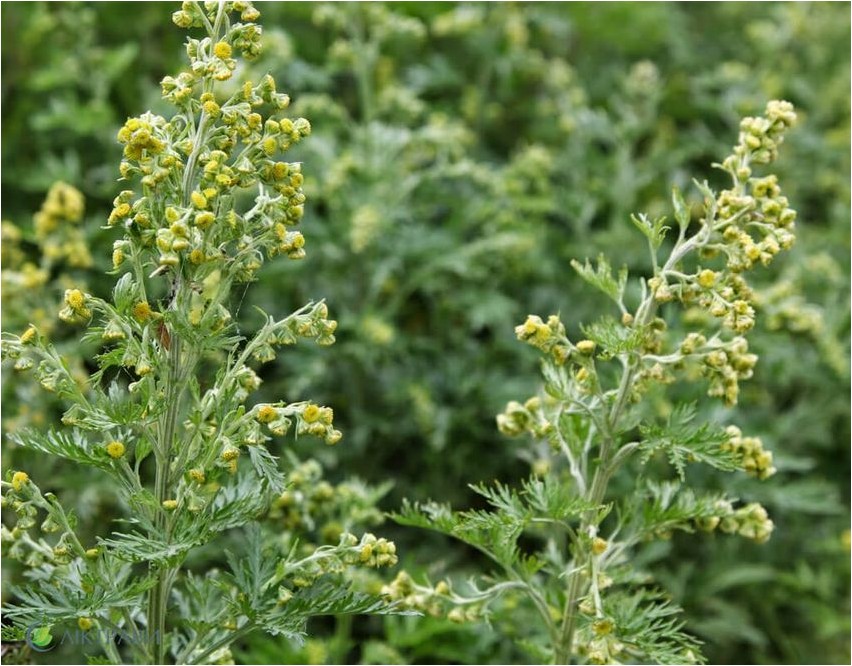
Yakutian Artemisia is a member of the Asteraceae or Compositae family. Its Latin name is Artemisia jacutica Drob.
The family name of Yakutian Artemisia is Asteraceae Dumort. (Compositae Giseke).
Description of Yakutian Artemisia
Yakutian Artemisia is an annual or biennial plant, reaching a height of between twenty-five and forty centimeters. The entire plant is grayish in color, and the root is upright and rather slender. The stems of this plant can be single or present in groups, and these stems can be erect or ascending at the base. The flower heads of Yakutian wormwood are hemispherical, six to eight millimeters wide, and borne on stalks in a wide, loose paniculate inflorescence. The heads may also be drooping or drooping. There are up to twenty-one pistillate flowers, and the corolla itself is narrowly tubular. The disc flowers are bisexual and quite numerous, and the corolla is conical. The achenes of Yakutian wormwood reach one millimeter in length and are oblong-ovate in shape.
Flowering of Yakutian wormwood occurs in August. In the wild, this plant is found in the Okhotsk region of the Far East and throughout Eastern Siberia, with the exception of the Yenisei region. The plant prefers sandy shores, salt meadows, sandy outcrops on peaks and slopes, salt marshes, gravelly steppe areas, and the shallows of salt lakes and rivers.
Description of the medicinal properties of Yakut wormwood
Yakut wormwood is endowed with highly valuable medicinal properties, and it is recommended to use the herb of this plant for medicinal purposes. The herb includes the inflorescences, leaves, and stems. These valuable medicinal properties are attributed to the essential oil found in the above-ground portion of this plant.
The essential oil, alcohol and chloroform extract of the herb of this plant are endowed with fungistatic activity. Essential oil of Yakut wormwood has anti-inflammatory properties, and is also endowed with the ability to reduce joint swelling, reduce capillary permeability and suppress exudation. In addition, the essential oil of this plant will effectively eliminate signs of hydropic degeneration and metabolic disorders in the parenchyma of the kidneys, heart and liver. It should be noted that the effectiveness of the essential oil of this plant is more pronounced compared to the essential oil of Artemisia sievers, Artemisia pontica and Artemisia macrocephala. Also, such a healing agent is endowed with fungicidal and antibacterial activity, and will also stimulate the growth of connective tissue during wound regeneration.

As for traditional medicine, here Yakut wormwood has become quite widespread. An infusion prepared from the herb of this plant is indicated for use against malaria and various venereal diseases, while a decoction prepared from the inflorescence of Yakut wormwood is recommended for use against scabies.
For edema, it is recommended to use the following very effective healing remedy based on this plant: to prepare such a healing remedy, you will need to take one tablespoon of crushed dry Yakut wormwood herb per two glasses of boiling water. The resulting healing mixture should be infused in a warm place for about two hours, and then this mixture must be filtered very carefully. Take the resulting healing remedy based on Yakut wormwood three to four times a day with one third of a glass.