Low Reed Grass
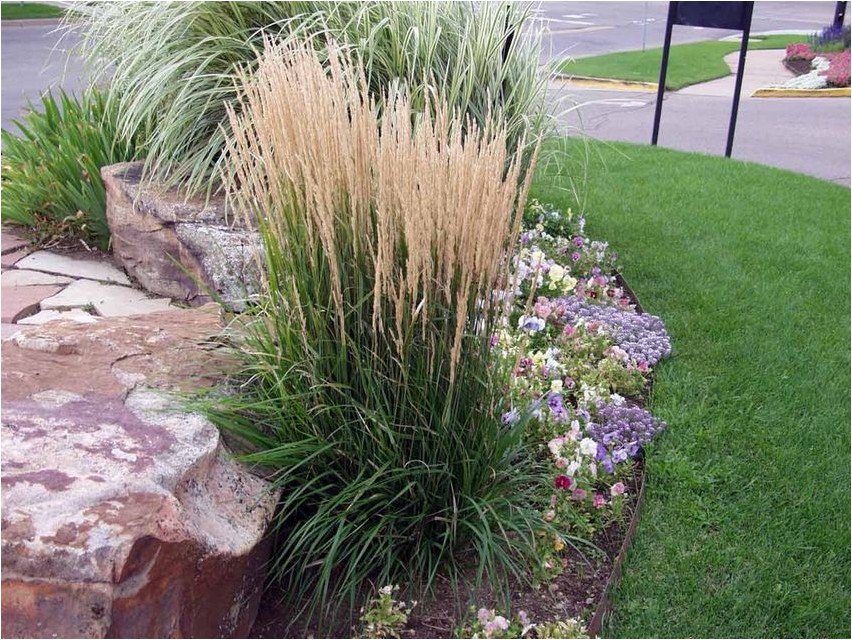
Low Reed Grass is a member of the Poaceae family, and its Latin name is Calamagrostis epigeios.
The Latin name of the family is Poaceae.
Description of Low Reed Grass
Low Reed Grass has many common names, including “biluk,” “puchnik,” “dlinnokneka,” and “venechnik.” Low Reed Grass is a perennial herbaceous plant that can reach heights between eighty and one hundred and fifty centimeters. The plant has a long, horizontal rhizome. Low Reed Grass stems are straight, rough, and coarse. The leaves can reach fifteen millimeters in width, are rough and coarse, and are blue-green in color. The leaf ligule can reach up to nine millimeters in length. The inflorescence of the reed grass is a large panicle, which can reach up to thirty centimeters in length. The inflorescence is compressed and erect. The plant’s spikelets are green or dirty purple, linear-lanceolate, and numerous. The length of these spikelets varies between five and seven millimeters, and they are twisted into tufts. The plant’s glumes are linear-awl-shaped, with the lower lemma being exactly half as long as the glume. The lower lemma has a straight awn that emerges from the center of the spine. The hairs on the axis of the spikelet are almost twice as long as the lemma.
Reed grass blooms in the summer. In the wild, this plant is found in Belarus, Ukraine, Moldova, Central Asia, and also in Russia, with the exception of the Arctic and highlands. It grows in meadows, meadow steppes, forest edges, clearings, open forests, along the edges of swamps, in damp shrubs, on embankments and ditches, and also in sandy soils.
Description of the medicinal properties of Calamagrostis

The roots of Calamagrostis should be used for medicinal purposes. It is noteworthy that the seeds of this plant contain significant amounts of fat, protein, calcium, phosphorus, and magnesium. A decoction made from the roots of Calamagrostis is recommended for medicinal use as a diuretic.
It is noteworthy that previously, both mats and mats were quite often made from the long stems of low reed grass. On the territory of Ukraine, straw was used to cover the roofs of numerous outbuildings. Fiber can be obtained from the stems and leaves of reed grass; rope products made from such fiber turn out to be much stronger and more durable than hemp ropes. The panicle of the plant was often used to make brooms.
In order to use low reed grass as a diuretic, you will need to prepare the following decoction: you need to take one tablespoon of crushed dry roots of this plant, then add one glass of boiling water and boil the resulting mixture over low heat for five minutes. After this, this mixture of low reed grass should be infused for one hour, and also strained. As a diuretic, the resulting decoction of low reed grass should be used one or two tablespoons three times a day.
It is worth noting that a plant such as low reed grass is characterized by quite great importance in forestry. Low reed grass is an antagonist of young generations of the forest at the initial stages of its development. This plant suppresses seedlings both in nurseries and in cultivation. On very fertile soils in a pine forest, many pines are simply doomed to death, and low reed grass in this case turns out to be a very useful plant.





