Hysis
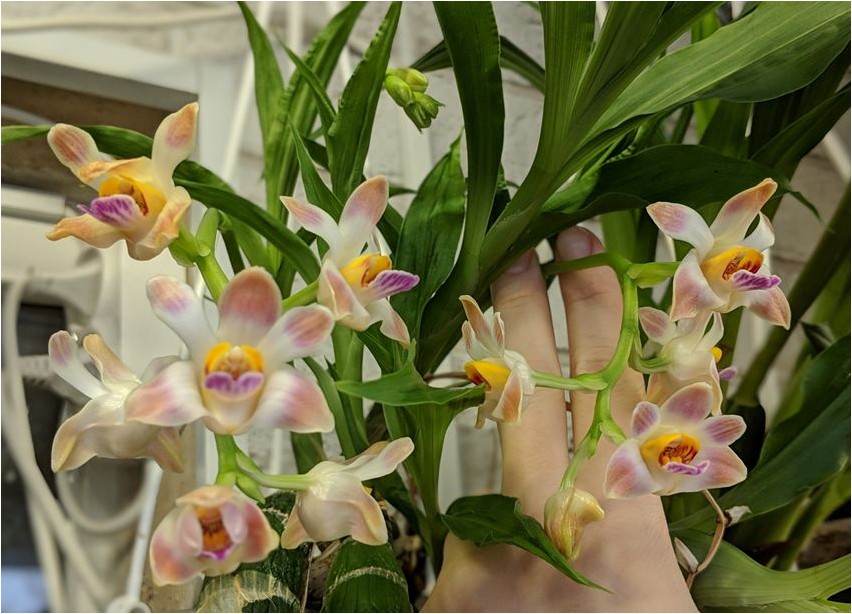
Hysis (lat. Chysis) is a genus of herbaceous perennial plants belonging to the Orchid family (lat. Orchidaceae).
It differs from many types of orchids in having wide oval-lanceolate leaves, similar to the leaves of ordinary plants; multi-flowered inflorescences of small flowers born from the axils of the lower leaves; a “bunch” of pollinia responsible for procreation. Hysis is popular in indoor floriculture.
What’s in your name
The Latin genus name “Chysis” is based on a Greek word meaning “heap”. The plants of the genus owe this name to their reproductive organs, called “pollinia.” In plants of the genus Hisis there are eight of them, which are divided into small and large, 4 pieces of each. Their number and crowded arrangement created the association with the “heap”.
In the literature on decorative floriculture, the name of the genus is shortened to three letters – “Chy”.
The genus name “Chysis”, officially accepted by botanists, has synonyms for various reasons, one of which is “Thorvaldsenia”.
The type species of the genus is “Chysis aurea” (Golden Hysis).

The description of a number of species of the genus “Chysis” belongs to the English botanist John Lindley (John Lindley, 1799 – 1865), a great expert on plants of the orchid family.
Description
Plants of the genus Hysis naturally live in the humid forests of Central and South America, located above sea level up to an altitude of 2000 meters. Being epiphytes, they are located on tropical trees, spreading their freedom-loving roots, like old man’s beards, along the support trunk. Some, related to lithophytes, prefer rocky mountain slopes. Although plants of the genus Hysis are widespread, they are quite rare.
Fusiform pseudobulbs, growing up to 45 centimeters long, have a slightly thickened end and often take on a mournful appearance, drooping towards the surface of the earth.
The appearance of the broadly oval, lanceolate leaves is more similar to the herbaceous leaves of Lily of the Valley than to the fleshy or leathery leaves of many orchid species. Distinct longitudinal veins, lost in the sharp tip of the leaf, give the ribbed and crumpled appearance of the platinum leaf. The sheath of the previous leaf gently embraces the next leaf.
From the leaf axils located at the base of the stem, before all the plant’s leaves have fully formed, sturdy flower stalks emerge, bearing multi-flowered spring inflorescences. The flowers, forming a fragrant inflorescence, are medium to large in size for an orchid family, fleshy, giving the impression that the lip is molded from beeswax. The petals are yellow, pink, or white.
Varieties
The genus Chizis is not very numerous. According to various sources, it includes between 6 and 10 species, of which three are most commonly used in cultivation:
* Chysis aurea (Golden Chysis):
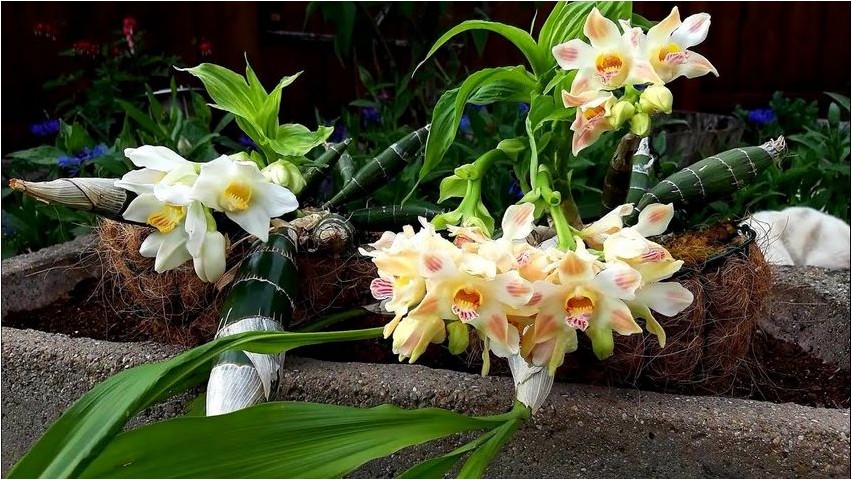
* Chysis bractescens (Bracted Chysis):
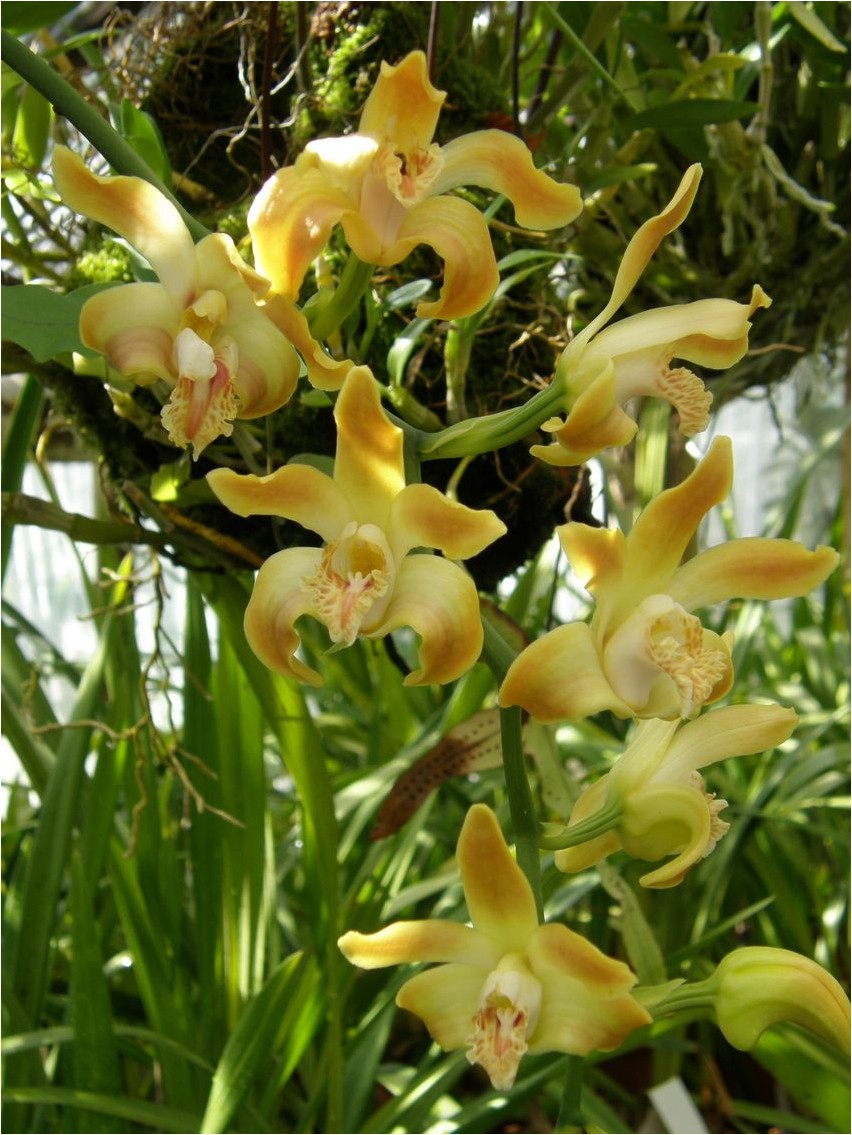
* Chysis tricostata (Three-ribbed Chysis):
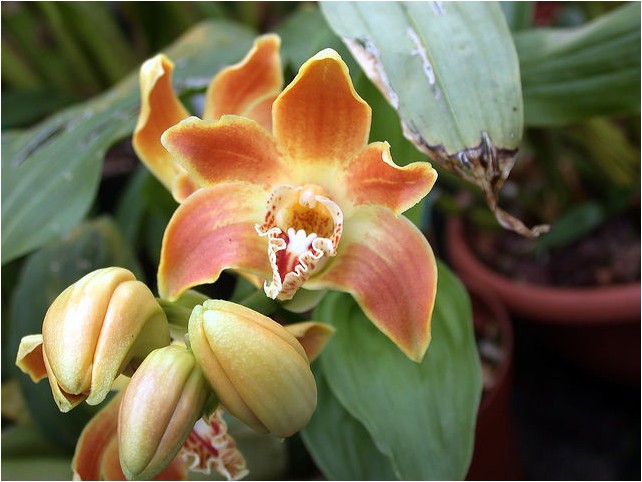
Growing Conditions
Plants of the Chysis genus, being epiphytes, grow best supported on rough tree bark, or in hanging pots or baskets filled with a substrate that provides good drainage and allows the roots to dry quickly after watering. Water daily during the summer, and stop watering during the dormant period.
Although orchids prefer good light, direct sunlight is harmful to the leaves, as it can cause burns on the surface of the leaf blade. Therefore, the light should be bright but diffused. Temperature conditions are divided into four types, depending on the season (active growing season or dormant period) and the time of day. During the summer day, it ranges from 20 to 28 degrees Celsius; at night, around 17; during the winter dormant period, the temperature is maintained at around 13 degrees.
Chysis Orchid Care and Flowering Features: Chysis Limminghei