Poskonnik
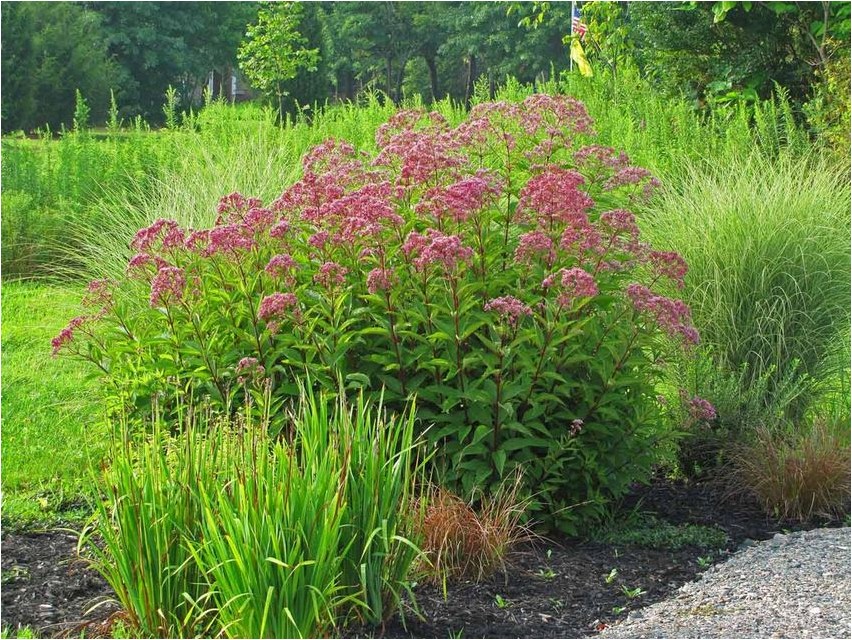
Pokonnik (lat. Eupatorium) is a genus of perennial flowering plants classified as a member of the Aster family (lat. Asteraceae). Tall species are used in landscape design as a natural screen for outbuildings.
Some poisonous species are used in measured quantities by traditional healers and official medicine. Large tall bushes of plants are very decorative and with their massiveness inspire respect. Plants of the genus are native to temperate regions of the Northern Hemisphere.
What’s in your name
The genus owes its Latin name “Eupatorium” to the last king of the independent Pontic kingdom named Mithridates VI Eupator Dionysus, who became famous in the 2nd-1st centuries BC. According to legend, Mithridates Eupator used the abilities of certain types of plants of this genus, which were able to suppress the effect of snake venom, which in those distant times was a popular means of eliminating rivals. For the sake of having power, mothers killed their husbands, their own children, brother killed brother… In general, those were terrible times.
According to one version, the genus owes its Russian name “Poskonnik” to the external similarity of its plants to the male specimen of the Hemp plant, which has a personal name – “Poskon”.
Plants have many popular names. In English-speaking countries it is called: “Bonesets” (Bone), “Thoroughworts” (Puzachi), “Snakeroots” (Snake roots).
Description
Most plants of the genus are perennial herbaceous plants ranging in height from half a meter to three meters. Some of them are shrubs.

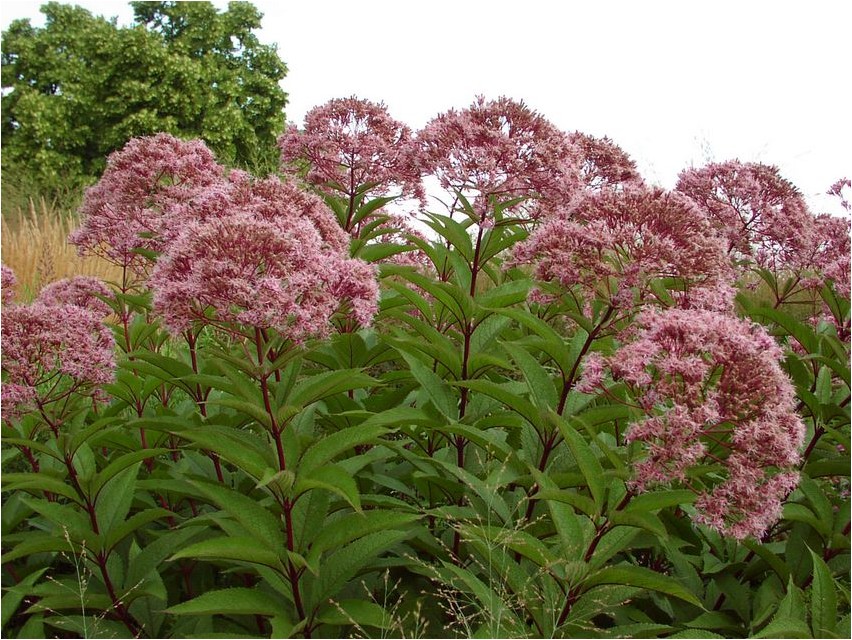
Strong, erect stems often do not like to branch and are covered with hairy pubescence and leaves. The shape, size and structure of leaves can vary greatly among different species. As a rule, large leaves are located on powerful stems, which can be petiolate or sessile. On the stem, the leaves are arranged in a regular order, or form picturesque cup-shaped whorls. The shape of the leaves is very different: heart-shaped with a jagged edge; linear with a rounded end or spear-lanceolate; ovoid or rhombic. The leaf blade is often entire, but can also be pinnately dissected or palmately lobed. The surface of the leaf blade varies from smooth to rough or covered with hairs.
A lush paniculate inflorescence is assembled from smaller panicles formed by small flowers and protruding in different directions from the top of the stem on long pedicels. The shape of the flowers is externally different from the usual basket inflorescences of the Asteraceae family, but retains the traditional elements of the Asteraceae, that is, it has asexual petals, sometimes very narrow, thread-like, and a core of bisexual flowers. The color of the petals can be white, pink, lilac-violet in various shades.
Varieties
Quite a numerous genus, in the ranks of which there are from 36 to 60 species in different classification systems. Here are a few of them:
* White sapling (lat. Eupatorium album)
* High sable (lat. Eupatorium altissimum)
* Petiolate sapling (lat. Eupatorium perfoliatum)
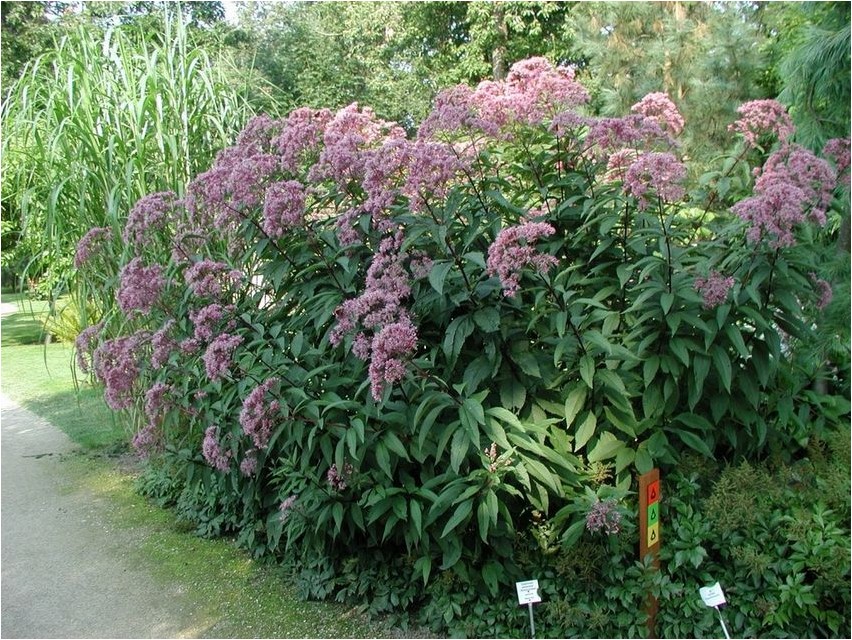
* Hemp sapling (lat. Eupatorium cannabinum)
* Chinese sable (lat. Eupatorium chinense)
* Round-leaved sapling (lat. Eupatorium rotundifolium)
* Lineifolia sapling (lat. Eupatorium linearifolium).
Usage
Tall types of Pokonnik are very popular among European landscape designers when arranging gardens in a natural style, where powerful and tall plants play the role of a vertical dominant. Against their background, the orange-yellow tongues of Buzulnik, the golden baskets of Rudbeckia with a brown central eye, and the yellow-eyed sunny Helenium look great. In addition, with the help of several such bushes you can hide unsightly outbuildings, a fence, or a compost heap from prying eyes.
The healing abilities of some species, for example, Eupatorium cannabinum, are used by folk healers and official medicine.