Boreal bedstraw
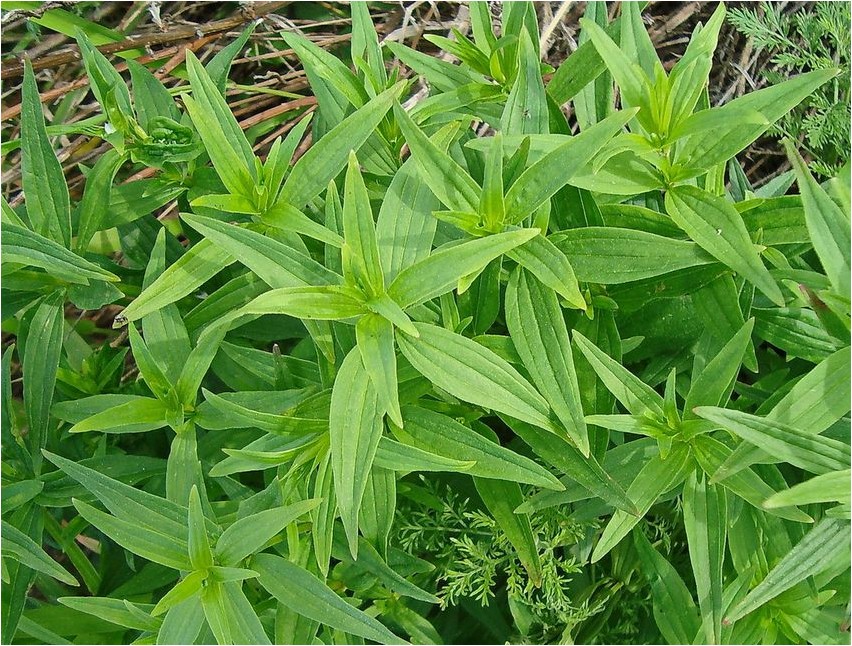
Boreal bedstraw is one of the plants of the family called rotational plants; in Latin the name of this plant will be as follows: Galium boreale L. S. (G. septentionale Roem. et Schult.).
As for the name of the boreal bedstraw family itself, in Latin it will be: Menyanthaceae Dumort.
Description of boreal bedstraw
Boreal or northern bedstraw is a perennial herbaceous plant, the height of which will vary between fifteen and eighty centimeters. The leaves of this plant will be arranged in whorls of four, they are lanceolate, narrow and wide, and these leaves are endowed with three veins, and the flowers are painted white.
Under natural conditions, this plant is found in Belarus, Ukraine, the Arctic, the Far East, the Caucasus, Western and Eastern Siberia, as well as in all regions of the European part of Russia, with the exception of only the north of the Black Sea and Lower Volga regions. For growth, boreal bedstraw prefers meadow steppes, damp floodplains, dry and forest meadows, forests, clearings, rocks, rocky outcrops, shores of lakes and rivers, thickets of bushes, edges, fields, places along roads, the outskirts of key swamps, ranging from the lowlands to the upper mountain zone. It is noteworthy that boreal bedstraw is also a very ornamental plant.
Description of the medicinal properties of boreal bedstraw
Boreal bedstraw is endowed with very valuable healing properties, and it is recommended to use the rhizomes, seeds and grass of this plant for medicinal purposes. The term grass includes flowers, stems and leaves.
The presence of such valuable healing properties is recommended to be explained by the content of tannins, steroid saponins, coumarins, anthraquinones and flavonoids in this plant. The herb of this plant will contain oleic acid, steroidal saponins, coumarins, higher aliphatic hydrocarbons, tannins, essential oil, asperuloside and alkaloids. The leaves and flowers contain vitamin C and alkaloids.

Boreal bedstraw is endowed with very effective diuretic, anti-inflammatory, expectorant, sedative, wound-healing, hemostatic and cardiotonic properties. As for traditional medicine, here this plant is very widespread. A decoction prepared from the boreal bedstraw herb is recommended for use for various malignant tumors and deafness, while lotions are used for conjunctivitis.
Tibetan medicine uses a decoction based on the rhizomes of this plant for a variety of female diseases and pneumonia, and traditional medicine also uses this remedy for menorrhagia.
For liver diseases, Tibetan medicine uses a decoction prepared from the herb boreal bedstraw. Traditional medicine uses an infusion of the herb of this plant for arthalgia, photophobia, various diseases of the liver and heart, osteoalgia, eclampsia, amenorrhea, in the postpartum period, female diseases and is used as a diuretic.
As part of the collection, a tincture based on boreal bedstraw is used as a wound-healing and hemostatic agent, and is also used for ascites. An infusion of flowers and herbs of this plant is used as a sedative for rheumatism and neurasthenia, and is also used for gastritis. Boreal bedstraw flower powder is used topically for furunculosis and is used as a wound healing agent.