Justice, or Jacobinia
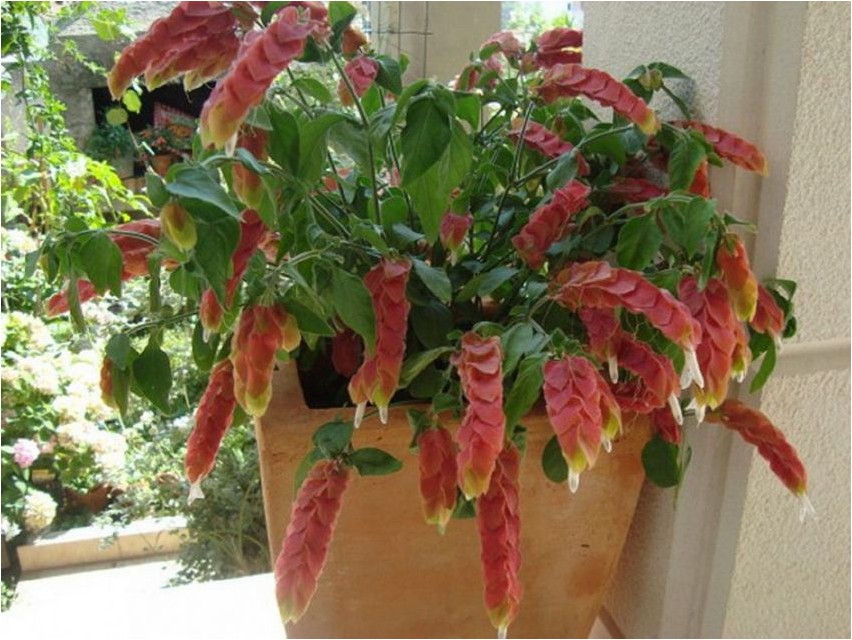
Justice (lat. Justicia), or Jacobinia (lat. Jacobinia) is a genus of beautifully flowering herbaceous or shrub plants of the Acanthaceae family (lat. Acanthaceae). Lovers of warmth and humidity have chosen tropical places on our planet for their place of residence.
The plants of the genus are given a special color by graceful elongated bracts with delicate colors, proudly rising above the bright decorative leaves of evergreens.
What’s in your name
The Latin name of the plant genus “Justicia” is in no way connected with the bodies of “Justice” created by human society for the triumph of justice and legality in the intricate intricacies of human relationships.
In this name, botanists immortalized the memory of their colleague, a Scottish gardener named James Justice (1698 – 1763), who, being a passionate researcher of the plant world, was not always in harmony with the law, and therefore was even accused of unnecessary expenses invested in soil mixtures and greenhouses. For such a passionate love of plants, which resulted in overspending of public funds, James Justice was expelled from the Fraternity, the British Royal Horticultural Society. This did not in the least affect his reputation among true fans of botany, and therefore a genus of magnificent evergreen plants is named after him.
The official Latin botanical name of the plant genus has a huge number of synonymous names in the world, one of which is Jacobinia. This, naturally, creates confusion among gardeners, but nothing can be changed about this, since the tropics are spread over many parts of the planet, and each nation comes up with its own name for plants of the genus.
Description
Herbaceous plants of the tropics, less often subshrubs or shrubs, prefer year-round warmth and high air humidity. Therefore, in areas with a temperate climate, they feel much more comfortable in greenhouses or on flower shelves and window sills of warm rooms.

Given favorable conditions, plants of the genus delight gardeners with their evergreen whole leaves, which skillfully combine their simplicity with the grace of the leaf blade. The pronounced veins of the leaf blade, fanning out on either side of the central vein, create the impression of a convex surface of the leaf and form a decorative and graceful wavy-toothed edge and pointed tip. The beauty is complemented by the bright green color of the leaf blade.
The elongated bracts, often perceived as flowers, give the plants a special highlight. They can be pink, yellow, red, crimson and even green. Tubular, two-lipped flowers are hidden behind the bracts. Together they form spike-shaped dense inflorescences towering above the lush greenery of the plants.
Varieties
* Vascular justice (lat. Justicia adhatoda).
* Justice meat-red (lat. Justicia carnea), or Jacobinia meat-red (lat. Jacobinia carnea).
* Justice Brandegee (lat. Justicia brandegeeana).
* Californian justice (lat. Justicia californica).
* Justicia cydoniifolia (lat. Justicia cydoniifolia).
* Jacobinia pauciflora (lat. Jacobinia pauciflora) – showing the world inflorescences combining yellow and scarlet colors.
* Jacobinia chrysostephana (lat. Jacobinia chrysostephana) – distinguished by yellow corymbose inflorescences.
Growing conditions
It is not always possible to create favorable living conditions for tropical plants indoors. After all, for their successful development and growth, an even, warm temperature and high humidity are required, which is not always combined with conditions acceptable for human life.
Deviations from the required temperature and humidity parameters inhibit the growth of plants, or even lead to their death. Therefore, if it is impossible to create the necessary conditions, in order not to waste your time, effort and money, it is better to acquire a less picky plant.