Strawberry
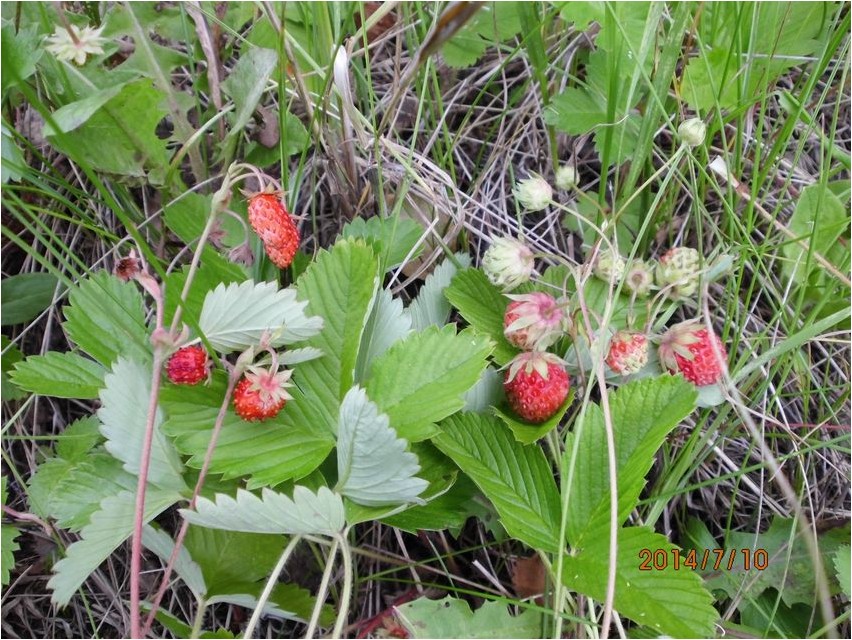
Strawberry (Latin: Fragaria) is a popular berry crop; a genus of perennial herbaceous plants in the Rosaceae family.
The genus includes a large number of wild species, as well as species not found in the wild, such as the pineapple strawberry (Latin: Fragaria*ananassa). Wild strawberries grow in Eurasia and the Americas, with some species found in the mountainous regions of Japan.
Cultivated Species
*The pineapple strawberry, or garden strawberry, or large-fruited strawberry (Latin: Fragaria*ananassa) is one of the most common species, grown in many garden plots and on private plantations. It is often mistakenly classified as a strawberry, a berry crop belonging to a different botanical species.
*The wild strawberry, or alpine strawberry (Latin: Fragaria vesca), is a species found both in the wild and in cultivation. It has excellent flavor characteristics but does not produce large berries. It is a medicinal plant.
*Fragaria moschata (musk strawberry) is a species often grown by gardeners in their gardens. It produces good yields of medium-sized berries. This species is commonly referred to as a strawberry. It is found both in the wild and in cultivation.
*Fragaria viridis (green strawberry) is a species originally called a strawberry, now known as a polunica. It grows wild in central Russia.

*Fragaria virginiana (strawberry) is one of the parent taxa of garden strawberries. It is resistant to drought and low temperatures. Disadvantages: small fruits, low yields, and intensive shoot formation, which leads to additional costs in plant care. *Chilean strawberry (Fragaria chiloensis) is one of the parent taxa of the garden strawberry. It produces fairly large and aromatic berries.
Crop characteristics
Strawberry is a herbaceous plant with a fibrous root system, most of which penetrates to a depth of 20-25 cm. The leaves are compound, trifoliate, and sit on long stems. The shoots are creeping and quickly root. The flowers are small, bisexual, gathered in multi-flowered corymbs, located on long peduncles that form a rosette from the root collar. The petals are white, rarely yellowish.
The fruit is a false berry (a polynut) or strawberry. The seeds are small, brownish, and are found on the surface of a succulent, expanded receptacle. In central Russia, strawberries bloom from the third ten days of May to early July. Both berries and flowers can coexist on a single plant.
Growing Conditions
Strawberries are undemanding when it comes to soil conditions. With proper and timely care, they can grow in any location, except dry sands and very waterlogged soils. Sandy loam and light loamy, nutritious, breathable, and moderately moist soils are optimal.
Because the strawberry”s root system is shallow, it requires constant moisture, but low-lying areas with stagnant meltwater are not suitable for growing the crop. Otherwise, the plants will rot, become susceptible to various rots, and other diseases. It”s advisable to set aside a separate plot for strawberries.
Soil Preparation
Proper soil preparation is essential for healthy plants and, subsequently, large harvests of delicious and juicy berries. Before planting strawberries, the soil is dug deeply, mineral and organic fertilizers are added, weeds are removed, and any present beetle and wireworm larvae are actively controlled.
Plots with sod-podzolic soils are dug to a depth of 20-22 cm, while chernozem and podzolized soils are dug to a depth of 28-30 cm. Deep soil cultivation ensures favorable water and nutrient balance, which helps improve plant resilience and yield. Well-rotted manure, peat, or compost are added during digging, along with superphosphate, potassium salt, and ammonium nitrate. The amount of mineral fertilizer is selected individually for each soil type.
Planting
Gardeners use young, rooted bushes, which form from tendrils of the mother plant, as planting material. It”s best to collect material from high-yielding mother bushes 2-3 years old. Cutting material from unseasoned bushes is not recommended, as the yield will be negligible. Young rosettes root only in loose and moderately moist soil, so this should be taken care of in advance. The tendrils are evenly spaced in shallow holes, pressed into the soil, and covered with soil. Leaves and the growing point of the central bud should not be covered. As the tendrils grow and new rosettes appear, they are covered with moist soil.
Strawberries can be planted throughout the season, from early spring to fall, but before the onset of sustained frost (approximately 1. 5-2 months). Strawberries root best when planted in summer and fall, and a good harvest can be achieved the following year. Prepare the seedlings immediately before planting. Rooted rosettes are dug up with a trowel, old leaves are removed, and the roots are trimmed. The roots are then dipped in a soil slurry and buried for several hours.
After this time, the rosettes are transplanted to their permanent location. Planting can be done in rows. The distance between rows should be 70-80 cm, and between plants, 20-25 cm. A square nest planting method is also acceptable. In this case, the planting material is spaced 50 cm apart, with three specimens per nest. Care
Caring for strawberries involves cultivating the soil, watering, weeding, fertilizing, and controlling diseases and pests. Removing runners and mulching the soil are essential. Water regularly, avoiding over-watering; sprinkler irrigation is an option. Plants also require light hilling of exposed roots, which can sometimes be exposed during frost. At least 7-8 tillings and 5-6 weedings are performed per season.
Mulch is applied between rows to a depth of approximately 6-8 cm immediately after the first spring tilling. Well-rotted straw, fallen leaves, reeds, and plastic film can be used as mulch. For fertilizer, it is recommended to use humus, bird droppings, compost, wood ash, and mineral fertilizers. The need for these fertilizers depends entirely on the fertility of the soil. There”s no need to apply fertilizer during the first two years, unless, of course, it was applied before planting.
Strawberries from seed — from sowing to flowering!
Strawberries