Common Fig
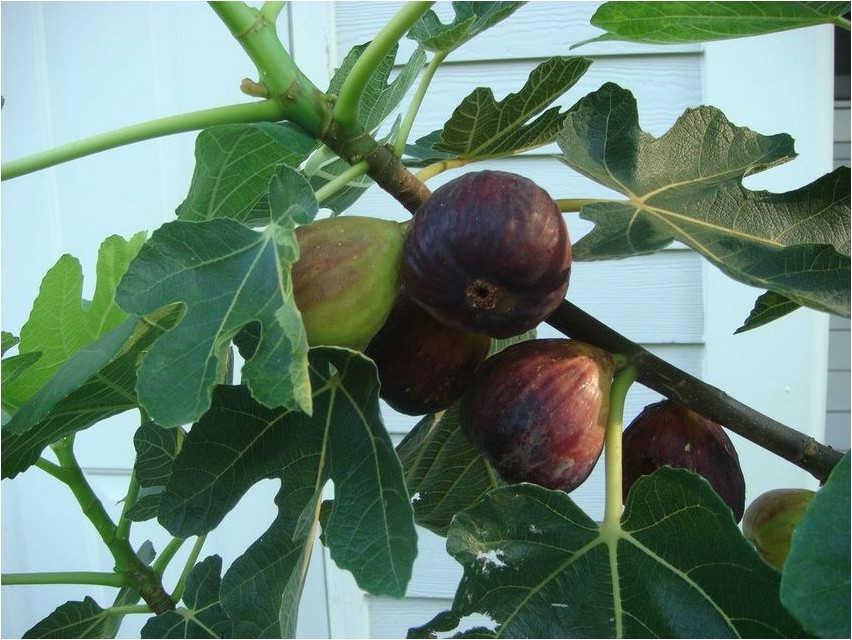
The common fig is a member of the Moraceae family, and its Latin name is Ficus carica L.
The Latin name of the common fig family is Moraceae Link.
Description of the Common Fig
The common fig is also known by the following common names: wine berry, anjir, hehik, fig tree, and common fig tree. The common fig is a monoecious tree with gray bark and a fairly wide, spreading crown, reaching a height of about seven to ten meters. Common fig flowers are collected in distinctive inflorescences, from which the fruit develops. These fruit, depending on the variety, can be pear-shaped, spherical, or flat. The fruit of this plant is covered with a thin skin that can be peeled off quite easily, revealing the tender flesh. The leaves of the common fig are quite large, alternate, and can be three- or five-lobed. The underside of these leaves is light, dark green, and pubescent, with a distinctive scent.
The common fig blooms from April to May. It is worth noting that this plant is one of the oldest cultivated crops. The common fig’s homeland is Asia Minor and Syria. It was only later that it reached the Caucasus and Crimea. Today, the plant can be found in some regions of Central Asia, Crimea, and Transcaucasia.
Description of the Medicinal Properties of the Common Fig
The common fig has very valuable medicinal properties, and its fruits, roots, and leaves are recommended for medicinal purposes. The fruits should be harvested around August-September, the leaves are collected in April-May, and the roots can be collected in both spring and fall.
The most valuable fruits of the common fig are the fruit, which contains approximately 40 percent sugars, including glucose and fructose. They also contain proteins, potassium salts, calcium salts, vitamins, magnesium, iron, phosphorus, fiber, acetic, oxalic, malic, and citric acids. The fruits of this plant contain a plant enzyme called ficin, which has the properties of fibrinolysin.

In folk medicine, the fruits of this plant are recommended for the treatment of various thromboembolic diseases. Due to their high sugar and potassium content, these fruits are considered beneficial for various cardiovascular diseases.
The common fig has mild laxative, expectorant, diuretic, emollient, enveloping, anti-inflammatory, and antiseptic properties. The healing properties of this plant are widely used in folk medicine in various countries. If boiled in milk, the common fig is used for acute catarrh of the upper respiratory tract, bronchitis, bronchiectasis, and tracheitis. This decoction is recommended to be drunk half a glass two to four times a day for various urinary tract and kidney diseases, urolithiasis, and anemia. Decoctions and preserves made from this plant should be used as an antipyretic and diaphoretic, and also have a positive effect on bronchitis, tracheitis, and laryngitis. To prepare a decoction, take two tablespoons of dried fruit per glass of milk or water. This decoction can also be used as a gargle for sore throats or taken internally, approximately 100 grams, two to four times a day for constipation and gastritis.
Sowing and transplanting figs in the Moscow region at home





