Peresupen dioecious
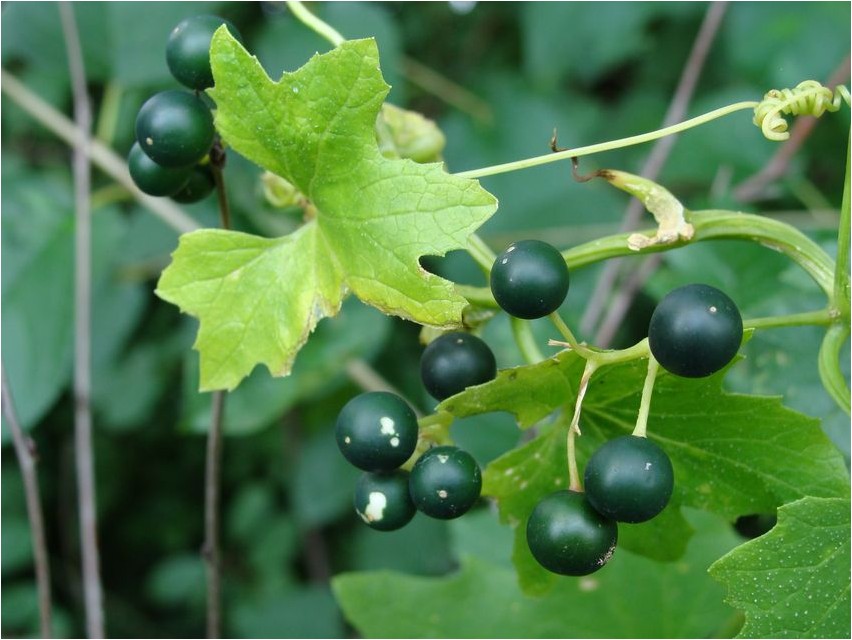
Dioecious is one of the plants of the family called Cucurbitaceae; in Latin the name of this plant will be as follows: Brionia dioica L.
As for the name of the dioecious foot family itself, in Latin it will be: Cucurbitaceae Juss.
Description of the dioecious foot
Stupid dioecious is a perennial climbing herbaceous vine, the length of which will fluctuate between two and four meters. Such a plant will be endowed with simple branched and helically rounded tendrils. The leaves of the dioecious plant will be palmate, consisting of five to seven angular and serrated lobes, with the middle lobe being the longest. This plant is dioecious, with some specimens having only male staminate flowers and others having female pistillate flowers. The staminate flowers of the dioecious plant are pale yellow in color and are found in racemes, while the pistillate flowers will be collected in a corymb. The calyx and corolla of this plant will be five-lobed. The fruit of the dioecious plant is a red berry. This plant blooms in the summer.
Under natural conditions, the dioecious steppe is found in the territory of Moldova, Crimea, Belarus, the Caucasus, Central Asia, the Black Sea region of Russia and Ukraine, as well as in the Dnieper region and the Carpathians in Ukraine. To grow, the dioica prefers thickets of shrubs, lake shores, dry river beds, and also thickets of bushes. It is noteworthy that this plant is not only decorative, but will also be a very valuable honey plant. In addition, the dioecious plant will be a poisonous plant, especially regarding its roots.
Description of the medicinal properties of dioecious footfoot
Peresupena dioecious is endowed with very valuable healing properties, and it is recommended to use the fruits, roots, leaves and shoots of this plant for medicinal purposes.
Such medicinal raw materials should be harvested during the autumn or spring period.

The presence of such valuable medicinal properties is attributed to the alkaloids and triterpenoids bryonolic and bryononic acids, as well as the phenolic carboxylic acids ceryl alcohol, chrysonic acid, and the following higher fatty acids: stearic, palmitic, oleic, linoleic, and myristic. The aboveground parts of this plant contain traces of coumarins and essential oil, while the stems contain flavonoids, nitrogen-containing compounds, and carotene. The flowers contain carotene and flavonoids.
Bryony has valuable wound-healing, antipyretic, anti-inflammatory, stimulating, expectorant, analgesic, hemostatic, restorative, antitumor, laxative, and anthelmintic properties. Experiments have shown that preparations based on this plant possess antitumor activity, and an extract from this plant exhibits antibacterial activity. Preparations based on bryony are indicated for use in tumors of the glands and spleen, as well as breast cancer. In homeopathy, such remedies based on this plant are used for diphtheria and rheumatism. In folk medicine, this plant is used externally to remove warts and cleanse the skin, and is also used as a detoxifying agent for the bites of various poisonous snakes and insects. These remedies are quite effective.
Adam’s root. Healing tincture in alcohol/vodka