Clover
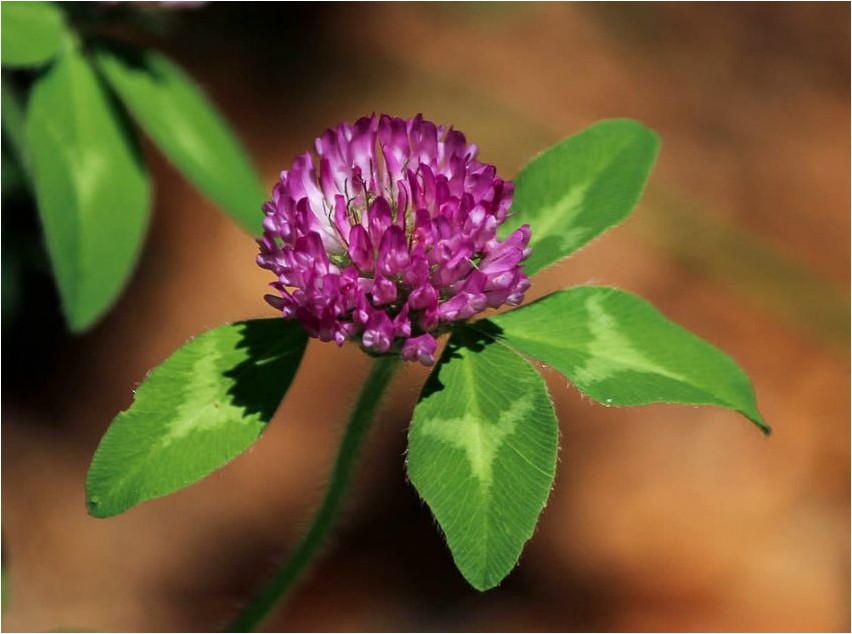
Red clover is one of the plants of the family called legumes; in Latin the name of this plant will be as follows: Trifolium pratense L.
As for the name of the meadow clover family itself, in Latin it will be: Fabaceae Undl.
Description of red clover
Meadow clover is also known by the following popular names: gogolechka, God’s bread, butterfly bread, voloshok, vyzil, forest worker, head, woodpecker, woodpecker, red woodpecker, scrofulous grass, jaundice, red kupyak, honey porridge, redhead, light blue, field nut, licorice, trefoil and sucker. Red clover is a biennial or perennial herbaceous plant, endowed with ascending branched branches, the height of which will vary between fifteen and sixty centimeters. The leaves of this plant are trifoliate, the basal and lower leaves are on rather long petioles. It is noteworthy that the upper leaves of this plant are almost sessile, they are endowed with a whitish triangular spot, and the leaves will be rounded and elongated. Red clover flowers are quite small in size, they are moth-type and are collected in spherical heads equipped with involucres. Such heads will be painted in lilac-red tones. The fruit of red clover is an ovoid, single-seeded bean.
This plant blooms throughout the summer. Under natural conditions, meadow clover is found throughout almost all of Russia, the Caucasus, the Far East, Ukraine and Belarus. For growth, the plant prefers shrubs, forest edges, meadows and clearings.
Description of the medicinal properties of red clover
Red clover is endowed with very valuable healing properties, and it is recommended to use flower heads and leaves for medicinal purposes. It is recommended to harvest such raw materials during the period from May to June.
The presence of such valuable healing properties should be explained by the content of essential oil in the dried inflorescences of this plant, as well as trifolin and isotropholine glycosides, coumaric acid, fatty oils, carotene, salicylic acid and organic acids, as well as the following vitamins: B1, B2, K and E. The herb of this plant contains vitamins C and E, carotene, tocopherol, axerophthol, isorhamnetin, sitosterols, tyrosine, quercetin methyl ester, coumaric and salicylic acids. It should be noted that trifolesin, which is a very valuable antifungal substance, was isolated from the roots of this plant.

It is noteworthy that this plant is quite widely used in dermatology internally and externally. Internally, products based on this plant should be used for baldness, graying of hair, vitiligo, allergic skin diseases and vasculitis. As for external use, this product is used in the form of lotions and poultices for eczema, boils, and is also used for baths for allergic skin lesions. The juice of this plant is recommended to be rubbed into the roots of the hair, which is done in order to slow down the graying of hair.
As for traditional medicine, the flowers and herbs of this plant are used as an expectorant and emollient for various diseases of the respiratory system, and also as a diaphoretic and anti-inflammatory agent for colds. In addition, such drugs are also used for inflammation of the larynx, sore throat, fever, malaria and mumps. It should be noted that an infusion prepared from red clover leaves will have the ability to improve appetite.





