Air
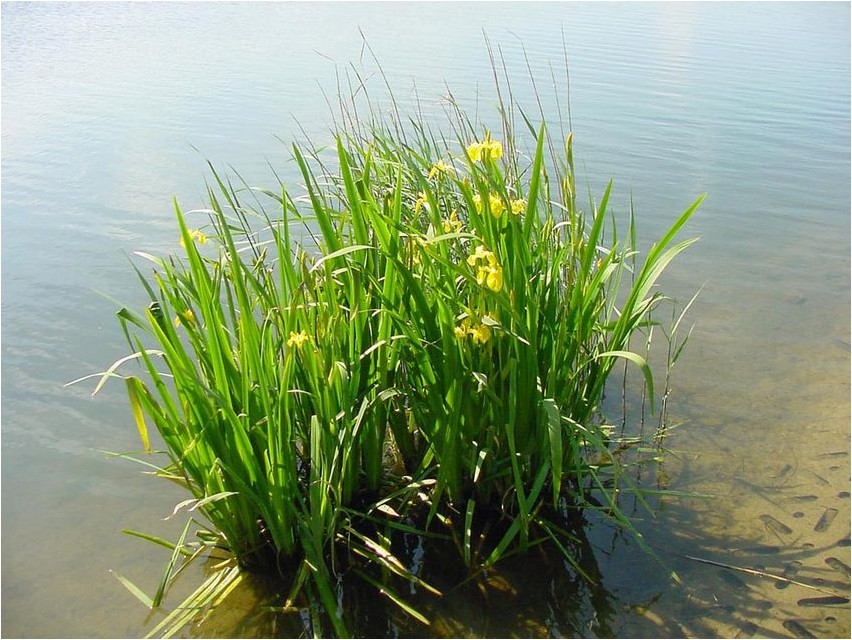
Calamus (lat. Acorus) is the only genus of herbaceous perennial plants of the calamus family, or calamus (lat. Acoraceae). The Aroid family received independent status only 30 years ago (1987), and before that it was listed as the most primitive member of the Araceae family, being its ninth subfamily.
The Calamus family owes its independent status to the Missouri Botanical Garden scientist Michael H. Grayum, who isolated the genus Calamus from the Araceae family. The correctness of this identification was confirmed by molecular analysis of plants of the genus.
What’s in your name
It is believed that the Latin name of the genus “Acorus” is based on the ancient Greek language, in which a word with a similar sound meant “ugly”. The culprit of this name was probably the greenish-yellow inconspicuous inflorescences of plants of the genus.
The Russian name of the genus “Air” comes from the Turkish language, in which the name of this plant is consonant. The Turkish name is again based on the ancient Greek one. So, the ancient Greek language continues to live in the names of many plants.
Description
Plants of the genus have chosen the outskirts of swamps or shallow waters as their habitat, that is, they prefer damp places. The height of plants of different species can vary dramatically, ranging from 10 to 120 centimeters.
The guarantor of longevity of plants of the genus Calamus is a thick (up to three centimeters in diameter), brown outside rhizome, spreading in a horizontal direction. The white-pink core of the rhizome has a pleasant smell, which some compare to the aroma of tangerine, while others resemble the aroma of cinnamon. The rhizome is quite edible.

From the rhizome, adventitious roots go into the soil, and a triangular, erect stem is born on the surface, which does not like to branch and has sharp ribs.
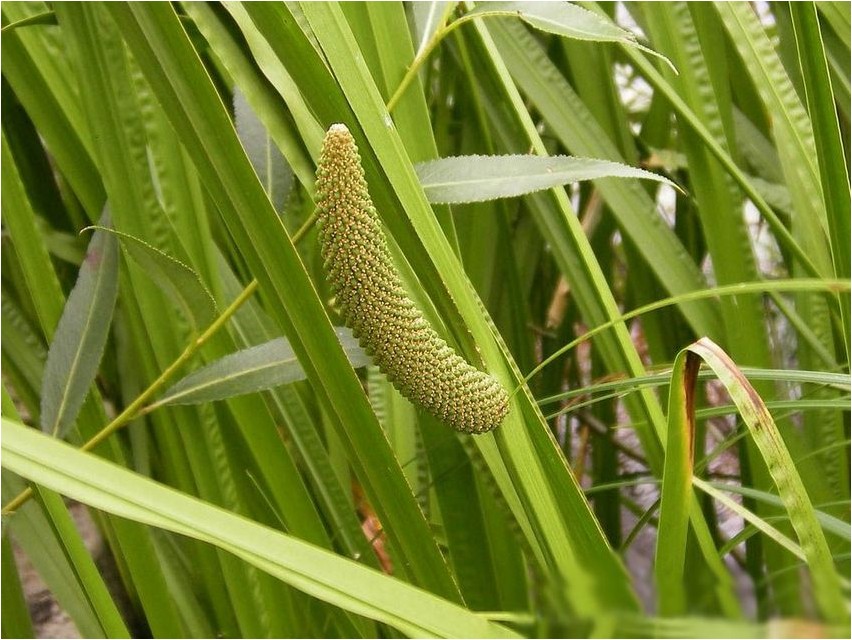
Bright evergreen sword-shaped long leaves surround the stem, merging tightly with each other around the base of the stem and fan-shapedly spreading their sharp ends to the sides. Cut leaves emit a persistent spicy smell that lasts for a long time indoors.
The inflorescence in the form of a cylindrical cob is formed by very small bisexual flowers of greenish-yellow color. The inflorescence is protected from external adversities by a long covering leaf emerging from the base of the peduncle.
The fruits are oblong dry berries with numerous seeds.
Varieties
Various sources list from two to six plant species in the genus Calamus, including:
* Reed calamus (lat. Acorus calamus) – in our country it is more often called “common calamus” or “swamp calamus”.
* Calamus (lat. Acorus gramineus) – or “Acorus gramineus”, has softer leaves than the previous species.
* Tatarinov’s calamus (lat. Acorus tatarinowii).
* Broad-leaved calamus (lat. Acorus latifolius).
* American calamus (lat. Acorus americanus).
Usage
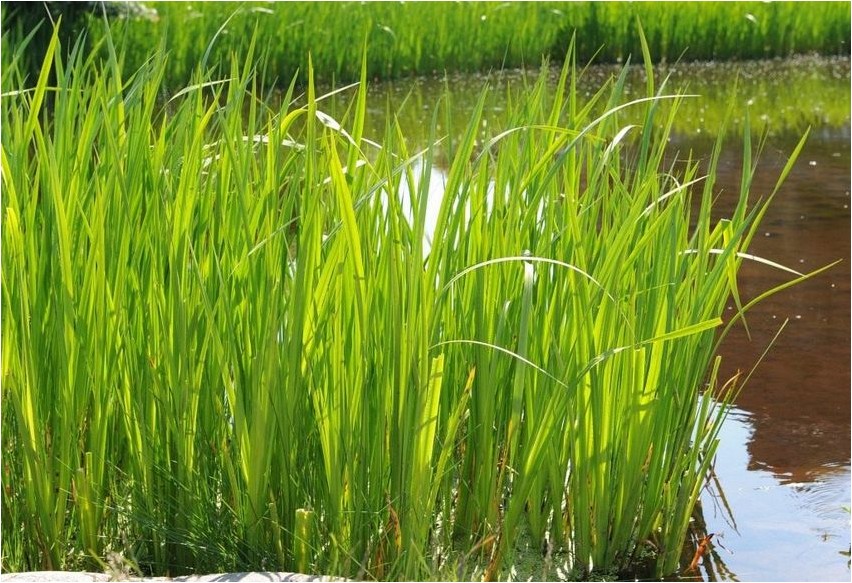
Decorative leaves, combined with unpretentiousness and cold resistance, make the plants popular when decorating garden ponds. The low-growing Calamus grass thrives in aquariums and is also a water purifier.
The aromatic pulp of the rhizome was used by people as a food product, but today both of the most common types of Calamus (swamp and cereal) in Russia are included in the list of plants hazardous to health, containing toxic and narcotic substances.
Calamus oil, contained in the rhizome of plants, is extracted and used in the perfume industry, as well as in scientific medicine.
Traditional healers use the leaves and rhizomes of Calamus, which have a range of medicinal properties, to support the functioning of the gastrointestinal tract, respiratory tract, and other ailments.





