Hemp sativa
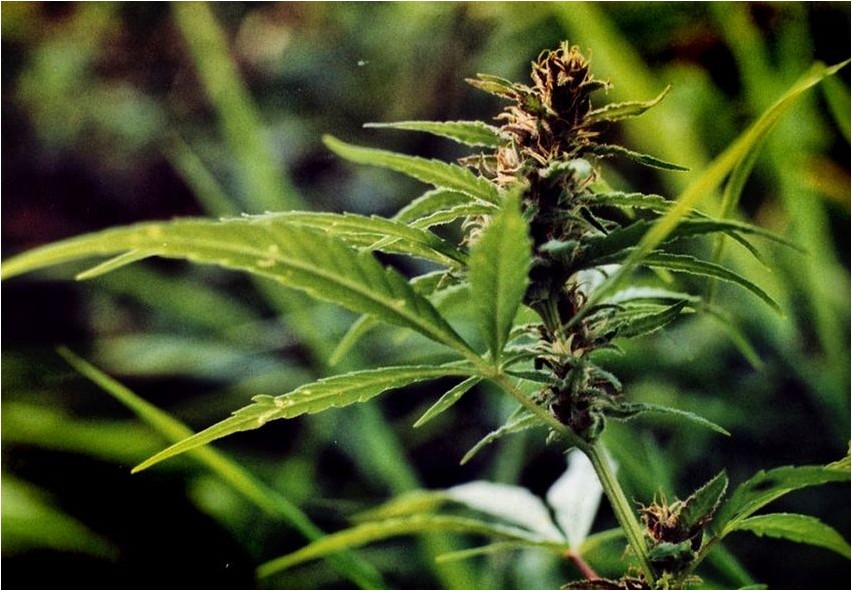
Hemp is one of the plants of the family called hemp; in Latin the name of this plant will be as follows: Cannabis sativa L.
As for the name of the hemp family itself, in Latin it will be: Cannabaceae Endl.
Description of hemp sativa
Hemp is an annual dioecious plant, endowed with a straight tetrahedral branched stem, the height of which will vary between forty and one hundred centimeters. The lower leaves of this plant are opposite, the upper leaves will be alternate, deeply palmate and petiolate, and with three to five elongated lanceolate lobes. Staminate flowers are quite small in size and greenish-white in color, such flowers will be collected in paniculate inflorescences, while pistillate flowers are collected in axillary spike-shaped inflorescences. The fruits of hemp are ovoid, shiny nuts, slightly compressed on the sides and colored gray-brown. Actually, such fruits are also called hemp seeds.
It should be noted that as a technical crop, this plant is grown to obtain oil and fiber for the textile industry. For this purpose, this plant is grown in Ukraine, Belarus and the European part of Russia. It is noteworthy that this plant can be found as a weed near roads and near housing. As a wild crop, hemp is found in the Western Volga region and Altai in Western Siberia.
Description of the medicinal properties of hemp
Hemp is endowed with very valuable healing properties, and for medicinal purposes it is recommended to use the tops of the shoots of this plant with leaves and flowers. It is recommended to harvest such raw materials from June to July. The fruits of hemp are also used, which should be harvested between August and September.
The presence of such valuable healing properties should be explained by the plant’s content of protein substances, fatty oil, resin, mucus, steroidal saponins, vitamin K and traces of alkaloids. As for the leaves and pistillate flowers, there is a strong-smelling substance called cannabin, and the dried leaves contain carotene. The plant also contains the following substances: essential oil, phytoncides, cannabin, volatile and non-volatile alkaloids.

This plant has a hypnotic, analgesic and sedative effect. Externally, hemp is used as an emollient and analgesic poultice for breastfeeding and eye diseases. For eye diseases, you should apply lotions of decoction and tincture, which should be diluted in a ratio of one to ten. A compress of seeds and chaff is recommended for use for chronic rheumatism, and a lotion of crushed seeds or oil should be applied for burns and abscesses.
The products of dry distillation of hemp fruits should be used to lubricate wounds, and it is recommended to make baths from the steamed herb of this plant for rheumatism.
The fruit of hemp should be used internally as a very valuable cleansing and strengthening agent for dropsy in the form of both a decoction and tincture. Also, the fruits of this plant are also used for cystitis, urethritis, hemorrhoids, scrofula, pulmonary tuberculosis, gonorrhea, inflammation of the prostate gland and severe cough. The fruits of hemp can also improve lactation in nursing mothers, and in the form of milk, such parts of the plant are used for urinary retention in children.
In folk medicine, hemp oil is used as a valuable anthelmintic, and roasted seeds of this plant with salt help enhance sexual activity.





