Black cohosh smelly
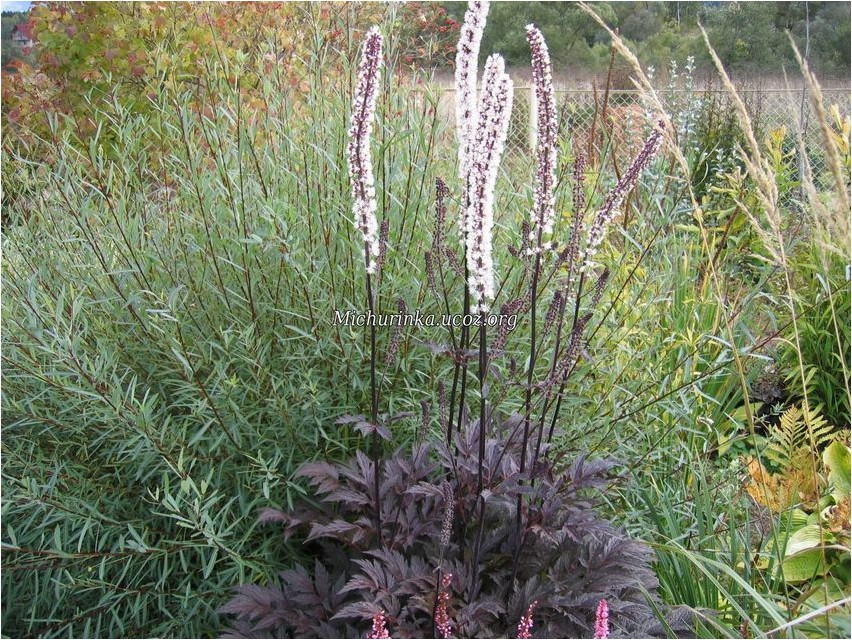
Black cohosh is one of the plants of the family called Ranunculaceae; in Latin the name of this plant will be as follows: Cimicifuga foetida L.
As for the name of the black cohosh family itself, in Latin it will be: Ranunculaceae Juss.
Description of black cohosh
Black cohosh is a perennial herbaceous plant that can reach a height of two meters. The rhizome of this plant is thick and multi-headed. The stems of black cohosh are herbaceous annuals; they can be found in single quantities or among several of the rhizomes. It is noteworthy that such stems can be either simple or branched at the top. The lower stem leaves of black cohosh are on long petioles that will widen at the base. Such leaves are double-triple. The inflorescence of this plant is a simple or most often branched raceme, and all branches of such an inflorescence will be covered with glandular hairs.
The flowers of black cohosh are bisexual, the sepals will be petal-shaped and fall off early. The stamens of this plant will be numerous, there are about one to five ovaries, they are pubescent, either on short stalks or are sessile.
Black cohosh blooms from June to August. Under natural conditions, this plant is found in Western Siberia. For growth, the plant prefers edges, forest glades, meadows, slopes, forests and places among bushes. It should be noted that black cohosh is also an ornamental plant.
Description of the medicinal properties of black cohosh
Black cohosh is endowed with very valuable healing properties, and it is recommended to use the roots, leaves and rhizomes of this plant for medicinal purposes. Rhizomes should be dug up around August-September, then such rhizomes are washed and left to dry under sheds. It should be remembered that the fresh plant has the ability to irritate the skin.

The presence of such valuable healing properties is explained by the content of alkaloids, tannins, flavonoids, vitamin C, triterpene saponins, black cohosh chromone, resins, sterols, essential oil and the following phenolcarboxylic acids in this plant: hesperetinic and salicylic. It is noteworthy that black cohosh has a rather strong unpleasant odor.
A tincture prepared from the roots and rhizomes of this plant is used as an antihypertensive agent. There are opinions that claim that preparations based on this plant are also endowed with anti-sclerotic effects, which is explained by the content of stinking triterpenoids in black cohosh.
As for traditional medicine, here this plant is used to treat colds, toothache, rheumatism, migraines and sexually transmitted diseases, and also as an obstetric aid.
A decoction prepared from the rhizomes of black cohosh is used for various infectious diseases, including diphtheria, measles, typhoid, smallpox and anthrax. Also, such a decoction based on this plant is used as an antipyretic and is used for poisoning with scopolia grass.
A decoction of the rhizomes and herbs of the stinking bug is used as an antifever and tonic, helping to enhance labor. Externally, such remedies are effective for leukemia, leprosy and various skin diseases. An infusion of black cohosh leaves is used for wounds, abscesses, anthrax, liver echinococcus and diphtheria.





