Bedbug sativum
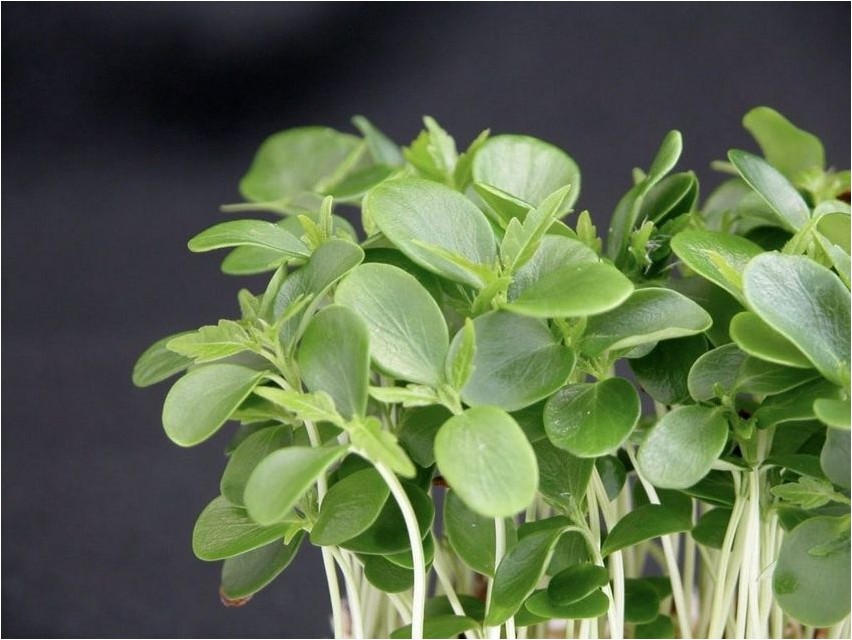
Lepidium sativum L. is one of the plants of the family called cabbage or cruciferous plants; in Latin the name of this plant will be as follows: Lepidium sativum L.
As for the name of the bedbug family itself, in Latin it will be: Brassicaceae Burnett.
Description of bedbugs
Bedbug sativum is an annual herbaceous plant, the height of which will fluctuate between fifteen and forty centimeters. The stem of this plant is single, paniculate and straight. The basal leaves of the plant will be petiolate; they can be either lobed or bipinnate. The upper leaves of this plant are linear, entire and sessile; such leaves are colored blue-green. The flowers of this plant will be quite small in size, they are painted white and are collected in an inflorescence, which is a brush. The fruit of the bedbug sativum is a round-ovoid pod. The seeds of this plant will be slightly flattened in shape, they are ovoid in shape, smooth and colored in darkish-brown tones.
Flowering of the bedbug occurs during the period from June to July. The seeds of this plant will ripen in August, and they retain their germination capacity for about three to four years. Under natural conditions, this plant is found in the Crimea, the European part of Russia, the Caucasus, the Far East and Central Asia. The homeland of this plant is considered to be Western Asia and North Africa. To grow, this plant prefers the outskirts of fields and trash areas.
Description of the medicinal properties of bedbug sativum
Bed bug is endowed with very valuable healing properties, and it is recommended to use the roots and grass of this plant for medicinal purposes. The concept of grass includes the flowers, leaves and stems of the plant.
The presence of such valuable healing properties should be explained by the content of carotene, flavonoids, mustard oil, iodine, phosphate, calcium, potassium, iron, isothiocyanate, vitamins B1, B2, C and E in the composition of this plant. The seeds of the bug plant contain steroids, mucus, fatty oil, triterpenoids and isothiocyanates.

This plant is used for high blood pressure, respiratory ailments, and to strengthen the nervous system, improve appetite, and aid digestion. The juice of the common bugleweed is recommended as an antiscorbutic and is also used for anemia. Powdered seeds of this plant can be used as a substitute for mustard plasters. For scabies, scrofula, and suppurating wounds, an ointment made from crushed seeds and common bugleweed herb mixed with lard or ghee in a ratio of one to five is recommended. This plant is used for nasal polyps and other neoplasms, uterine tumors, cancer, warts, lipomas and atheromas, paronychia, wounds, ulcers, boils, ringworm, sciatica, malaria, bronchial asthma, and scurvy, and is also used as a very effective diuretic.
In Indian medicine, an infusion made from this plant’s herb is quite common. This remedy is used for coughs with phlegm, asthma, and hemorrhoidal bleeding. The seeds of the bugleweed are used as a laxative, abortive, and lactogenic agent, and externally, they are used as a wound-healing agent. A decoction of the roots of this plant is used for secondary syphilis, while an infusion of the leaves is used for scurvy.
Lepidium sativum (Bugsop)





