Walnut gray
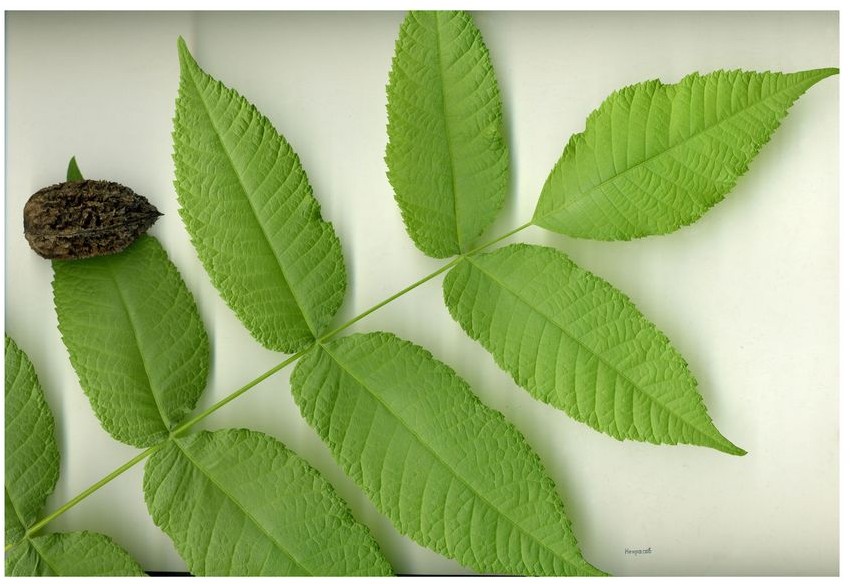
Gray walnut (lat. Juglans cinerea) is a representative of the genus Walnut of the Walnut family. North America is considered to be its homeland.
It is one of the most cold-resistant species, but in Russia it grows only in the Moscow region and surrounding regions, as well as in the south of the country. In the Urals, trees are often damaged by spring frosts, so growing them at this latitude is difficult.
Characteristics of culture
Gray walnut is a deciduous tree up to 30 m high with a broadly ovate or spreading sparse crown. The plant is characterized by rapid growth, the annual growth is 50 cm. Externally, the gray walnut is similar to the Manchurian walnut, the difference lies in the color of the branches. The bark of the trunk is deeply furrowed and gray in color. Young shoots are pubescent and equipped with glands. The leaves are light green, compound, odd-pinnate, consist of 11-19 leaflets, bloom at the end of May, fall at the beginning of October, sometimes earlier.
Female flowers are collected in racemes, male flowers — in earrings. Flowering occurs simultaneously with the blossoming of leaves. The fruit is elongated, ovoid, covered with a gray, densely felt, sticky shell. The nut shell is thick, black-brown, and has wavy ridges located between the longitudinal ribs. The nut kernel is medium-sized, oily, sweet, average weight — 2. 5 g. The gray nut bears fruit annually, starting from 6-10 years of age. The average age is 180 years.
Growing conditions
Gray walnut is light-loving, although it tolerates light shading. In dense shade, plants practically do not bloom or bear fruit, and are often affected by pests and diseases. The crop is demanding regarding soil conditions, preferring fresh, fertile and moist soils. Does not accept saline, heavy clay, highly acidic and waterlogged soils.
Subtleties of reproduction
Gray walnut is propagated by seeds and shoots. Sowing is done in the fall (after harvesting). To do this, the fruits are peeled and planted in the ground. When sowing in spring, the seeds are pre-stratified for 6-7 months. Crops do not need shelter, but protection from rodents is mandatory. The nut is placed in the hole with the top up; this position will increase the germination rate and have a positive effect on the health of future seedlings. For other nut trees, this arrangement of seeds is undesirable; they are placed sideways in the hole.
Gray walnut is sown immediately in a permanent place, since young plants have a negative attitude towards replanting. The fact is that most nut trees have a deeply penetrating root system; the tap root, even at the first stage of growth, reaches a length of 65-70 cm. If a transplant is planned, then before sowing, a sheet of slate is placed in the hole to a depth of 60 cm, which will prevent the growth of the tap root.
Application
Gray walnut has a beautiful openwork crown and large feathery foliage, which is why the plant is often used for landscaping alleys and parks. They look good in singles, solitaires and loose groups. Walnut kernels are used in the confectionery industry.
We collect Manchurian, gray, heart-shaped NUTS for sowing
Walnut gray
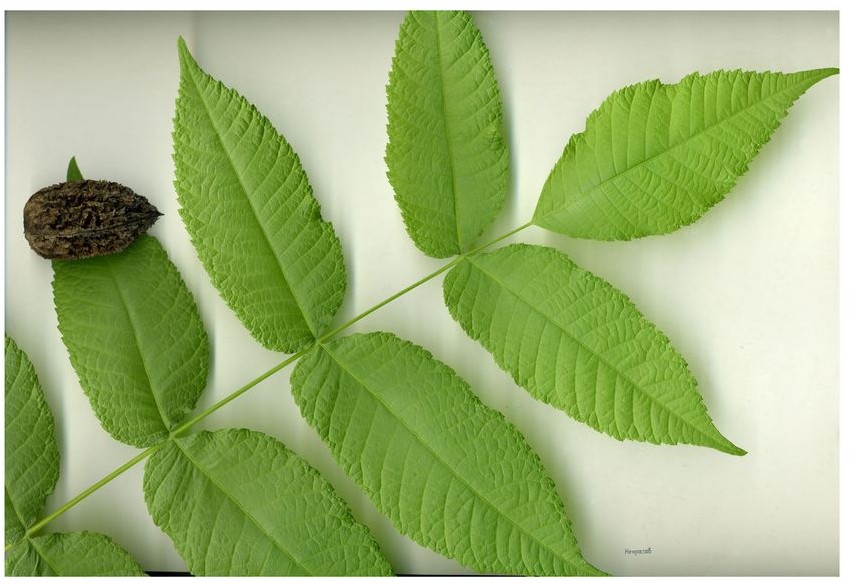
Gray walnut (lat. Juglans cinerea) is a representative of the genus Walnut of the Walnut family. North America is considered to be its homeland.

It is one of the most cold-resistant species, but in Russia it grows only in the Moscow region and surrounding regions, as well as in the south of the country. In the Urals, trees are often damaged by spring frosts, so growing them at this latitude is difficult.
Characteristics of culture
Gray walnut is a deciduous tree up to 30 m high with a broadly ovate or spreading sparse crown. The plant is characterized by rapid growth, the annual growth is 50 cm. Externally, the gray walnut is similar to the Manchurian walnut, the difference lies in the color of the branches. The bark of the trunk is deeply furrowed and gray in color. Young shoots are pubescent and equipped with glands. The leaves are light green, compound, odd-pinnate, consist of 11-19 leaflets, bloom at the end of May, fall at the beginning of October, sometimes earlier.
Female flowers are collected in racemes, male flowers — in earrings. Flowering occurs simultaneously with the blossoming of leaves. The fruit is elongated, ovoid, covered with a gray, densely felt, sticky shell. The nut shell is thick, black-brown, and has wavy ridges located between the longitudinal ribs. The nut kernel is medium-sized, oily, sweet, average weight — 2. 5 g. The gray nut bears fruit annually, starting from 6-10 years of age. The average age is 180 years.
Growing conditions
Gray walnut is light-loving, although it tolerates light shading. In dense shade, plants practically do not bloom or bear fruit, and are often affected by pests and diseases. The crop is demanding regarding soil conditions, preferring fresh, fertile and moist soils. Does not accept saline, heavy clay, highly acidic and waterlogged soils.
Subtleties of reproduction
Gray walnut is propagated by seeds and shoots. Sowing is done in the fall (after harvesting). To do this, the fruits are peeled and planted in the ground. When sowing in spring, the seeds are pre-stratified for 6-7 months. Crops do not need shelter, but protection from rodents is mandatory. The nut is placed in the hole with the top up; this position will increase the germination rate and have a positive effect on the health of future seedlings. For other nut trees, this arrangement of seeds is undesirable; they are placed sideways in the hole.
Gray walnut is sown immediately in a permanent place, since young plants have a negative attitude towards replanting. The fact is that most nut trees have a deeply penetrating root system; the tap root, even at the first stage of growth, reaches a length of 65-70 cm. If a transplant is planned, then before sowing, a sheet of slate is placed in the hole to a depth of 60 cm, which will prevent the growth of the tap root.
Application
Gray walnut has a beautiful openwork crown and large feathery foliage, which is why the plant is often used for landscaping alleys and parks. They look good in singles, solitaires and loose groups. Walnut kernels are used in the confectionery industry.