Kalmia wedge-shaped
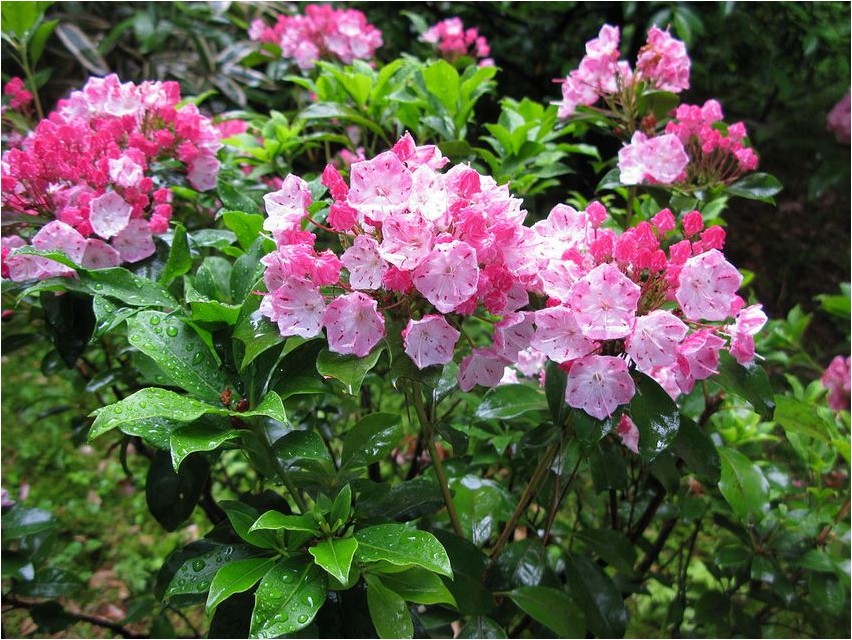
Kalmia cuneata (lat. Kalmia cuneata) is a deciduous shrub from the genus Kalmia (lat. Kalmia), which represents the heather family (lat. Ericaceae) on the planet.
The perennial Kalmia wedge-shaped sheds its leaves for the winter, giving birth to new ones in the spring, which is fundamentally different from most species of plants of the Kalmia genus. As for its inflorescences, they are formed by white saucer-shaped flowers, typical for this genus. Kalmia wedge-shaped is one of the plants disappearing from the face of the Earth, since it has many enemies, including the fact that it cannot withstand competition with other marsh plants.
What”s in your name
Per Kalm, a botanist of Swedish-Finnish origin, a colleague of the more famous botanist, Carl Linnaeus, through his activities in growing exotic plants brought by him from America, received the honor of immortalizing his glorious name in the name of a genus of plants of the same morphology. This is how a genus of plants with the Latin name “Kalmia” appeared.
The specific epithet “cuneata” (“wedge-shaped”) specifies the shape of the leaves of this species of the genus Kalmia. Although a more significant difference from other species of the genus is the deciduous nature of the shrub, while the shape of the leaves can be confused with the shape of leaves of other representatives of the genus.
In the English-speaking environment, the plant is known under the common name “Whitewicky”, one of the possible translations of which could be “White wick”. This name, most likely, was born in the homeland of the plant — two US states: North Carolina and South Carolina, in which only Kalmia wedge-shaped can be found in the wild.
Description
Kalmia wedge-shaped in nature is an erect shrub, sparsely branched, growing in shrub swamps, along small streams, on the sandy shores of sea bays.

It, like the Russian Ivan-chai plant, is one of the first to appear on lands devastated by forest fires. The improving art of man in fighting fires reduces the plant’s chances of existence, since under standard conditions it has many enemies trying to oust Kalmia cuneiformis from nature. Therefore, Kalmia wedge-shaped belongs to the risk group of plants disappearing from the earth’s surface. The plant is rarely cultivated, although it is quite decorative.
This is perhaps the only species in the Kalmiya genus that has changed traditions and sheds its leaves for the winter. The height of the erect shrub varies from 10 to 100 cm. The shoots of young plants are reddish in color and covered with glandular hairs.
Narrow-oval, oblanceolate or obovate leaves are almost sessile, having short petioles (from 2 to 4 mm), or sessile. The dark green surface of the leaf blade in late autumn and early winter provides the fading nature with golden and scarlet colors. The reverse side of the leaf blade is paler and covered with glandular hairs.
In summer, relatively large flowers (up to 1. 5 cm in diameter) bloom on short stalks (from 1 to 3 mm), gathering in groups of 3 to 10 pieces. They form one-sided corymbose inflorescences in the leaf axils. The flowers look like miniature saucers of an elite white or creamy white color. The “bottoms” of the flower saucers are highlighted with a dark red flirty stripe. The petals are protected by oblong, pointed sepals, usually green. 10 brave stamens stick out from the center of the saucers.
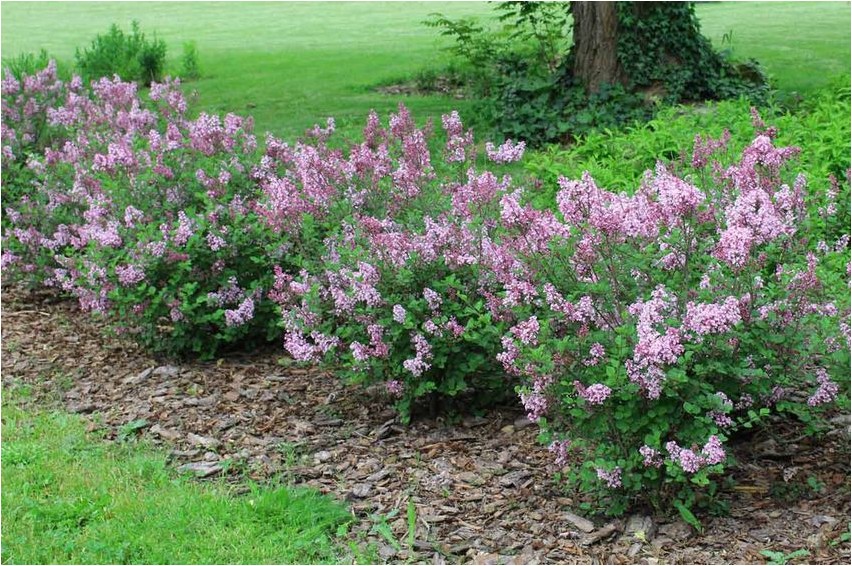
This is what these simple but very elegant flowers look like in the photograph:
Paradoxes of nature
Fire helped the caveman become modern man. It heats our homes and helps transform food into something easier for the human body to digest.
At the same time, fire poses a threat to all life on the planet when its flames cannot be curbed. But it turns out that such a natural disaster for many is a blessing for Kalmia wedge-shaped, giving her a chance to survive among her enemies.