Gynostemma
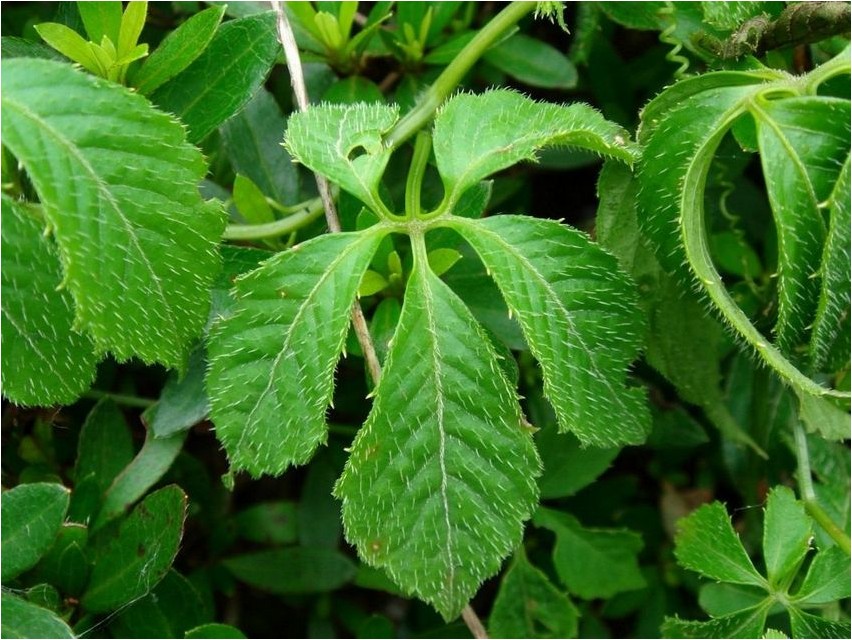
Gynostemma (Latin: Gynostemma) is a genus of herbaceous climbing plants in the Cucurbitaceae family. The genus includes over 30 species, nine of which are endemic (plants restricted to a limited range).
Gynostemma grows in New Guinea, Malaysia, Japan, and Southeast Asia. Typical habitats include shrub thickets, forests, roadsides, lowlands, and mountain slopes.
Cultivars
Gynostemma is a perennial climbing plant with glabrous or pubescent stems. The leaves are simple, ovate-lanceolate, or palmate, divided into 3-9 lobes, arranged alternately. The flowers are small, unisexual, and borne in axillary, paniculate, or racemose inflorescences. The corolla is white or green, with five deeply dissected, narrowly lanceolate lobes. The fruits are berry-like, round, and black. The seeds are equipped with a spinous papilla.
Gynostemma pentaphyllum is a popular species of the genus, represented by evergreen, semi-woody or herbaceous vines. The shoots are sparsely pubescent or glabrous, climbing, and grooved. The leaves are opposite, palmately compound. The leaflets are glossy with a sheen, lanceolate, and serrated along the edges. The flowers are small, unremarkable, pale green or white, collected in axillary paniculate inflorescences. The fruits are spherical and black.
Cultivation Features
Most Gynostemma species are unisexual, and to set seeds, both male and female plants must be grown in the same plot. Male flowers are collected in longer panicles than female flowers, and they can only be distinguished during flowering. In temperate climates, seeds are sown in a greenhouse or seedling containers; in hotter climates, they are sown in open ground. Before sowing, the seeds are soaked in warm water for 24 hours, then sown to a depth of 1. 5-2 cm. As the seedlings grow, they need support. In addition to seed propagation, gardeners often propagate by cuttings, which root easily in nutrient-rich soil.
Gynostemma prefers well-drained, fertile, light, moderately moist soils without compaction. The site should be protected from cold winds. Gynostemma thrives in partial shade or full sun. In dense shade, gynostemma grows very slowly and rarely flowers, often dying. Plant care consists of regular watering, misting in the evening, fertilizing with mineral fertilizers, and mulching the area around the stems.

Application
Gynostemma is widely used in garden design. Its climbing shoots can be used to decorate gazebos, the walls of houses and outbuildings, fences, and more. In its native land, the plant is called the “herb of immortality” due to its rejuvenating and medicinal properties. Teas and various infusions are made from Gynostemma leaves, which act as a kind of energy drink and strengthen the immune system. Gynostemma contains a large number of easily absorbed nutrients.
The leaves and young shoots of the plant are used in salads. Regular consumption of leaf infusions is believed to suppress the development of various tumors, regulate blood pressure, and increase the body’s resistance to diseases and viruses. Gynostemma teas are especially beneficial for athletes and people whose work involves heavy physical exertion. The plant has a positive effect on the gastrointestinal tract, nervous system, and cardiovascular system. Gynostemma is effective for diabetes and hepatitis B.
Growing Gynostemma Pentaphyllum (jiaogulan)
https://www. youtube. com/watch? v=Zee42hiwgkc
Gynostemma gynostemma