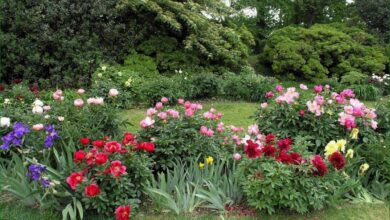
California cypress
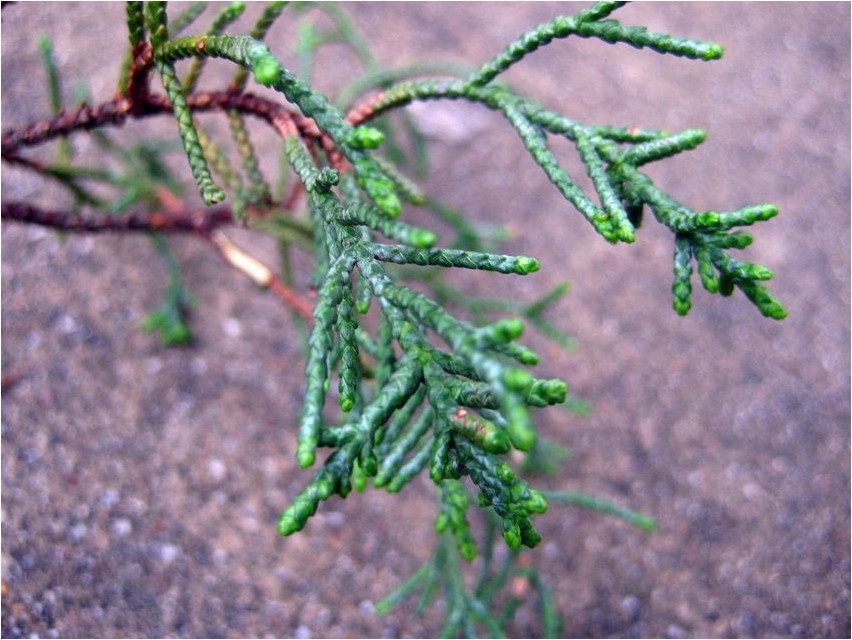
California cypress (lat. Cupressus goveniana) — in the wild, California cypress is found only on the Monterey Peninsula (western part of the USA), where it grows in small groups.
This is, as a rule, a small tree or shrub, differing from other species of the genus Cypress (Latin Cupressus), which is part of the Cypress family (Latin Cupressaceae), in the structure of its needles, which do not have resin-secreting glands.
What”s in your name
The word “Cypress”, chosen by botanists to designate a genus of coniferous plants, is associated by some people with the name of the island of Cyprus, where similar trees have grown in abundance since legendary times.
Others believe that the genus owes its name to a young man named Cypress, whom the ancient Greek god turned into a tree in order to relieve him of the pangs of conscience for accidentally killing his own deer.
There are other characters in legends with the name Cypress, whom numerous gods periodically turned into trees, believing that in this way they saved the souls of such people from the nervousness of life, or punishing people for unseemly behavior. This view of the origin of many plants gives rise to an even more attentive attitude of man to the plant world. After all, behind every plant there may be a person.
Description
California cypress is an evergreen tree with a wide range of sizes. The height of adult plants varies from 0. 2 to 10 meters, but under ideal living conditions the tree can rise to the sky to a height of up to 50 meters. The crown of the tree can be ovoid-conical or conical.

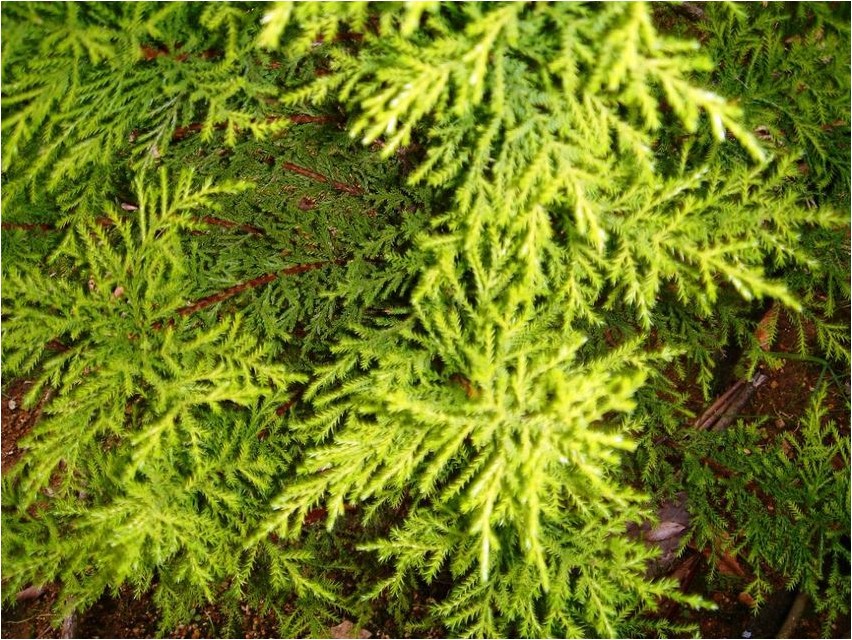
Intertwining branches with dense, dark green, scale-like foliage extend from a smooth or cracked-bark trunk. The length of scale-like leaves is from 0. 2 to 0. 5 centimeters. There are no resin-secreting glands in the leaves of Californian Cypress.
As a rule, the seed cones of Californian cypress are smaller than those of large-fruited cypress (lat. Cupressus macrocarpa). Their length can be from 1. 1 to 2. 2 centimeters, and their shape can be from spherical to oblong. The number of scales that protect the plant’s seeds from the vicissitudes of the weather varies from 6 to 10 pieces.
Once pollinated, the buds take 20 to 24 months for the seeds to fully mature. The seed cones, colored green at the beginning of life, become grey-brown or brown by the time they mature.
Once ripe, the cones continue to hold their seeds locked up, remaining in this state for many years. This is what the seed cones of many species of the Cypress genus do. They seem to have been created by nature for critical moments of life. Unfortunately, woody plants are periodically destroyed by fires, including Californian cypress trees. That’s when the moment comes for the seed cones, provoking them to open their protective scales and release the seeds.
The bare earth after a fire willingly accepts the seeds of Californian Cypress, which can quickly heal its wounds. But, although there is such an amazing connection between California Cypress and fires, this species of the Cypress genus is included in the list of plants that are disappearing from the face of our little blue planet.