Ambergris ragwort
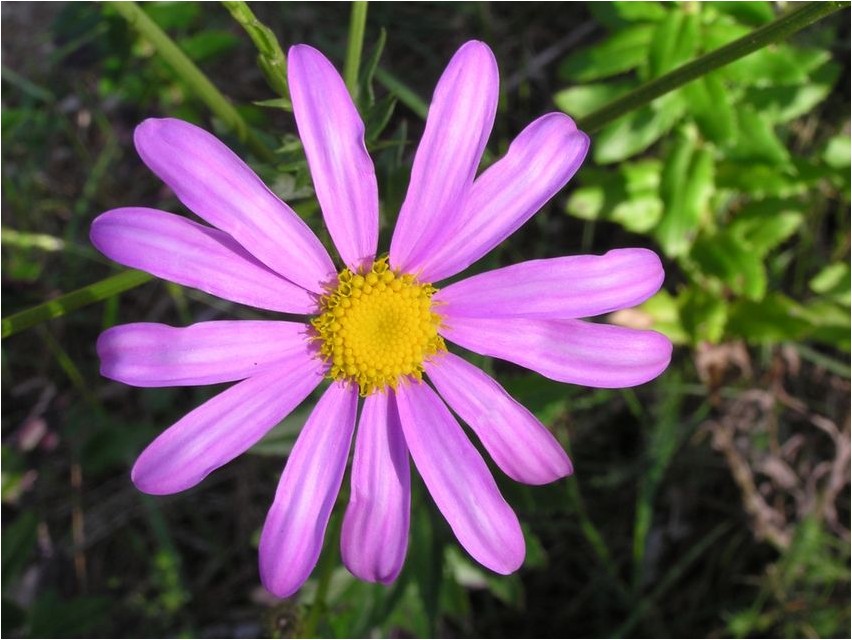
Ambergris ragwort is one of the plants of the family called Asteraceae or Asteraceae; in Latin the name of this plant will be as follows: Senecio ambraceus Turcz. ex DC.
As for the name of the ambergris ragwort family itself, in Latin it will be: Asteraceae Dumort.
Description of amber godson
Ambergris ragwort is a perennial herbaceous plant whose height will vary between thirty and eighty centimeters. The rhizomes of this plant are shortened, they will be endowed with numerous and long roots. The stem of the amber ragwort will be straight and single; at the top or sometimes from the middle, such a stem can be branched. The basal leaves of this plant will fade very early, the leaf blade is ovoid, and its length is five to eight centimeters, while the width will be about one to three centimeters. The stem leaves of the amber ragwort are sessile and pinnately dissected; at the base they will be endowed with ears. The baskets of this plant are on fairly long peduncles; their length will be about one and a half to six centimeters. The reed flowers are colored yellow, there will be eighteen to twenty of them in total, the length of the achenes is two millimeters, such achenes will be cylindrical.
Ambergris ragwort blooms from July to August. Under natural conditions, this plant is found in the Amur region in the Far East, in the Altai region of Western Siberia and in all regions of Eastern Siberia, with the exception of the Yenisei region. For growth, the plant prefers river pebbles, wet meadows and birch-aspen forests.
Description of the medicinal properties of ambergris ragwort
Ambergris ragwort is endowed with very valuable healing properties, and it is recommended to use the herb of this plant for medicinal purposes. The term grass includes flowers, stems and leaves. The presence of such valuable healing properties should be explained by the content of rubber and the alkaloid seneciphylline in this plant.
Ambergris ragwort is recommended for use against plague, anthrax and typhus. The grass and inflorescences of this plant are present in products that will be used for anemia, encephalitis and various cerebrovascular disorders.

For dizziness, it is recommended to use the following quite effective remedy based on amber ragwort: to prepare such a remedy you will need to take two teaspoons of crushed dry herbs per two hundred milliliters of boiling water. The resulting mixture should be infused for two hours, after which it is important to strain this healing mixture very carefully. Take the resulting remedy based on ambergris ragwort two to three times a day after meals, one tablespoon.
In case of exhaustion and poor appetite, the following remedy based on amber ragwort is considered effective: to prepare such a remedy, you will need to take one tablespoon of crushed dry herb of the inflorescences of this plant per glass of water. The resulting mixture should be boiled for about three to four minutes, then left to steep for about one hour, after which this healing mixture is filtered very carefully. Take the resulting healing mixture based on amber ragwort three times a day, one to two tablespoons. It is important to note that in order to achieve the greatest effectiveness when taking such a remedy, you should not only carefully follow all the rules for preparing this remedy, but also follow all the rules for its administration.





