Stahis
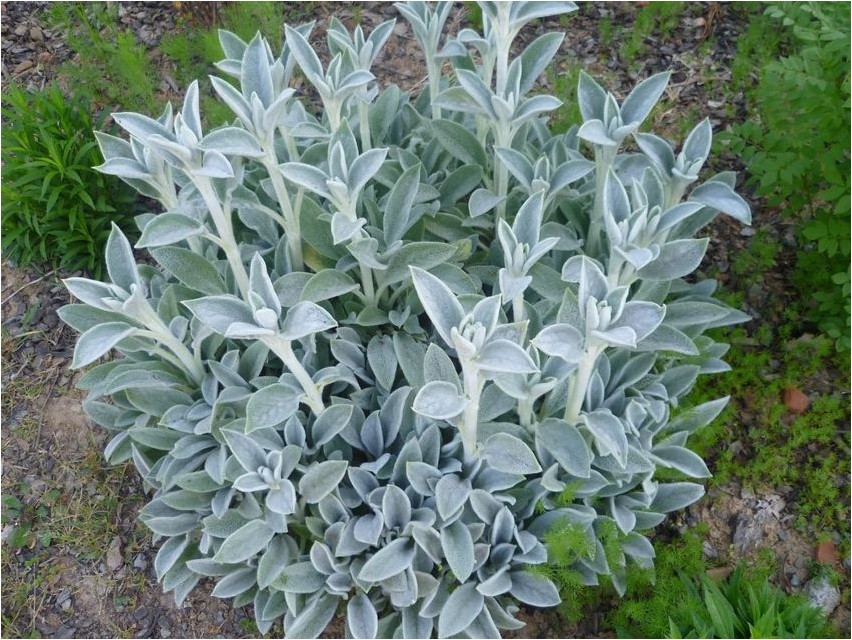
Stachys (lat. Stachys) is a genus of annual and perennial herbaceous plants or subshrubs of the Lamiaceae family. Other names are Chinese artichoke, chistets or khorogi.
The genus includes more than 300 species distributed throughout the world, with the exception of Australia and New Zealand. About 10 species grow on the territory of Russia; the plant is most common in Western Siberia, Altai and the European part of Russia. In central Russia, the following species are most often found: straight chickweed (Lat. Stachys recta), annual chickweed (Latin Stachys annua), forest chickweed (Latin Stachys sylvatica), swamp chickweed (Latin Stachys palustris).
Characteristics of culture
Stachys is a perennial, less often annual, herbaceous plant or densely pubescent subshrub up to 100-110 cm high. The leaves are entire or serrated, opposite. The flowers are small, purple, lilac, pink, yellow or white, collected in false whorled inflorescences forming spikelets. The calyx is five-toothed, bell-shaped or tubular-bell-shaped, equipped with sharp teeth. The fruit is a triangular nut, oblong or ovoid in shape. The corolla is two-lipped, the upper lip is helmet-shaped or concave, the lower lip is three-lobed.
Growing conditions
Stachys develops best in open sunny areas, with the exception of large stachys — prefers partial shade. Soils are preferably loose, fresh, with a moderate content of rotted manure or plant humus. Stachys woolly loves poor soils. The culture does not accept saline, acidic and waterlogged soils.
Care
In early spring, the area under perennial specimens is cleared of debris and mulch. Throughout the growing season, watering, fertilizing and loosening are carried out. During budding, the peduncles of Stachys woolly are cut off, as they reduce the decorativeness of the plantings. Over time, perennial bushes become very bare in the central part, so in the spring part of the plant is cut out with a shovel, and young rosettes are planted in the cleared area and humus is added.
Reproduction and planting
Stachys is propagated by seeds, cuttings and dividing the bush. Seeds are sown in spring or autumn immediately in open ground. Growing crops by seedlings is not prohibited. In the phase of 2-3 true leaves, the crops are thinned out, leaving a distance between plants of 5-8 cm. Stachys is planted in a permanent place after a year, maintaining an interval of 15-20 cm. The bush is divided in the spring, in August or September.

Cuttings can be taken during this period. Cuttings are taken from the lower part of the stem. The cuttings root quickly; care must be taken to prevent the planting material from rotting or drying out. Stachys can also be propagated by tubers, which are planted in pre-prepared holes 5-7 cm deep. The distance between plants should be 30-35 cm, and between rows, 70 cm. Typically, one tuber produces up to 200 specimens.
Harvesting
Tubers are harvested in September-October. Store the tubers in cellars or basements at 0-2°C in boxes filled with dry sand. They can be used throughout the winter and spring; they have a fairly long shelf life.
Uses
Stachis is widely used in cooking and folk medicine. In particular, stachys sylvestris is recommended by official medicine for women in the postpartum period. Marsh stachys acts as a diuretic, anti-inflammatory, choleretic, and anti-exudative. Stachys officinalis has similar properties. It is also used as an ornamental plant; woolly stachys will look very impressive in a garden.
WE”VE FOUND A NEW PRODUCT! THE MOST HEALTHY VEGETABLE IN THE GARDEN: STACHYS!
https://www. youtube. com/watch? v=XeOlPAsvF_M