Tailed swallowtail
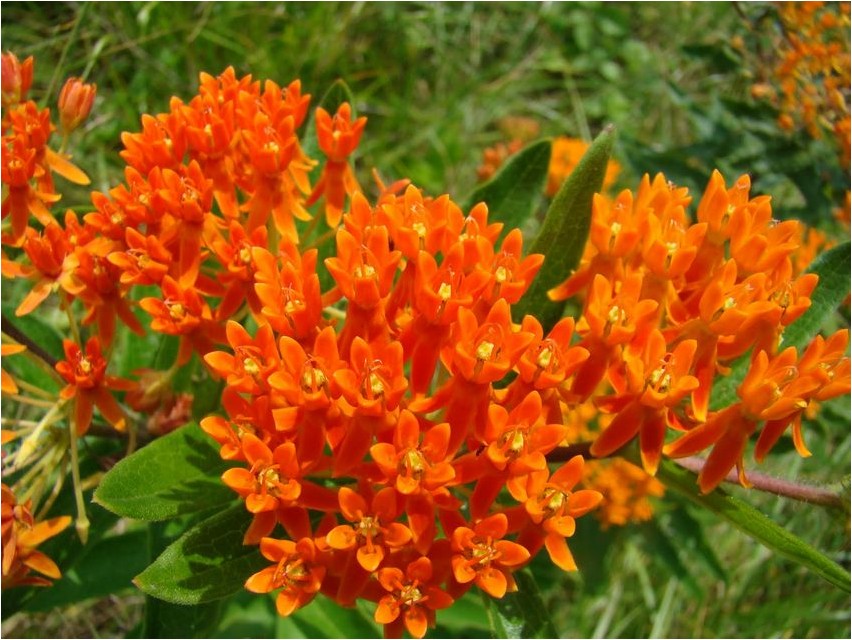
The Latin name for the caudatum swallowtail family is Asclepiadaceae R. Br.
Description of the caudatum swallowtail
The caudatum swallowtail is a perennial herbaceous plant that can reach a height of three meters. Its stem is twining and thinly corded, herbaceous, twisted, and glabrous. It is also slightly thickened at the internodes, which are long. The leaves are broadly ovate, seven to eight centimeters long, and about five to six centimeters wide. The flowers of the caudatum swallowtail are yellowish in color and reach approximately seven to eight millimeters in diameter. The corolla lobes are either oval or oblong, and four millimeters long. These lobes are also blunt, membranous at the edges, and have five outer lobes and five inner lobes. The leaflets are spindle-shaped, seven to nine centimeters long, and glabrous. The seeds of the caudatum swallowtail are flattened and ovoid, and approximately five to six millimeters long.
The flowering period of the caudatum swallowtail begins in July and ends in August, while the fruits ripen in October. In the wild, this plant is found in the Far East, specifically in southern Sakhalin and on the Shikotan and Kunashir Islands in the Kuril Islands. It prefers seashores, mountain river valleys, and mountain slopes.
Description of the medicinal properties of the caudatum swallowtail
The caudatum swallowtail has very valuable medicinal properties, and its roots and leaves are recommended for medicinal purposes.
The presence of such valuable medicinal properties can be explained by its content of the glycoside vincetoxin and cardiac glycosides: these elements are present in the roots of this plant. It is worth noting that descinanchogenin, which is identical to sarcostine, has been isolated from the herb of this plant.
As for Japanese and Chinese traditional medicine, the roots and herbs of this plant are quite widespread here. A decoction prepared from the roots and dried herb of the swallowtail is recommended for use as a very effective diuretic. An infusion of the dried roots of this plant should be used for cystitis, edema and pyelitis. Fresh crushed roots, stems and leaves of the swallowtail can be applied to wounds, which will contribute to their fastest healing. In addition, such parts of this plant are also used as an antidote when taken orally. Fresh juice from the root of the caudate is recommended for use for gastritis, peptic ulcer of the duodenum and stomach, and in addition, these remedies are also used for hemoptysis.

As a diuretic, it is recommended to use the following remedy based on swallowtail: to prepare such a remedy, you will need to take one tablespoon of crushed dry herb of this plant per glass of water. The resulting mixture should be boiled over fairly low heat for about four to five minutes, after which this healing mixture is left to infuse for one hour, then this mixture is filtered very carefully. Take the resulting medicinal product based on this plant three to four times a day, one tablespoon.
boy / male 7 POLINI Vincetoxicum Acuminatum POLINI Vincetoxicum Acuminatum